# StereoKit — Guides & Examples
StereoKit is a lightweight, low-dependency C# library for XR apps and games built on OpenXR.
This file is part of a 2-file AI-friendly documentation set:
- StereoKit-docs-API.md — condensed API reference for every type — signatures, summaries, parameters
- **StereoKit-docs-reference.md** — conceptual guides and runnable C# code examples, one section per API member (this file)
Source: https://stereokit.net/preview (generated from StereoKit's XML doc comments)
# Guides
## Getting Started
# Getting Started with StereoKit
The minimum prerequisite for StereoKit is the .NET SDK! You can use `dotnet --version` to check if this is already present.
If it is not, open up your Terminal, and run the following:
```bash
winget install Microsoft.DotNet.SDK.9
# Restart the Terminal to refresh your Path variable
```
On _Linux_, most distros have the .NET SDK in their package manager. You can find a [more complete list here] (https://learn.microsoft.com/en-us/dotnet/core/install/linux).
```bash
# Ubuntu
sudo apt-get install dotnet-sdk-9.0
# Debian
sudo dnf install dotnet-sdk-9.0
# On Ubuntu 24.04 or earlier, you need dotnet/backports
sudo add-apt-repository ppa:dotnet / backports`
```
With the .NET SDK installed, setting up a StereoKit project is quite simple!
```bash
# Install the StereoKit templates!
dotnet new install StereoKit.Templates
# Create a multiplatform StereoKit project, and run it
mkdir SKProjectName
cd SKProjectName
dotnet new sk-multi
dotnet run
# For hot-reloading code, try this instead of `run`
dotnet watch
```
> **Native code developers** can check out [this guide](https://stereokit.net/preview/Pages/Guides/Getting-Started-Native.html) for using StereoKit from C/C++.
## Tools and IDEs
Once you've installed the templates via `dotnet new install StereoKit.Templates`,
you have your choice of tools! Visual Studio 2022 will recognize the
StereoKit templates when creating a new project, and the Command Line
workflow works well with VS Code and other editors.
- Get [**Visual Studio 2022** here](https://visualstudio.microsoft.com/vs/).
- _Or_ get [VS Code here](https://code.visualstudio.com/).
StereoKit is OpenXR based, so will work in any environment that supports
OpenXR! On PC, this means you'll want a desktop runtime such as SteamVR,
Quest + Link, or Monado. If no OpenXR
runtime is found, StereoKit will provide a [nice Simulator](https://stereokit.net/preview/Pages/Guides/Using-The-Simulator.html)
that's great for development! Some runtimes also provide a simulator for
their platform, such as the [Meta XR Simulator](https://developers.meta.com/horizon/documentation/native/xrsim-getting-started),
so you can test their runtime without a headset.
## Android
When using StereoKit's sk-multi (multiplatform) template, deploying to an
Android device is pretty straightforward! From Visual Studio 2022, you'll
need to set the `SKProjectName.Android` sub-project as your Startup Project
(Solution Explorer->Right click on SKProjectName.Android->Set as Startup
Project), and then you'll have the option to deploy to any Android device
connected to your machine.
From the command line, or VS Code, you have to run the Android flavored
.csproj explicitly.
```bash
# From the same folder as above
dotnet run --project .\Projects\Android\SKProjectName.Android.csproj
```
## Minimum "Hello Cube" Application
The template does provide some code to help provide new developers a base
to work from, but what parts of the code are really necessary? We can boil
"Hello Cube" down to something far simpler if we want to! This is the
simplest possible StereoKit application:
```csharp
using StereoKit;
SK.Initialize();
SK.Run(() => {
Mesh.Cube.Draw(Material.Default, Matrix.S(0.1f));
});
```
## Next Steps
Awesome! That's pretty great, but what next? [Why don't we build some UI](https://stereokit.net/preview/Pages/Guides/User-Interface.html)?
Alternatively, you can check out the [StereoKit Ink](https://github.com/StereoKit/StereoKit-PaintTutorial)
repository, which contains an XR ink-painting application written in about
220 lines of code! It's well commented, and is a good example to pick
through.
For additional learning resources, you can check out the SDK source, which
does contain a [number of small demo scenes](https://stereokit.net/preview/Pages/Guides/Sample-Code.html)
that are excellent reference for a variety of different StereoKit features!
You can also check out the [Learning Resources](https://stereokit.net/preview/Pages/Guides/Learning-Resources.html)
page for a couple of repositories and links that may help you out.
And don't forget to peek in the API docs here! Most pages contain sample
code that illustrates how a particular function or property is used
in-context. The ultimate goal is to have a sample for 100% of the docs,
so if you're looking for one and it isn't there, use the 'Create an Issue'
link at the bottom of the web page to get it prioritized!
## Getting Started Native
# Getting Started with StereoKit - Native Code
StereoKit's golden path is through C#, but the core of StereoKit is really
just a C compatible library! C# is just a 1st class binding to this C
library, so all of SK's core functionality is still accessible from native
code. This can be fantastic if you need the reliability of native code, or
the ability to easily interact with other native libraries.
However! StereoKit's core documentation is entirely focused on C#. Many C#
docs map 1:1 with the C code, so this is still the best reference, but the
C API is really **only recommended to more advanced developers**.
## Native Template
The recommended way to get started with developing native StereoKit
applications is via the [CMake Template](https://github.com/StereoKit/SKTemplate-CMake).
Please see the template repository for up-to-date details and instructions!
This template is excellent for Linux and Windows development, and can be
fairly straightforward to use from VS Code.
## Sample Code
StereoKit's C API can be found in 2 different .h files, [stereokit.h](https://github.com/StereoKit/StereoKit/blob/master/StereoKitC/stereokit.h)
for all the main functions, and [stereokit_ui.h](https://github.com/StereoKit/StereoKit/blob/master/StereoKitC/stereokit_ui.h)
for the user interface.
There is also some sample code available in the [StereoKitCTest project](https://github.com/StereoKit/StereoKit/tree/master/Examples/StereoKitCTest)
that can be used for reference! It's not as complete as the C# samples, but
should help point you in the right direction for usage patterns and
translation from C# docs.
## Other Languages
Since StereoKit is a C API, it's pretty easy to bind to other languages!
While there are no official bindings other than C#, there are some partial
examples for [Zig](https://github.com/StereoKit/StereoKit/tree/master/Examples/StereoKitZig)
and [V](https://github.com/StereoKit/StereoKit/tree/master/Examples/StereoKitV),
as well as a community driven effort to bind with [rust](https://github.com/mvvvv/StereoKit-rust)!
## Getting Started VS Code
# Getting Started with StereoKit - Visual Studio Code
The [regular getting started guide](https://stereokit.net/preview/Pages/Guides/Getting-Started.html)
and the official templates now cater to Visual Studio Code, but if you're
interested in setting up a StereoKit project for VS without using the
templates, here's a quick rundown!
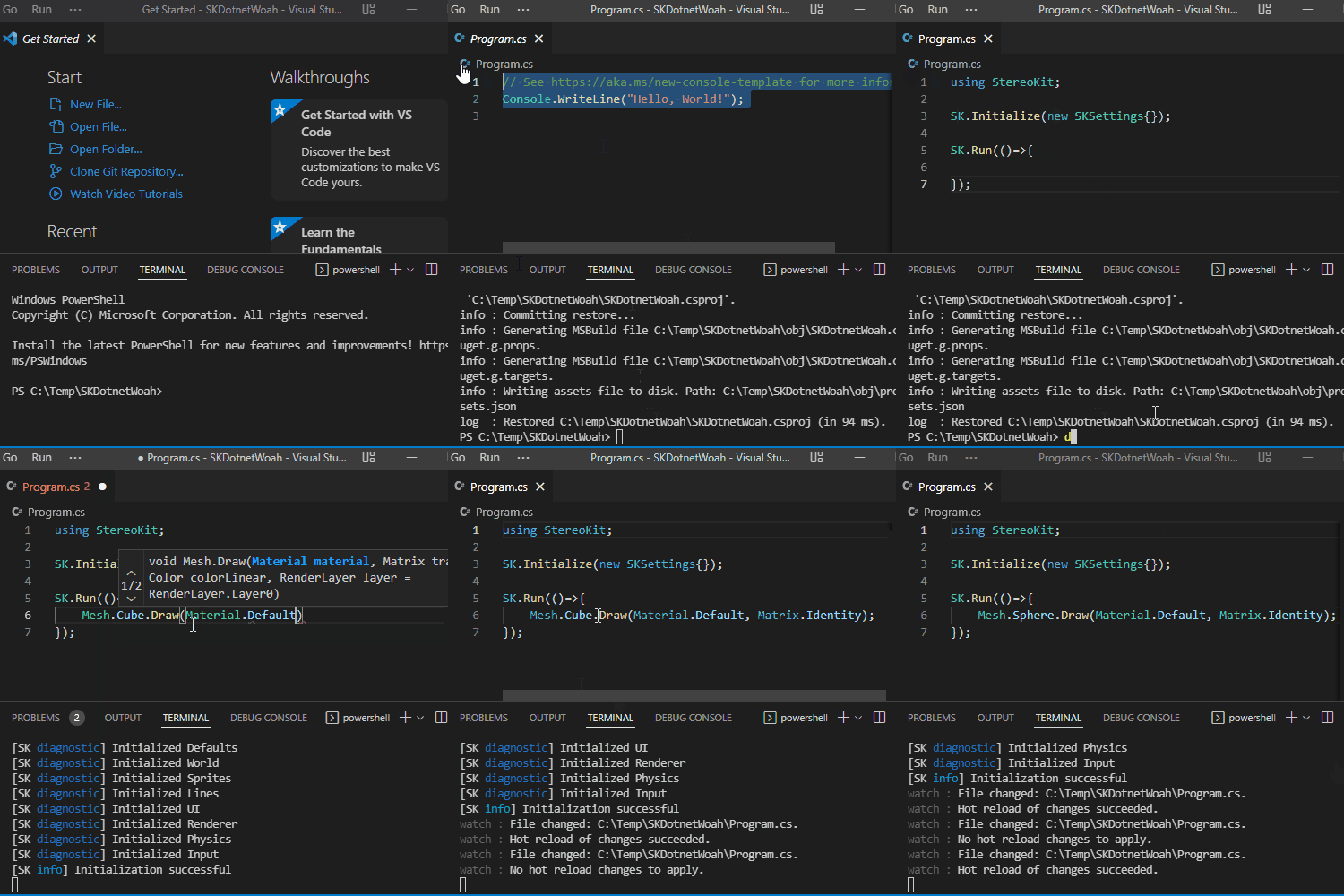
This guide also serves as a way to get started with C# projects in a
command line environment! VS Code may have additional extensions that can
make this experience simpler.
This requires having [the .NET **SDK**](https://dotnet.microsoft.com/en-us/download)
installed on your machine. Some development setups may already have this
installed, you can try running `dotnet --version` to double check!
To create the project:
```shell
mkdir ProjectName
cd ProjectName
dotnet new console
dotnet add package StereoKit
```
Add some code to get started:
```csharp
using StereoKit;
SK.Initialize();
SK.Run(()=>{
Mesh.Sphere.Draw(Material.Default, Matrix.S(0.1f));
});
```
To run the project:
```shell
# For .NET's hot-reload functionality
dotnet watch
# Or just a normal run
dotnet run
```
## Learning Resources
# Learning Resources
Outside of the resources here on the StereoKit site, there's a number of
other places you can go for learning information! Here's a collection of
external learning and sample resources to get you off the ground a little
faster! If you have your own resources that you'd like to see linked
here, just let us know!
## Official Sample Projects
### [StereoKit Ink](https://github.com/StereoKit/StereoKit-PaintTutorial)

A well documented repository that illustrates creating a complete but
simplified inking application. It includes functionality like custom and
standard UI, line rendering, file save/load, and hand menus.
### [Bing Maps API and Terrain Sample](https://github.com/StereoKit/StereoKit-BingMaps)

A well documented repository showing how to load and display satellite
imagery and elevation information from the Bing Maps API. It includes
creating a terrain system using StereoKit's shader API, loading color and
height data from an external API, and building a pedestal interface to
interact with the content.
### [Release Notes Demo for v0.3.1](https://github.com/StereoKit/StereoKitReleaseNotes/tree/main/v0.3.1)
This is an interactive release notes demo project that showcases the
features released in StereoKit v0.3.1! Not every release has a demo like
this, but it can be pretty enlightening to browse through a code-base
such as this one for reference.
### [Light Baking and Scene Management](https://github.com/maluoi/SKLightBake)
This is a quick demo for performantly managing static scenes, and baking
lighting into them with StereoKit! This bakes lighting into the vertex
colors of the mesh, so is visually limited by the number of vertices the
mesh has, and will merge meshes together.
### [StereoKit Demos](https://stereokit.net/preview/Pages/Guides/Sample-Code.html)
These are the demos that test StereoKit features and APIs! They are
occasionally documented, but frequently short and concise. They can be
great to check out for a focused example of certain parts of the API!
## Community Projects
### [Nakamir - Azure Active Directory Auth](https://github.com/Nakamir-Code/AzureStereoKitUWPSamples)
This repo contains a StereoKit sample application (for Microsoft HoloLens
2) that demonstrates user authentication using Microsoft Azure Active
Directory.
### [brunoshine - Azure Spatial Anchors](https://github.com/brunoshine/StereoKit.Samples.AzureSpatialAnchors)
This is a demo application on how to use Azure Spatial Anchors with
StereoKit to persist world anchors between sessions and devices.
### [Marc Plogas - Azure Spatial Anchors](https://github.com/mplogas/stereokit.azure.spatialanchors)
Another ASA demo from Microsoft Cloud Advocate, Mark Plogas.
### [Nakamir](https://github.com/Nakamir-Code/SKRiggedHandVisualizer) and [ClonedPuppy](https://github.com/ClonedPuppy/SKHands) - Rigged Hands
Attaching a skinned mesh/model to StereoKit's hand joint data.
## Sites and Places
### [GitHub Discussions/Issues](https://github.com/StereoKit/StereoKit/discussions)
The best place to ask a question! It's asynchronous, and a great place
for long-form answers that can also benefit others. The Discussions tab
is best for questions, feedback, and more nebulous stuff, and the Issues
tab is best if you think something might be misbehaving or missing!
### [The StereoKit Discord Channel](https://discord.gg/jtZpfS7nyK)
In a rush with a question, got a project to share, or just want to hang
out and chat? Or maybe you're looking for some feedback on a potential
contribution? Whatever the case, come and say hi on the Discord! This is
the core hang-out spot for the team and community :)
## User Interface
# Building UI in StereoKit
StereoKit uses an immediate mode UI system. Basically, you define the UI
every single frame you want to see it! Sounds a little odd at first, but
it does have some pretty tremendous advantages. Since very little state
is actually stored, you can add, remove, and change your UI elements with
trivial and standard code structures! You'll find that you often have
much less UI code, with far fewer places for things to go wrong.
The goal for this UI API is to get you up and running as fast as possible
with a working UI! This does mean trading some design flexibility for API
simplicity, but we also strive to retain configurability for those that
need a little extra.
## Making a Window
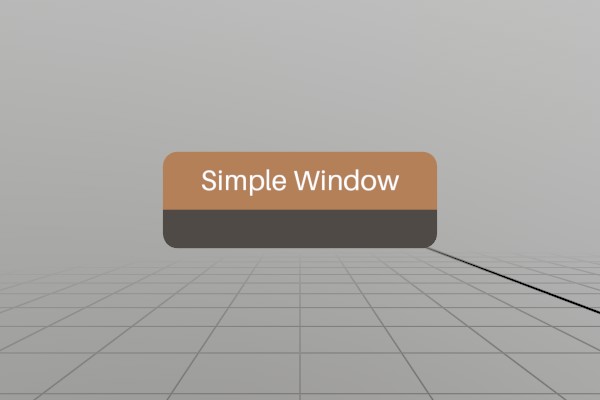
Lets start with a function that draws a simple, empty window.
```csharp
void SimpleWindow(ref Pose windowPose)
{
UI.WindowBegin("Simple Window", ref windowPose);
UI.WindowEnd();
}
```
Looks pretty easy! You can begin a window, and end a window, and all
the UI elements between those two calls "belong" to that window. But
first, lets put this in context! StereoKit's UI code must be called
every frame, so you would need to call `SimpleWindow` in your
application's `Step` phase.
```csharp
using StereoKit;
SK.Initialize();
Pose simpleWinPose = new (0, 0, -0.5f, Quat.LookDir(-Vec3.Forward));
SK.Run(()=> {
SimpleWindow(ref simpleWinPose);
});
```
Note here that _you_ own the Window's Pose data, you can change it and
manage it however you want! StereoKit does take a _reference_ to the
variable so it can update it based on the user's current interaction
with the window, but that all happens immediately in the `WindowBegin`
function call, the reference doesn't persist internally!
> You might also have wondered about the Pose we used here! When the
> app starts up, the user will generally be at the "identity pose",
> that is to say, at XYZ 0,0,0 facing forward 0,0,-1. For the window
> pose to be nice to a starting user, we put it half a meter forward,
> and have the window face backward towards the user's starting point.
## Making a Button
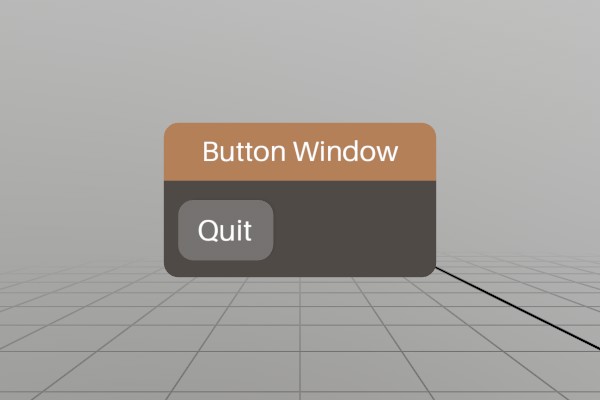
The simplest UI element, the button, illustrates nicely how "events"
occur in an immediate mode GUI system. Instead of some form of callback
or event, the `Button` function merely returns true on the first moment
it is pressed! You can safely put your function in an `if` statement,
and react to the interaction inline! Or pass execution along to a
callback, you do you.
```csharp
void ButtonWindow(ref Pose windowPose)
{
UI.WindowBegin("Button Window", ref windowPose);
if (UI.Button("Quit"))
SK.Quit();
UI.WindowEnd();
}
```
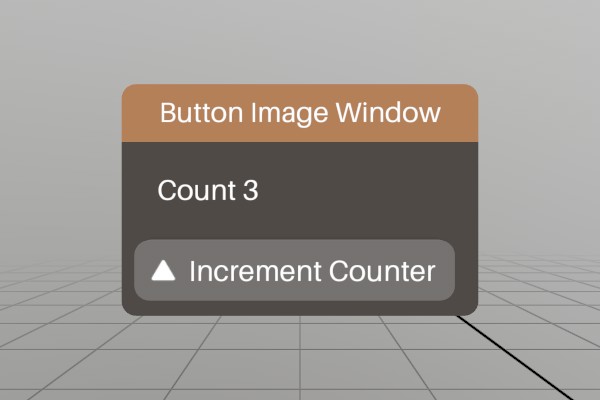
Adding an image to a button is pretty easy too, `UI.ButtonImg` takes a
sprite and an optional layout to make your buttons a little snazzier!
Here we're using one of StereoKit's built-in default sprites, but you
can swap that out with a Sprite you've loaded from file too!
```csharp
void ButtonImgWindow(ref Pose windowPose, ref int counter)
{
UI.WindowBegin("Button Image Window", ref windowPose);
UI.Label($"Count {counter}");
if (UI.ButtonImg("Increment Counter", Sprite.ArrowUp))
counter++;
UI.WindowEnd();
}
```
## Making a Toggle
Just to drive home the idea of how immediate mode state management
works, lets take a look at the `Toggle` element!
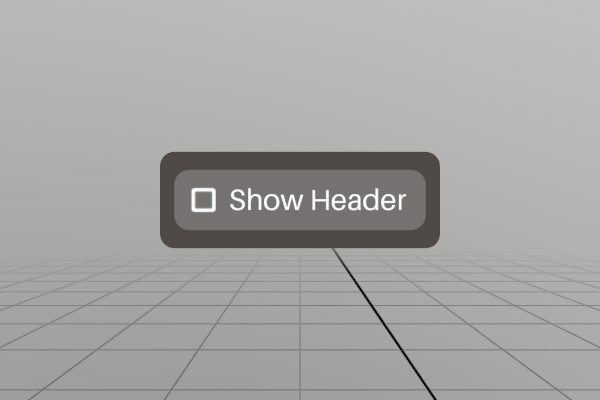
```csharp
bool header = false;
void ToggleWindow(ref Pose windowPose)
{
UI.WindowBegin("Toggle Window",
ref windowPose,
header ? UIWin.Normal : UIWin.Body);
UI.Toggle("Show Header", ref header);
UI.WindowEnd();
}
```
> `header` is used as a class global variable to illustrate the
> _complete_ life of the variable. It could just as easily be a `ref`
> parameter like the `Pose`.
As you might expect, `UI.Toggle` is a UI element that will toggle a
boolean value whenever it's pressed! Like the `UI.Button`, `UI.Toggle`
also has a return value, in this case it returns true _anytime_ the
boolean value changes from interaction. Sometimes quite useful, but in
this case we don't actually need an event to react to, we just use the
same boolean variable every frame when defining the window!
Though perhaps a subtle detail, this is one of the superpowers of an
immediate mode mentality. Recalculating the enum value every frame
allows us to avoid caching some separate `UIWin` variable in addition
to our `header` boolean. Our own `header` variable becomes a singular
source of truth that can be durable to mutation at any point in time.
Multiple sources of truth and cached values can often lead to
desynchronization bugs.
## Custom Windows
StereoKit also supports the idea of objects as interfaces! Instead of
putting UI elements onto windows, we can create 3D models and apply UI
elements to their surface! StereoKit uses 'handles' to accomplish this,
a grabbable area that behaves much like a window, but with a few more
options for customizing layout and size.
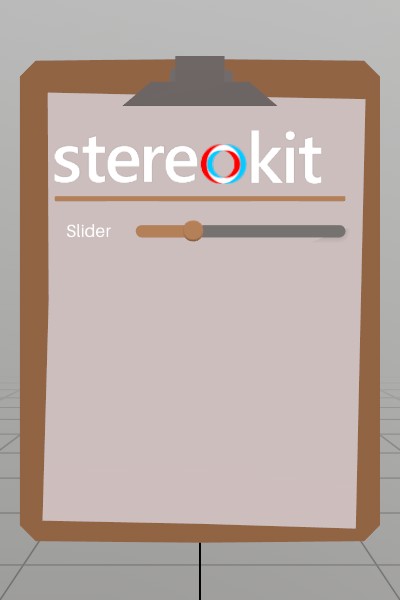
```csharp
Model clipboard = Model .FromFile("Clipboard.glb");
Sprite logoSprite = Sprite.FromFile("StereoKitWide.png");
void CustomWindow(ref Pose windowPose, ref float slider)
{
UI.HandleBegin("Clip", ref windowPose, clipboard.Bounds);
// Handle also does not specify the valid layout area for the UI,
// so we do this explicitly here. In this case, I know in advace
// that the clipboard GLTF file has a usable surface that's about
// 26x30cm.
UI.LayoutArea(V.XY0(.13f, .15f), new Vec2(.26f, .3f));
// Since the Handle does not draw anything, we must draw our own
// visual! We can draw this at Identity because HandleBegin
// pushes its pose onto the transform hierarchy. This is _not_ a
// UI element, it's just a regular Model asset and does not use
// any of the UI's layout tools.
clipboard.Draw(Matrix.Identity);
UI.Image(logoSprite, V.XY(.22f, 0));
UI.HSeparator();
UI.Label("Slider");
UI.SameLine();
UI.HSlider("slideId", ref slider, 0, 1);
UI.HandleEnd();
}
```
As you can see, it looks basically like a Window with the Begin/End
pattern, but with the extra `LayoutArea` and custom visual. You can
find another more complex example of using GLTFs for UI with a radio
model [over in the demos](https://github.com/StereoKit/StereoKit/blob/master/Examples/StereoKitTest/Demos/DemoNodes.cs).
There's also a few new UI elements here! A `UI.Image` to decorate the
interface a bit, a `UI.HSeparator` to visually separate or group
elements, a `UI.Label` to put a small bit of text on the UI (see
UI.Text for longer pieces of text!), `UI.SameLine` to manipulate the
layout and put the next UI element on the same 'line', and then
`UI.HSlider`, a nice tool for changing `float` values.
You can check out the [Tearsheet Demo](https://github.com/StereoKit/StereoKit/blob/master/Examples/StereoKitTest/Demos/DemoUITearsheet.cs)
to see the vast majority of UI elements in use, or check the [UI class docs](https://stereokit.net/preview/Pages/StereoKit/UI.html)
for a complete list of UI related elements.
## UI Layout
So far, our UI layout has been pretty simplistic! Each UI element has
for the most part determined its own size, and then advanced to the
next layout line for the next element. All StereoKit UI functions have
a number of variants to them, typically one that auto-layouts as much
as possible, one that accepts an explicit size, and one that completely
bypasses StereoKit's layout system. The ones that bypass SK's layout
system are named differently, `UI.ButtonAt`, `UI.HSliderAt`, etc.,
rather than just being overloads.
> `UI.___At` functions are useful when designing custom elements,
> element groups, or your own layout system, but are not often used at
> top level.
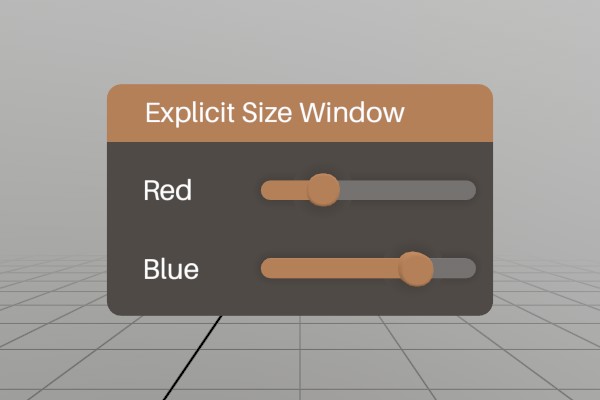
Here's how explicitly sized UI elements work.
```csharp
void ExplicitSizeWindow(ref Pose windowPose,
ref float slider1,
ref float slider2)
{
UI.WindowBegin("Explicit Size Window",
ref windowPose,
new Vec2(.2f, 0));
// Explicit sizes on labels can be really useful for forcing the
// text into visual columns, rather than ragged edges of auto
// sized text.
UI.Label("Red", new Vec2(.06f, 0));
UI.SameLine();
UI.HSlider("slideId1", ref slider1, 0, 1);
UI.Label("Blue", new Vec2(.06f, 0));
UI.SameLine();
UI.HSlider("slideId2", ref slider2, 0, 1);
UI.WindowEnd();
}
```
> When a size of 0 is provided for either axis, StereoKit will
> auto-size that dimension. For a Window, it will grow in that
> direction. For UI elements, they will generally take all remaining
> space for the X axis, and use UI.LineHeight for the vertical axis.
You can also add extra space between elements, or reserve empty chunks
of layout space. Reserving space is a common trick for when you need to
draw something custom on the UI, but it can also be empty!
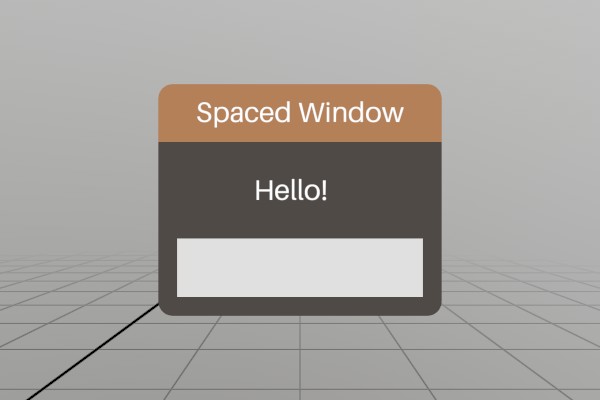
```csharp
void SpaceWindow(ref Pose windowPose)
{
UI.WindowBegin("Spaced Window", ref windowPose);
// Add horizontal space in front of the label equal to the height
// of one standard UI line.
UI.HSpace(UI.LineHeight);
UI.Label("Hello!");
// Reserve a full UI line, and draw a cube there using non-UI
// drawing functions.
Bounds layout = UI.LayoutReserve(Vec2.Zero, false, 0.001f);
Mesh.Cube.Draw(Material.Default,
Matrix.TS(layout.center, layout.dimensions));
UI.WindowEnd();
}
```
## Layout Cuts and Hierarchy
StereoKit also has a hierarchical layout area system, so you can always
push and pop Layout areas onto the Layout stack, and fill them with
elements. This can be arbitrary rectangles within the current Surface,
rectangles reserved on the current Layout via `UI.LayoutReserve`, or
areas "cut" from the current Layout with `UI.LayoutPushCut`.
> See `UI.Push/PopSurface` to create new UI Surfaces with different
> origins and orientations. `UI.WindowBegin/End` internally calls
> `UI.Push/PopSurface` with the Window's Pose, but you can do the same
> at any point as well!
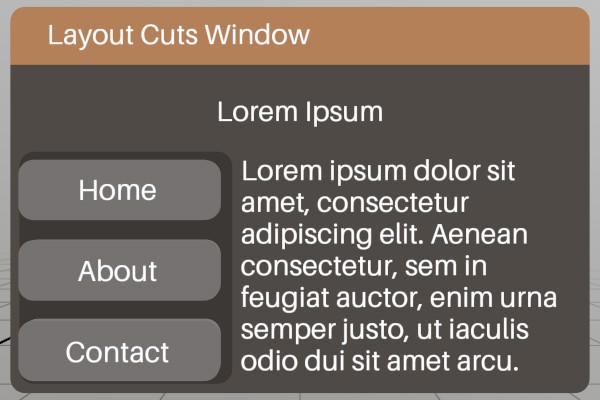
```csharp
void LayoutCutsWindow(ref Pose windowPose)
{
UI.WindowBegin("Layout Cuts Window",
ref windowPose,
new Vec2(0.3f, 0));
UI.LayoutPushCut(UICut.Top, UI.LineHeight);
// Center some text in this "Cut". We can do this by filling the
// current layout by specifying a size of UI.LayoutRemaining, and
// then setting the text to align to the center of its element
// region.
UI.Text("Lorem Ipsum",
Align .Center,
TextFit.None,
UI .LayoutRemaining);
UI.LayoutPop();
UI.LayoutPushCut(UICut.Left, 0.1f);
// We can use a non-layout "At" panel element to add a decorative
// background to this entire layout area, without affecting the
// layout of the elements in it.
UI.PanelAt(UI.LayoutAt, UI.LayoutRemaining);
// Explicit size these buttons to ensure they all take the same
// width, instead of sizing to fit their text.
UI.Button("Home", V.XY(0.1f, 0));
UI.Button("About", V.XY(0.1f, 0));
UI.Button("Contact", V.XY(0.1f, 0));
UI.LayoutPop();
// Fill the remaining uncut area with text.
UI.Text("Lorem ipsum dolor sit amet, consectetur adipiscing " +
"elit. Aenean consectetur, sem in feugiat auctor, enim "+
"urna semper justo, ut iaculis odio dui sit amet arcu.");
UI.WindowEnd();
}
```
## An Important Note About IDs
StereoKit does store a small amount of information about the UI's state
behind the scenes, like which elements are active and for how long.
This internal data is attached to the UI elements via a combination of
their own ids, and the parent `Window`/`Handle`'s id!
This means you should be careful to NOT re-use ids within a
`Window`/`Handle`, otherwise you may find ghost interactions with
elements that share the same ids. If you need to have elements with the
same id, or if perhaps you don't know in advance that all your
elements will certainly be unique, `UI.PushId` and `UI.PopId` can be
used to mitigate the issue by using the same hierarchy id mixing that
the Windows use to prevent collisions with the same ids in other
`Windows`/`Handles`.
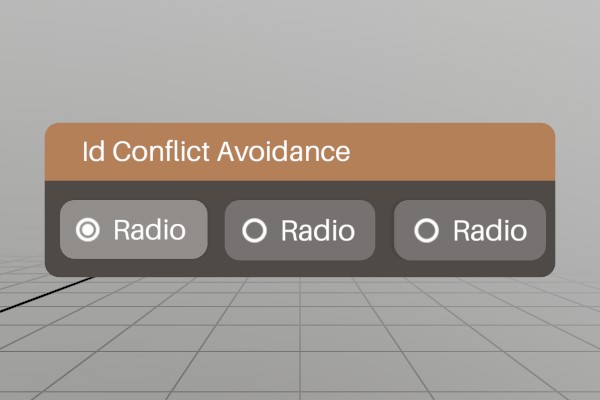
Here's a set of `Radio` options, but all of them have the same name/id!
Pushing a unique id onto the id stack prevents the `Radio` ids from
conflicting!
```csharp
void IdWindow(ref Pose windowPose, ref int option)
{
UI.WindowBegin("Id Conflict Avoidance", ref windowPose);
UI.PushId(1);
if (UI.Radio("Radio", option == 1)) option = 1;
UI.PopId();
UI.SameLine();
UI.PushId(2);
if (UI.Radio("Radio", option == 2)) option = 2;
UI.PopId();
UI.SameLine();
UI.PushId(3);
if (UI.Radio("Radio", option == 3)) option = 3;
UI.PopId();
UI.WindowEnd();
}
```
## What's Next?
And there you go! That's how UI works in StereoKit, pretty reasonable,
huh? For further reference, and more UI methods, checkout the [UI class documentation](https://stereokit.net/preview/Pages/Reference/UI.html).
If you'd like to see the complete code for this sample,
[check it out on Github](https://github.com/StereoKit/StereoKit/blob/master/Examples/StereoKitTest/Guides/GuideUI.cs)!
## Using Hands
# Using Hands
StereoKit uses a hands first approach to user input! Even when hand-sensors
aren't available, hand data is simulated instead using existing devices!
For example, Windows Mixed Reality controllers will blend between pre-recorded
hand poses based on button presses, as will mice. This way, fully articulated
hand data is always present for you to work with!
## Accessing Joints
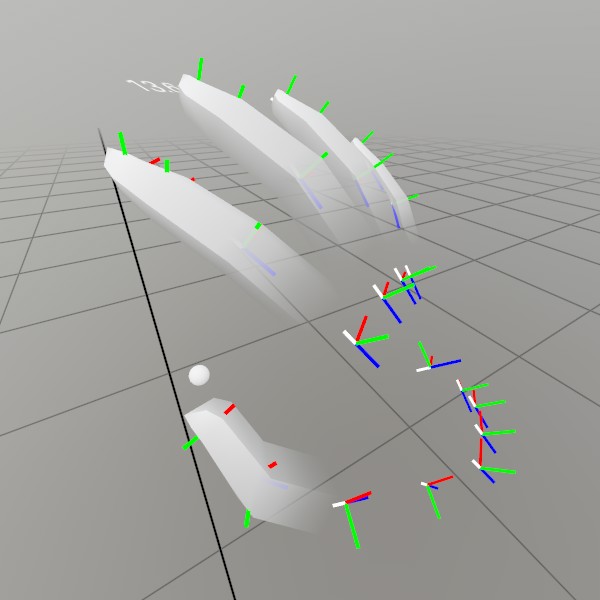
Since hands are so central to interaction, accessing hand information needs
to be really easy to get! So here's how you might find the fingertip of the right
hand! If you ignore IsTracked, this'll give you the last known position for that
finger joint.
```csharp
Hand hand = Input.Hand(Handed.Right);
if (hand.IsTracked)
{
Vec3 fingertip = hand[FingerId.Index, JointId.Tip].position;
}
```
Pretty straightforward! And if you prefer calling a function instead of using the
[] operator, that's cool too! You can call `hand.Get(FingerId.Index, JointId.Tip)`
instead!
If that's too granular for you, there's easy ways to check for pinching and
gripping! Pinched will tell you if a pinch is currently happening, JustPinched
will tell you if it just started being pinched this frame, and JustUnpinched will
tell you if the pinch just stopped this frame!
```csharp
if (hand.IsPinched) { }
if (hand.IsJustPinched) { }
if (hand.IsJustUnpinched) { }
if (hand.IsGripped) { }
if (hand.IsJustGripped) { }
if (hand.IsJustUngripped) { }
```
These are all convenience functions wrapping the `hand.pinchState` bit-flag, so you
can also use that directly if you want to do some bit-flag wizardry!
## Hand Menu
Lets imagine you want to make a hand menu, you might need to know
if the user is looking at the palm of their hand! Here's a quick
example of using the palm's pose and the dot product to determine
this.
```csharp
static bool HandFacingHead(Handed handed)
{
Hand hand = Input.Hand(handed);
if (!hand.IsTracked)
return false;
Vec3 palmDirection = (hand.palm.Forward).Normalized;
Vec3 directionToHead = (Input.Head.position - hand.palm.position).Normalized;
return Vec3.Dot(palmDirection, directionToHead) > 0.5f;
}
```
Once you have that information, it's simply a matter of placing a
window off to the side of the hand! The palm pose Right direction
points to different sides of each hand, so a different X offset
is required for each hand.
```csharp
public static void DrawHandMenu(Handed handed)
{
if (!HandFacingHead(handed))
return;
// Decide the size and offset of the menu
Vec2 size = new Vec2(4, 16);
float offset = handed == Handed.Left ? -2-size.x : 2+size.x;
// Position the menu relative to the side of the hand
Hand hand = Input.Hand(handed);
Vec3 at = hand[FingerId.Little, JointId.KnuckleMajor].position;
Vec3 down = hand[FingerId.Little, JointId.Root ].position;
Vec3 across = hand[FingerId.Index, JointId.KnuckleMajor].position;
Pose menuPose = new Pose(
at,
Quat.LookAt(at, across, at-down) * Quat.FromAngles(0, handed == Handed.Left ? 90 : -90, 0));
menuPose.position += menuPose.Right * offset * U.cm;
menuPose.position += menuPose.Up * (size.y/2) * U.cm;
// And make a menu!
UI.WindowBegin("HandMenu", ref menuPose, size * U.cm, UIWin.Empty);
UI.Button("Test");
UI.Button("That");
UI.Button("Hand");
UI.WindowEnd();
}
```
## Pointers
And lastly, StereoKit also has a pointer system! This applies to
more than just hands. Head, mouse, and other devices will also
create pointers into the scene. You can filter pointers based on
source family and device capabilities, so this is a great way to
abstract a few more input sources nicely!
```csharp
public static void DrawPointers()
{
int hands = Input.PointerCount(InputSource.Hand);
for (int i = 0; i < hands; i++)
{
Pointer pointer = Input.Pointer(i, InputSource.Hand);
Lines.Add (pointer.ray, 0.5f, Color.White, Units.mm2m);
Lines.AddAxis(pointer.Pose);
}
}
```
The code in context for this document can be found [on Github here](https://github.com/StereoKit/StereoKit/blob/master/Examples/StereoKitTest/Demos/DemoHands.cs)!
## Using The Simulator
# Using the Simulator
As a developer, you can't realistically spend all of your development in
a headset just yet. So, a decent grasp over StereoKit's fallback
flatscreen MR simulator is particularly helpful! This is basically a 2D
window that allows you to move around and interact, without requiring an
OpenXR runtime or headset.
## Simulator Controls
When you start the simulator, you'll find that your mouse controls the
right hand by default. This is a complete simulation of an articulated
hand, so you'll have access to all the joints the same way you would a
real tracked hand. The hand becomes tracked when the mouse enters the
window, and untracked when leaving the window. The pointer ray, which is
normally a shoulder->hand ray, will be along the mouse ray instead.
### Mouse Controls:
- Left Mouse - Hand animates to a Pinch gesture.
- Right Mouse - Hand animates to a Grip gesture.
- Left + Right - Hand animates to a closed fist.
- Scroll Wheel - Moves the hand toward or away from the user.
- Shift + Right - Mouse-look / rotate the head.
- Left Alt - [Eye tracking](https://stereokit.net/preview/Pages/Reference/Input/Eyes.html) will point along the ray indicated by the mouse.
- Ctrl + Shift - Switch between controlling left hand, right hand, or no hand.
To move around in space, you'll find controls that should be familiar to
those that play first-person games! Hold Left Shift to enable this.
### Keyboard Controls:
- Shift+W - Move forward.
- Shift+A - Move left.
- Shift+S - Move backwards.
- Shift+D - Move right.
- Shift+Q - Move down.
- Shift+E - Move up.
## Simulator API
There's a few bits of functionality that let you set up the simulator, or
some features that may assist you in debugging or testing! Here's a
couple you may want to know about:
### Simulator Enable/Disable
By default, StereoKit will fall back to the flatscreen simulator if
OpenXR fails to initialize for any reason (like, headset not plugged in,
or OpenXR not present). You can modify this behavior at initialization
time when defining your SKSettings for SK.Init.
```csharp
SKSettings settings = new SKSettings {
appName = "Flatscreen Simulator",
assetsFolder = "Assets",
// This tells StereoKit to always start in a 2D simulator
// window, instead of an immersive MR environment.
mode = AppMode.Simulator,
// Setting this to true will prevent StereoKit from creating the
// fallback simulator when OpenXR fails to initialize. This is
// important when shipping a final application to users.
noFlatscreenFallback = true,
};
```
### Overriding Hands
A number of functions are present that can make unit test and
complex input simulation possible. For a full example of this,
the [DebugToolWindow](https://github.com/StereoKit/StereoKit/blob/master/Examples/StereoKitTest/DebugToolWindow.cs)
in the Test project has a number of sample utilities for
recording and playing back input.
Overriding the hands is one important element that you may want
to do! [`Input.HandOverride`](https://stereokit.net/preview/Pages/Reference/Input/HandOverride.html)
will set the hand input to a very specific pose, and hold that
pose until you call `Input.HandOverride` again with a new pose,
or call [`Input.HandClearOverride`](https://stereokit.net/preview/Pages/Reference/Input/HandClearOverride.html)
to restore control back to the user.
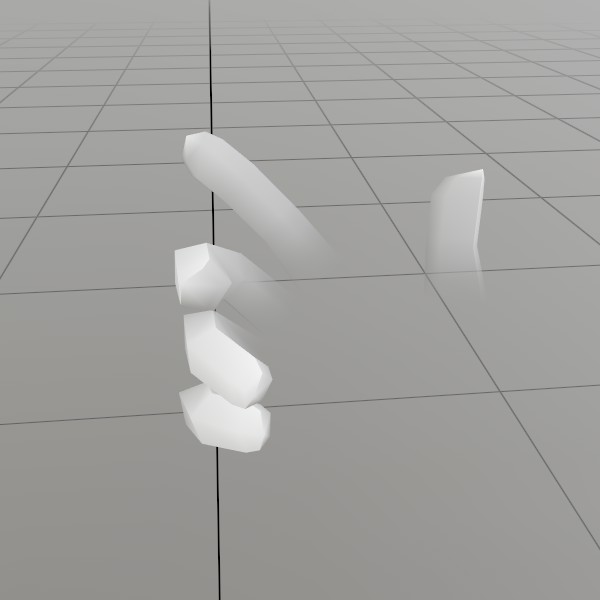
_This screenshot is generated fresh every StereoKit release using Input.HandOverride, to ensure consistency!_
```csharp
// These 25 joints were printed using code from a session with a real
// hand.
HandJoint[] joints = new HandJoint[] { new HandJoint(new Vec3(0.132f, -0.221f, -0.168f), new Quat(-0.445f, -0.392f, 0.653f, -0.472f), 0.021f), new HandJoint(new Vec3(0.132f, -0.221f, -0.168f), new Quat(-0.445f, -0.392f, 0.653f, -0.472f), 0.021f), new HandJoint(new Vec3(0.141f, -0.181f, -0.181f), new Quat(-0.342f, -0.449f, 0.618f, -0.548f), 0.014f), new HandJoint(new Vec3(0.139f, -0.151f, -0.193f), new Quat(-0.409f, -0.437f, 0.626f, -0.499f), 0.010f), new HandJoint(new Vec3(0.141f, -0.133f, -0.198f), new Quat(-0.409f, -0.437f, 0.626f, -0.499f), 0.010f), new HandJoint(new Vec3(0.124f, -0.229f, -0.172f), new Quat(0.135f, -0.428f, 0.885f, -0.125f), 0.024f), new HandJoint(new Vec3(0.103f, -0.184f, -0.209f), new Quat(0.176f, -0.530f, 0.774f, -0.299f), 0.013f), new HandJoint(new Vec3(0.078f, -0.153f, -0.225f), new Quat(0.173f, -0.645f, 0.658f, -0.349f), 0.010f), new HandJoint(new Vec3(0.061f, -0.135f, -0.228f), new Quat(-0.277f, 0.674f, -0.623f, 0.283f), 0.010f), new HandJoint(new Vec3(0.050f, -0.125f, -0.227f), new Quat(-0.277f, 0.674f, -0.623f, 0.283f), 0.010f), new HandJoint(new Vec3(0.119f, -0.235f, -0.172f), new Quat(0.147f, -0.399f, 0.847f, -0.318f), 0.024f), new HandJoint(new Vec3(0.088f, -0.200f, -0.211f), new Quat(0.282f, -0.603f, 0.697f, -0.268f), 0.012f), new HandJoint(new Vec3(0.056f, -0.169f, -0.216f), new Quat(-0.370f, 0.871f, -0.308f, 0.099f), 0.010f), new HandJoint(new Vec3(0.045f, -0.156f, -0.195f), new Quat(-0.463f, 0.884f, -0.022f, -0.066f), 0.010f), new HandJoint(new Vec3(0.047f, -0.155f, -0.178f), new Quat(-0.463f, 0.884f, -0.022f, -0.066f), 0.010f), new HandJoint(new Vec3(0.111f, -0.244f, -0.173f), new Quat(0.182f, -0.436f, 0.778f, -0.414f), 0.022f), new HandJoint(new Vec3(0.074f, -0.213f, -0.205f), new Quat(-0.353f, 0.622f, -0.656f, 0.244f), 0.011f), new HandJoint(new Vec3(0.046f, -0.189f, -0.204f), new Quat(-0.436f, 0.891f, -0.073f, -0.108f), 0.010f), new HandJoint(new Vec3(0.048f, -0.184f, -0.182f), new Quat(-0.451f, 0.811f, 0.264f, -0.263f), 0.010f), new HandJoint(new Vec3(0.061f, -0.188f, -0.168f), new Quat(-0.451f, 0.811f, 0.264f, -0.263f), 0.010f), new HandJoint(new Vec3(0.105f, -0.250f, -0.170f), new Quat(0.219f, -0.470f, 0.678f, -0.521f), 0.020f), new HandJoint(new Vec3(0.062f, -0.228f, -0.196f), new Quat(-0.444f, 0.610f, -0.623f, 0.206f), 0.010f), new HandJoint(new Vec3(0.044f, -0.215f, -0.192f), new Quat(-0.501f, 0.841f, -0.094f, -0.183f), 0.010f), new HandJoint(new Vec3(0.048f, -0.209f, -0.176f), new Quat(-0.521f, 0.682f, 0.251f, -0.448f), 0.010f), new HandJoint(new Vec3(0.061f, -0.207f, -0.168f), new Quat(-0.521f, 0.682f, 0.251f, -0.448f), 0.010f), new HandJoint(new Vec3(0.098f, -0.222f, -0.191f), new Quat(0.308f, -0.906f, 0.288f, -0.042f), 0.000f), new HandJoint(new Vec3(0.131f, -0.251f, -0.164f), new Quat(0.188f, -0.436f, 0.844f, -0.248f), 0.000f) };
Input.HandOverride(Handed.Right, joints);
```
## Drawing
# Drawing content with StereoKit
Generally, the first thing you want to do is get content on-screen! Or
in-visor? However it's said, in this guide we're going to explore the
various ways to display some holograms!
At its core, drawing things in 3D is done through a combination of
[`Mesh`](https://stereokit.net/preview/Pages/Reference/Mesh.html)es and
[`Material`](https://stereokit.net/preview/Pages/Reference/Material.html)s. A Mesh
is a collection of triangles in 3D space that describe where the
surface of that 3D object is. And a Material is then a collection
of parameters, [`Tex`](https://stereokit.net/preview/Pages/Reference/Tex.html)tures
(2d images), and Shader code that are combined to describe the
visual properties of the Mesh's surface!
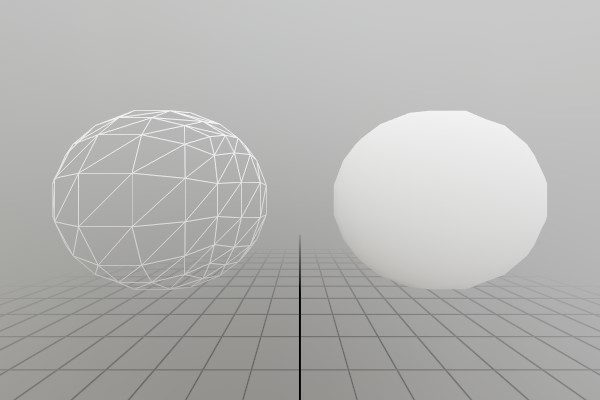
_Meshes are made from triangles!_
And in addition to that, you'll need to know a little bit about
matrices, which are a math construct used to describe the location,
orientation and scale of geometry within the 3D space! A [`Matrix`](https://stereokit.net/preview/Pages/Reference/Matrix.html)
isn't difficult the way we're using it, so don't worry if math
isn't your thing.
And then StereoKit also has a [`Model`](https://stereokit.net/preview/Pages/Reference/Model.html),
which is a high level combination of Meshes, Material, Matrices,
and a few more things! Most of the time, you'll probably be drawing
Models loaded from file, but it's important to have options.
Then lastly, StereoKit has easy systems for drawing [`Line`](https://stereokit.net/preview/Pages/Reference/Lines.html)s,
[`Text`](https://stereokit.net/preview/Pages/Reference/Text.html), [`Sprite`](https://stereokit.net/preview/Pages/Reference/Sprite.html)s
and various other things! These are still based on Meshes and
Materials under the hood, but have some complex features that can
make them difficult to build from scratch.
## Meshes and Materials
To simplify things here, we're going to use the built-in assets,
[`Mesh.Sphere`](https://stereokit.net/preview/Pages/Reference/Mesh/Sphere.html)
and [`Material.Default`](https://stereokit.net/preview/Pages/Reference/Material/Default.html).
Mesh.Sphere is a built-in mesh generated using math when StereoKit
starts up, and Material.Default is a high performance simple
Material that serves as StereoKit's default Material. (For more
built-in assets, see the [`Default`](https://stereokit.net/preview/Pages/Reference/Default.html)s)
```csharp
Mesh.Sphere.Draw(Material.Default, Matrix.Identity);
```
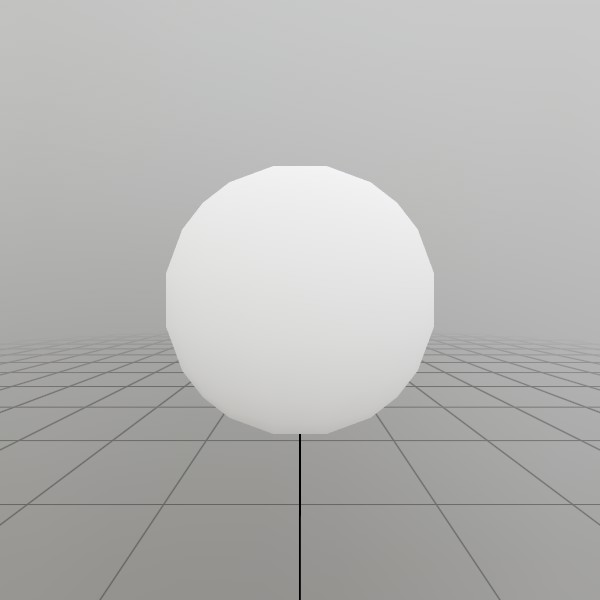
_Drawing the default sphere Mesh with the default Material._
[`Matrix.Identity`](https://stereokit.net/preview/Pages/Reference/Matrix/Identity.html)
can be though of as a 'No transform' Matrix, so this is drawing the
sphere at the origin of the 3D space.
That's pretty straightforward! StereoKit will get this Mesh/Material
pair onto the screen this frame. Remember that StereoKit is
generally an immediate mode API, so this won't show up for more
than the current frame. If you want it to draw every frame, you'll
have to call Draw every frame!
So how do you get a Mesh to begin with? In most cases you'll just
be working with Models, but you can get a Mesh directly from a few
places:
- [`Mesh.Sphere`](https://stereokit.net/preview/Pages/Reference/Mesh/Sphere.html), [`Mesh.Cube`](https://stereokit.net/preview/Pages/Reference/Mesh/Cube.html), and [`Mesh.Quad`](https://stereokit.net/preview/Pages/Reference/Mesh/Quad.html) are built-in mesh assets that are handy to have around.
- [`Mesh`](https://stereokit.net/preview/Pages/Reference/Mesh.html) has a number of static methods for generating procedural shapes, such as [`Mesh.GenerateRoundedCube`](https://stereokit.net/preview/Pages/Reference/Mesh/GenerateRoundedCube.html) or [`Mesh.GeneratePlane`](https://stereokit.net/preview/Pages/Reference/Mesh/GeneratePlane.html).
- A Mesh can be extracted from one of a [Model's nodes](https://stereokit.net/preview/Pages/Reference/ModelNode/Mesh.html).
- You can create a Mesh from a list of vertices and indices. This is more advanced, but [check the sample here](https://stereokit.net/preview/Pages/Reference/Mesh/SetVerts.html).
And where do you get a Material? Well,
- See built-in Materials like [`Material.PBR`](https://stereokit.net/preview/Pages/Reference/Default/MaterialPBR.html) for high-quality surface or [`Material.Unlit`](https://stereokit.net/preview/Pages/Reference/Default/MaterialUnlit.html) for fast/stylistic surfaces.
- A Material [constructor](https://stereokit.net/preview/Pages/Reference/Material/Material.html) can be called with a Shader. Check out [the Material guide](https://stereokit.net/preview/Pages/Guides/Working-with-Materials.html) for in-depth usage (Materials and Shaders are a lot of fun!).
- You can call [`Material.Copy`](https://stereokit.net/preview/Pages/Reference/Material/Copy.html) to create a duplicate of an existing Material.
## Matrix basics
If you like math, this explanation is not really for you! But if
you like results, this will get you going where you need to go. The
important thing to know about a [`Matrix`](https://stereokit.net/preview/Pages/Reference/Matrix.html),
is that it's a good way to represent an object's transform (Translation,
Rotation, and Scale).
StereoKit provides a number of Matrix creation methods that allow
you to easily create Translation/Rotation/Scale matrices.
```csharp
// The identity matrix is the matrix equivalent of '1'. You can also
// think of it as a 'no-transform' matrix.
Matrix transform = Matrix.Identity;
// Translates points 1 meter up the Y axis
transform = Matrix.T(0, 1, 0);
// Scales a point by (2,2,2), rotates it 180 on the X axis, and
// then translates it up 1 meter up the Y axis.
transform = Matrix.TRS(
new Vec3(0,1,0),
Quat.FromAngles(180, 0, 0),
new Vec3(2,2,2));
// To draw a cube at (0,-10,0) that's rotated 45 degrees around its Y
// axis:
Mesh.Cube.Draw(Material.Default, Matrix.TR(0,-10,0, Quat.FromAngles(0,45,0)));
```
The TRS methods have a lot of permutations that can help make your
matrix creation code a bit shorter. Like, if you don't need to add
scale to your TRS matrix, there's the TR variant! No rotation? Try
TS! Etc. etc.
Now. Even _more_ interesting, is that many Matrices can be combined
into a single Matrix representing multiple transforms! This is done
via multiplication, and an important note here is that matrix
multiplication is not commutative, that is: `A*B != B*A`, so the
order in which you combine your matrices is important.
This can let you do things like, rotate around a pivot point, or
build a hierarchy of transforms! A parent/child position hierarchy
can be described pretty easily this way:
```csharp
Matrix parentTransform = Matrix.TR(10, 0, 0, Quat.FromAngles(0, 45, 0));
Matrix childTransform = Matrix.TS( 1, 1, 0, 0.2f);
Mesh.Cube.Draw(Material.Default, parentTransform);
Mesh.Cube.Draw(Material.Default, childTransform * parentTransform);
```
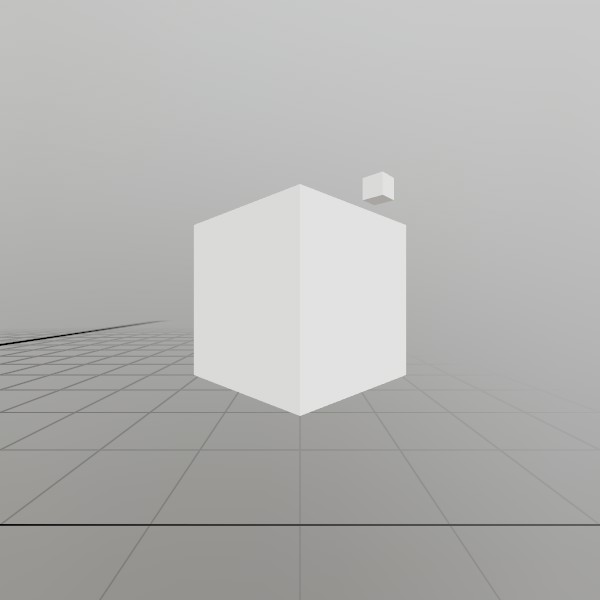
_The smaller `childTransform` is relative to `parentTransform` via multiplication._
## Models
The easiest way to draw complex content is through a Model! A Model
is basically a small scene of Mesh/Material pairs at positions with
hierarchical relationships to each other. If you're creating art in
a 3D modeling tool such as Blender, then this is basically a full
representation of the scene you've created there.
Just put your 3D model in the project's Assets folder, then load it
like this _once_ during initialization!
```csharp
Model model = Model.FromFile("DamagedHelmet.gltf");
```
And since a model already has all its information within it, all
you need to do is provide it with a location!
```csharp
model.Draw(Matrix.T(10, 10, 0));
```
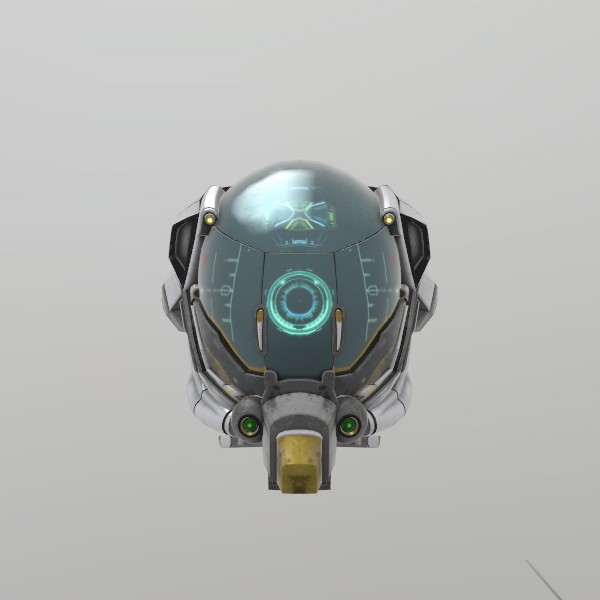
_StereoKit's main format is the .gltf file._
So... that was also pretty simple! The only real trick with Models
is getting one in the first place, but even that's not too hard.
There's a lot you can do with a Model beyond just drawing it, so
for more details on that, check out [the 3D Asset guide](https://stereokit.net/preview/Guides/Working-with-3D-Assets.html)!
But here's the quick list of where you can get a Model to begin
with:
- [`Model.FromFile`](https://stereokit.net/preview/Pages/Reference/Model/FromFile.html) is the easiest, most common way to get a Model!
- [`Model.FromMesh`](https://stereokit.net/preview/Pages/Reference/Model/FromMesh.html) will let you create a very simple Model with a single function call.
- The [Model constructor](https://stereokit.net/preview/Pages/Reference/Model/Model.html) lets you create an empty Model, which you can then fill with ModelNodes via [`Model.AddNode`](https://stereokit.net/preview/Pages/Reference/Model/AddNode.html)
- You can call [`Model.Copy`](https://stereokit.net/preview/Pages/Reference/Model/Copy.html) to create a duplicate of an existing Model.
## Lines
Being able to easily draw a line is incredibly useful for
debugging, and generally quite practical for many other purposes as
well! StereoKit has the [`Lines`](https://stereokit.net/preview/Pages/Reference/Lines.html)
class to assist with this, and is pretty straightforward to use.
There's a few variations, but at it's simplest, it's a few points,
a color, and a thickness.
```csharp
Lines.Add(
new Vec3(2, 2, 0),
new Vec3(3, 2.5f, 0),
Color.Black, 1*U.cm);
```
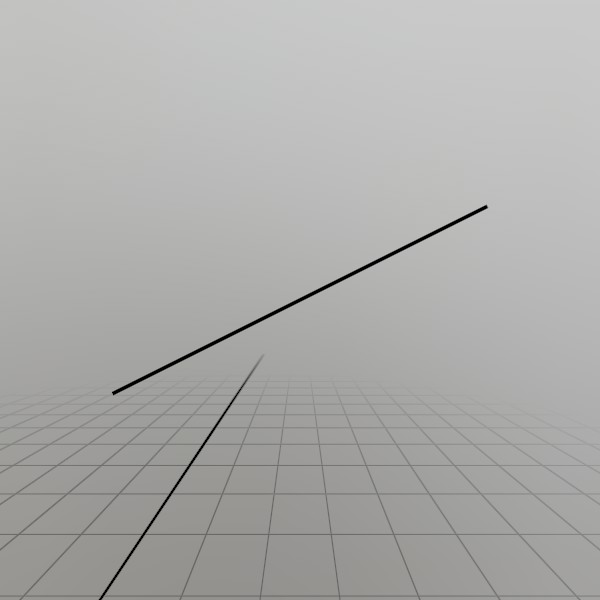
_You can also draw Rays, Poses, and multicolored lists of lines!_
## Text
Text is drawn with a collection of rectangular quads, each mapped
to a character glyph on a texture. StereoKit supports rendering any
Unicode glyphs you throw at it, as long as the active Font has
that glyph defined in it! This means you can work with all sorts of
different languages right away, without any baking or preparation.
To draw text with the default Font, you can do this!
```csharp
Text.Add("こんにちは", Matrix.T(-10, 10,0));
```

_'Hello' in Japanese, I'm pretty sure._
You can create additional font styles and fonts to use with text
drawing, and there are a number of overloads for [`Text.Add`](https://stereokit.net/preview/Pages/Reference/Text/Add.html)
that allow you to change the layout or constrain to a particular
area. Check the docs for the method for more information about that!
## Sprites
Drawing an image can be done in a few ways, the simplest being with
the [`Sprite`](https://stereokit.net/preview/Pages/StereoKit/Sprite.html) class!
Much like a `Model`, you can load a `Sprite` at initialization from
a file! StereoKit supports most common image formats, and if you're
looking to eke out some extra performance in your app, KTX2 images
include some extra features that can reduce load times and GPU
memory usage.
```csharp
Sprite sprite = Sprite.FromFile("StereoKitWide.png");
```
Drawing is then the same as with a `Model`, but with some extra
options for placement, and automatic handling of the image's aspect
ratio. Here we're placing the _center_ of the image at (0, 10, 0),
but we could just as easily place the _top left_ of the image at
that position instead! The scale here is also equivalent to the
size of the image's vertical axis, so this `Sprite` will be 0.5
meters tall.
```csharp
sprite.Draw(Matrix.TS(0, 10, 0, 0.5f), Pivot.Center);
```

If you already have a `Tex` with your image loaded, you can pretty
easily create a `Sprite` from it. One catch is that most of the
time with `Sprite`s, you _want_ the image to `Clamp` at the edges,
otherwise you may encounter a bit of bleed when the default `Wrap`
behavior wraps around the edges.
```csharp
// Creating a sprite from a Tex
Tex logo = Tex.FromFile("StereoKitWide.png");
tex.AddressMode = TexAddress.Clamp;
Sprite sprite = Sprite.FromTex(logo);
```
If you want to draw your image with a custom `Shader` or `Material`
options, you'll want to bypass the `Sprite` class and draw the
`Tex` manually! For this, we'll want to set up our `Material` in a
way that mimics the `Sprite`'s behavior. Notably, it should support
transparency, and not cull backfaces to make it visible from
behind.
```csharp
// In initialization, create a Material like this:
Tex logo = Tex.FromFile("StereoKitWide.png");
tex.AddressMode = TexAddress.Clamp;
Material spriteMaterial = Material.Unlit.Copy();
spriteMaterial.Transparency = Transparency.Blend;
spriteMaterial.FaceCull = Cull.None;
spriteMaterial[MatParamName.DiffuseTex] = logo;
```
And then `Draw` it on a `Mesh.Quad`, manually accounting for the
image's aspect ratio!
```csharp
float aspect = logo.Width / (float)logo.Height;
Vec3 scale = V.XYZ(aspect,1,1) * 0.5f;
Mesh.Quad.Draw(spriteMaterial, Matrix.TS(-30, 10, 0, scale));
```
## Cool!
So that's the highlights! There's plenty more to draw and more
tricks to be learned, but this is a great start! There's treasures
in the documentation, so hunt around in there for more samples. You
may also be interested in the [Materials guide](https://stereokit.net/preview/Pages/Guides/Working-with-Materials.html)
for advanced rendering code, or the [Model guide](https://github.com/StereoKit/StereoKit/blob/master/Examples/StereoKitTest/Demos/DemoNodes.cs)
(coming soon), for managing your visible content!
If you'd like to see all the code for this document,
[check it out here!](https://github.com/StereoKit/StereoKit/blob/master/Examples/StereoKitTest/Guides/GuideDrawing.cs)
## Working with 3D Assets
# Working with 3D Assets
StereoKit's core 3D asset format is the GLTF! While there is still support
for other formats, like STL, OBJ and PLY, GLTF is StereoKit's preferred
format of choice. It has a well defined modern specification, and a large
collection of quality tooling available in the ecosystem.
> GLB is still just the "binary" format of GLTF, typically with all related
> textures bundled inside it.
I've found [Blender](https://www.blender.org/) to have a very nice GLTF
exporter! So if your tool of choice doesn't support GLTF yet, exporting to
Blender for a final pass can be a good approach! However, most tools will at
least have a plugin for GLTF export.
Most 3D asset creation tools have material systems more geared towards
cinematic rendering, rather than realtime rendering, so it can be important
to understand how materials are exported in GLTF format [(via Blender)](https://docs.blender.org/manual/en/2.80/addons/io_scene_gltf2.html#exported-materials),
as well as how StereoKit interprets them.
## Materials
StereoKit's rules for interpreting GLTF materials are mostly
straightforward!
If the GLTF material is PBR (the normal case), StereoKit will use a PBR
shader. It uses the metallic roughness definition of PBR, and does not
currently support the specular/glossiness GLTF extension.
If the GLTF material is Unlit (In Blender, this is a material using a
Background or Emission surface) StereoKit will use an Unlit shader.
If the GLTF material has alpha mask on, StereoKit will use a "clip" variant
of the PBR or Unlit shaders that discards transparent pixels.
> It's good to note that GLTF supports vertex color data, and almost all
> StereoKit default shaders support vertex coloring! Vertex colors don't
> often show in 3D asset tools out-of-the-box, but this can be a nice way to
> add cheap baked lighting to Unlit materials, or add color variation to
> looping textures, or other creative uses!
### Lightmaps
StereoKit also supports a Ligtmapped material from GLTF files! This is a
somewhat non-standard setup not found in the original spec, but is a _very_
useful one for performant applications. It is not unusual to find bad GLTFs
where lighting data is baked down into the diffuse texture, expanding a
"looped" texture into something much much larger. This consumes much more
RAM than preserving the original looped texture and combining it with a
separate lightmap texture!
Instead, if StereoKit encounters a material that has:
- An emissive texture (the base color, like an Unlit material)
- An occlusion texture using the second UV channel (the lightmap)
- No texture for PBR base color
- No texture for PBR metal/roughness
This will trigger StereoKit to switch to a high-performance Unlit + Lightmap
shader.
## Best Practices
### Optimize with GLTFPack
StereoKit supports all the GLTF extensions required for [GLTFPack](https://github.com/zeux/meshoptimizer/blob/master/gltf/README.md)
to work properly! Mesh compression, KTX textures, quantization and transform
all work. If you can optimize your GLTF files in advance with a tool like
this, you can get 50-80% smaller files (even on GPU!), much faster load
times, and improved render performance!
```
gltfpack.exe -cc -tc -i modelName.glb -o modelName.opt.glb
```
This is effective with just about any model, but especially for
photogrammetry-like assets this type of optimization is absolutely critical!
### Backface Culling
GLTF supports a setting for enabling or disabling backface culling, an
important optimization that will skip rendering triangles that face away
from the viewer. Having backface culling ON can improve performance
significantly, and in most normal cases, is completely unnoticeable! For
whatever reason, many 3D tools seem to disable backface culling by default,
and this mistake is very common to find in many GLTF files!
Always make sure your materials have backface culling ON whenever possible!

### PBR Shaders vs. Unlit
Physically Based shaders look great! But the accuracy they provide costs a
lot of computation. If you can use an Unlit material instead, do it!
For more information about shaders and material, check out StereoKit's
[Material guide](https://stereokit.net/preview/Pages/Guides/Working-with-Materials.html)!
### References
A quick note about how Asset types (Model/Material/Tex, etc.) work in
StereoKit!
When you work with an Asset, you'll want to keep in mind that you're
actually working with a reference to the Asset! Sometimes the handle you
have is just one of _many_ references to the Asset, and so changing the
Asset will affect all other references to it as well.
If you want to change an Asset's property _without_ affecting other
references to that Asset, then you should `Copy()` that Asset, and modify
that new, unique instance instead! This is why you'll frequently see the
example code doing something like `Material.Default.Copy()` before
changing any of the properties.
## GLTF extension support
On a more technical note, here's a specific list of what GLTF extensions
StereoKit supports.
- KHR_materials_unlit
- KHR_mesh_quantization
- KHR_texture_basisu
- KHR_texture_transform (not rotation)
- EXT_meshopt_compression
## Notes About Alternative Formats
Why no FBX you might ask? FBX is an old and poorly defined format. Early
versions of StereoKit supported it, but it ended up being far too much pain.
Among other things, FBX has no reliable concept of "units" or even "which
direction is forward".
Why not USD? USD unfortunately has no format specification! It's less of a
file format, and more of a library. As such, it has a very poor tooling
ecosystem making the "format" difficult to support well. If you want to
support USD correctly, you must use the singular implementation of USD.
And unfortunately, that implementation doesn't pass my smell test for code
quality.
## Working with Materials
# Working with Materials
Materials describe the visual appearance of everything on-screen, so having
a solid understanding of how they work is important to making a good
looking application! Fortunately, StereoKit comes with some great tools
built-in, and Materials can be a _lot_ of fun to work with!
## Using Materials
We've already seen that we can use a Material like this:
```csharp
Mesh.Sphere.Draw(Material.Default, Matrix.Identity);
```
This uses the primary default Material, which is a simple but
extremely fast and flexible Material. The default is great, but
not very interesting, it's just a white matte
surface! If we want it to look different, we'll have to change some
of the Material's parameters.
Before we can change the Material's parameters, I'd like to
point out an important fact! StereoKit does not draw objects
immediately when Draw is called: instead, it stores draw
information, and at the end of the frame it will sort, cull, and
batch everything, and _then_ draw it all at once! Since a Material
is a shared Asset, Meshes are drawn with the Material as it appears
at the end of the frame!
This means you **cannot** take one Material, modify it, draw,
modify it again, draw, and expect them to look different. Both
draw calls share the same Material Asset, and will look the same.
Instead, you _must_ make a new Material for each visually distinct
surface. Here's what that looks like:
### Material from Copy
```csharp
Material newMaterial;
void InitNewMaterial()
{
// Start by just making a duplicate of the default! This creates a new
// Material that we're free to change as much as we like.
newMaterial = Material.Default.Copy();
// Assign an image file as the primary color of the surface.
newMaterial[MatParamName.DiffuseTex] = Tex.FromFile("floor.png");
// Tint the whole thing greenish.
newMaterial[MatParamName.ColorTint] = Color.HSV(0.3f, 0.4f, 1.0f);
}
void StepNewMaterial()
{
Mesh.Sphere.Draw(newMaterial, Matrix.T(0,-3,0));
}
```
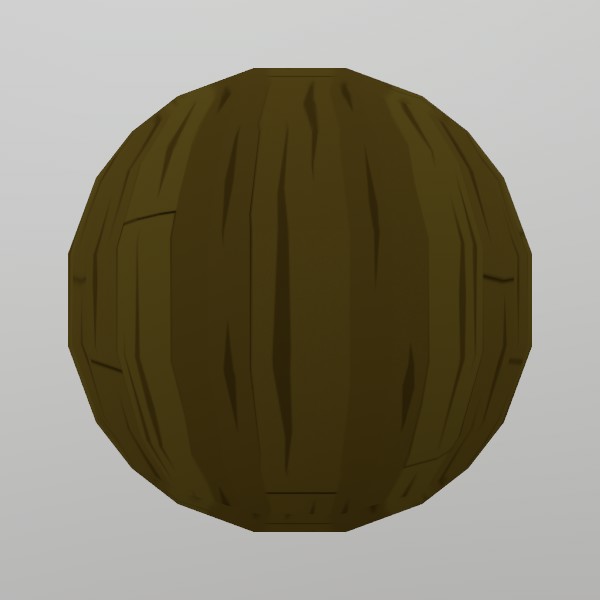
_It's uh... not the most glamorous material!_
Not all Materials will have the same parameters, and in fact,
parameters can vary wildly from Material to Material! This comes from
the Shader code that each Material has embedded at its core. The
Shader runs on the GPU, describes how each vertex is projected onto the
screen, and calculates the color of every pixel. Since each shader
program is different, each one has different parameters it works with!
While [`MatParamName`](https://stereokit.net/preview/Pages/Reference/MatParamName.html)
helps to codify and standardize common parameter names, it's always
best to be somewhat familiar with the Shader that the Material is
using.
For example, Material.Default uses [this Shader](https://github.com/StereoKit/StereoKit/blob/master/StereoKitC/shaders_builtin/shader_builtin_default.hlsl),
and you can see the parameters listed at the top:
```csharp
//--color:color = 1,1,1,1
//--tex_scale = 1
//--diffuse = white
float4 color;
float tex_scale;
Texture2D diffuse : register(t0);
```
Shaders use data embedded in comments to assign default values to
material properties, the `//--` indicates this. So in this case,
`color` is a float4 (Vec4 or Color in C#), with a default value of
`1,1,1,1`, white. This maps to [`MatParamName.ColorTint`](https://stereokit.net/preview/Pages/Reference/MatParamName.html),
but you could also use the name directly:
`newMaterial["color"] = Color.HSV(0.3f, 0.2f, 1.0f);`.
Materials also have a few properties that aren't part of the Shader,
things like [depth testing](https://stereokit.net/preview/Pages/Reference/Material/DepthTest.html)/[writing](https://stereokit.net/preview/Pages/Reference/Material/DepthWrite.html),
[transparency](https://stereokit.net/preview/Pages/Reference/Material/Transparency.html),
[face culling](https://stereokit.net/preview/Pages/Reference/Material/FaceCull.html),
or [wireframe](https://stereokit.net/preview/Pages/Reference/Material/Wireframe.html).
### Material from Shader
You can also create a completely new Material directly from a Shader!
StereoKit does keep the default Shaders around in the [`Shader`](https://stereokit.net/preview/Pages/Reference/Shader.html)
class for this purpose, but you can also use Shader.FromFile to load a
pre-compiled shader file, and use that instead. More on that in the
[Shader guide (coming soon)]().
```csharp
Material shaderMaterial;
void InitShaderMaterial()
{
// Instead of copying Material.Default, we're creating a completely new
// Material directly from a Shader.
shaderMaterial = new Material(Shader.Default);
// Make it just slightly transparent
shaderMaterial.Transparency = Transparency.Blend;
shaderMaterial[MatParamName.ColorTint] = new Color(1, 1, 1, 0.9f);
}
void StepShaderMaterial()
{
Mesh.Sphere.Draw(shaderMaterial, Matrix.T(0,2,0));
}
```
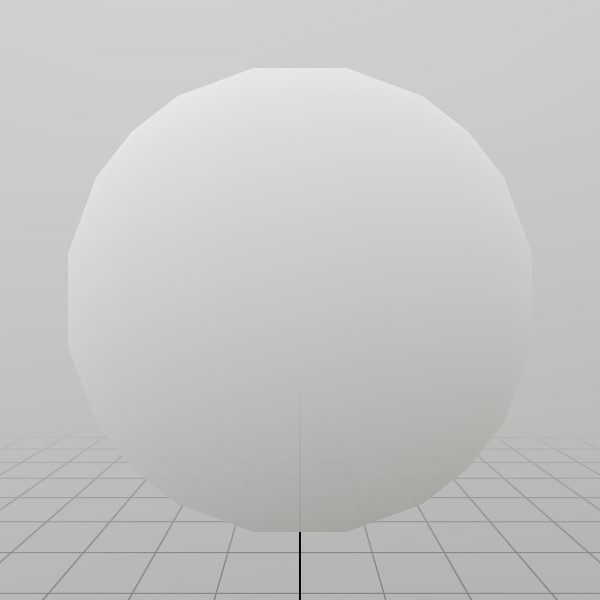
_It's a spooky circle now._
## Environment and Lighting
StereoKit's default lighting system is entirely based on environment
lighting! This can drastically affect how a material looks, so choosing the
right lighting can make a big difference in how your content looks. Here's
a simple white sphere again, but with a more complex lighting than the
default white room.
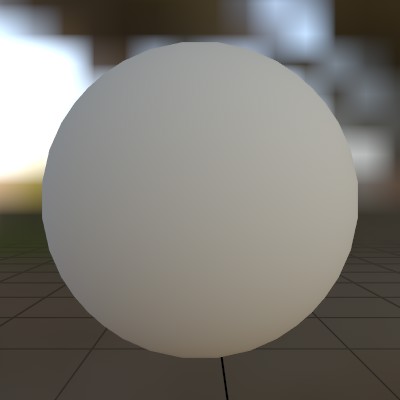
You can change the environment lighting with a nice cubemap, check out the
[`Renderer.SkyLight`](https://stereokit.net/preview/Pages/Reference/Renderer/SkyLight.html)
property for a nice example of how to do this!
## Materials and Performance
Since Materials are responsible for drawing everything on the screen, they
have a big impact on GPU side performance! If you check your device's
performance monitor and see the GPU maxed out at 100% all the time, it's a
good moment to take a peek at how you're working with Materials.
The first rule is that fewer Materials means better GPU utilization. GPUs
don't like switching between Shaders or even Material parameters, so if you
can re-use a Material safely, you should! StereoKit does a great job of
batching draw calls together to reduce this switching, but this is only
effective at boosting performance if Materials are getting re-used.
The next rule is that simpler Shaders are faster. Material.Unlit is just
about the fastest Material you can have, followed closely by
Material.Default! Material.PBR looks great, but does a lot of work to look
good. It's very fast compared to many other PBR shaders, and quite suitable
even on mobile VR headsets, but if you don't need it, use something faster!
And lastly, small textures are faster than large ones. Textures get sampled
a lot during rendering, which means moving around lots of texture memory!
Remember that halving a texture's size can reduce memory by a factor of 4!
It often helps to just see how long a draw call takes! For this, I like to
use [RenderDoc](https://renderdoc.org/)'s timing feature. RenderDoc works
quite nicely with StereoKit's flatscreen mode, and while this isn't a
perfect representation of performance on mobile devices, it's a solid
reference point.
## A Look at the Defaults
StereoKit strives to cover the basics for you, and Materials are no
exception! You'll find a collection of Materials and Shaders that are
designed to be performant and good looking on mobile XR headsets, and
should cover the majority of use-cases. Here's a sampling, and check
the docs for each one to see what properties they support!
### [`Material.Default`](https://stereokit.net/preview/Pages/Reference/Default/Material.html)

### [`Material.Unlit`](https://stereokit.net/preview/Pages/Reference/Default/MaterialUnlit.html)
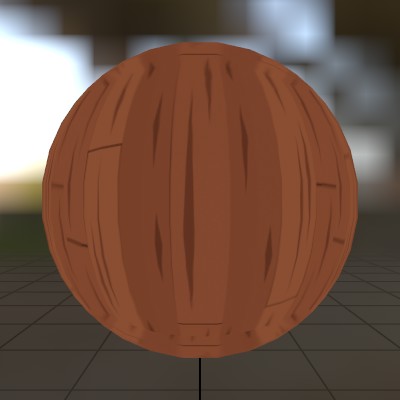
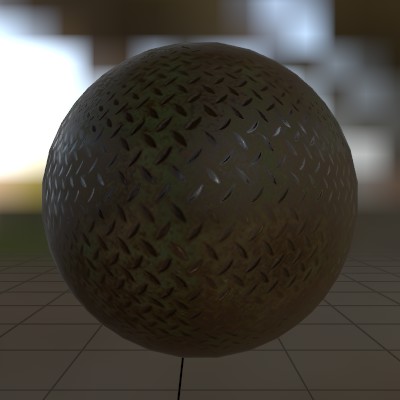
### [`Material.PBR`](https://stereokit.net/preview/Pages/Reference/Default/MaterialPBR.html)
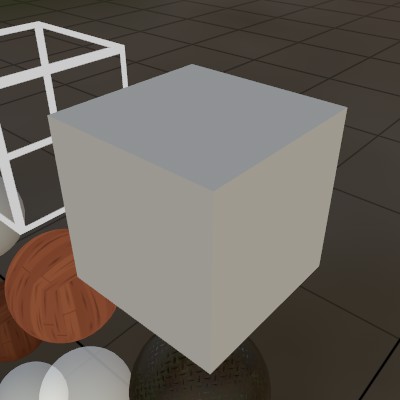
### [`Material.UI`](https://stereokit.net/preview/Pages/Reference/Default/MaterialUI.html)
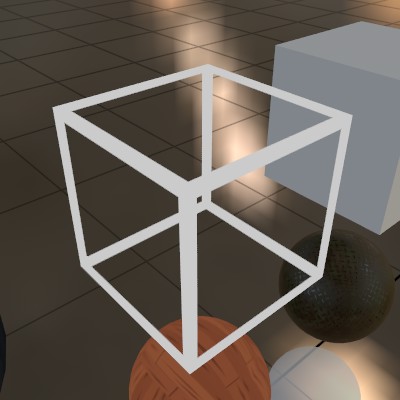
### [`Material.UIBox`](https://stereokit.net/preview/Pages/Reference/Default/MaterialUIBox.html)
## Debugging your App
# Debugging your App
### Set up for debugging
Since StereoKit's core is composed of native code, there are a few extra
steps you can take to get better stack traces and debug information! The
first is to make sure Visual Studio is set up to debug with native code.
This varies across .Net versions, but generally the option can be found at
Project->Properties->Debug->(Native code debugging).
You may also wish to disable "Just My Code" if you're trying to actually
inspect how StereoKit's code is behaving. This can be found under
Tools->Options->Debugging->General->Enable Just My Code, and uncheck it to
make sure it's disabled.
StereoKit is set up with Source Link as of v0.3.5, which allows you to
inspect StereoKit's code directly from the relevant commit of the main
repository on GitHub. Note that distributed binaries are in release format,
and may not 'step through' as nicely as a normal debug binary would.
### Check the Logs!
StereoKit outputs a lot of useful information in the logs, and there's a
chance your issue may be logged there! When submitting an issue on the
GitHub repository, including a copy of your logs can really help
maintainers to understand what is or isn't happening.
All platforms will output the log through the standard debug output window,
but you can also tap into the debug logs via
[`Log.Subscribe`](https://stereokit.net/preview/Pages/Reference/Log/Subscribe.html). Check
the docs there for an easy Mixed Reality log window you can add to your
project.
### MSBuild options
StereoKit has a collection of MSBuild variables that are designed to be
tweakable for a more configurable build experience! If you're having issues
with the defaults, you can display the variable list during build by
turning on `SKShowDebugVars` in your .csproj.
```xml
true
```
You can also consume the StereoKit SDK directly from source to allow for
more invasive debugging, or even core StereoKit development! Instead of
consuming the NuGet package, you can clone the StereoKit repository and
point your project to it. Note that [setup may be required to build from source](https://github.com/StereoKit/StereoKit/blob/master/BUILDING.md).
```xml
```
### Ask for Help
We love to hear what problems you're running into! StereoKit is completely
open source and has no analytics or surveillance tools embedded in it at
all. If you have an issue, we won't know about it unless _you_ tell us, or
we spot it ourselves!
The best place to ask for help will always be the [GitHub Issues](https://github.com/StereoKit/StereoKit/issues),
or [GitHub Discussions](https://github.com/StereoKit/StereoKit/discussions)
pages. Be sure to provide logs, platform information, and as many other
details as may be relevant!
## Common Issues
Here's a short list of some common issues we've seen people ask about!
### XR_ERROR_FORM_FACTOR_UNAVAILABLE in the logs
This is a common and expected message that basically means that OpenXR
can't find any headset attached to the system. Your headset is most likely
unplugged, but may also indicate some other issue with your OpenXR runtime
setup.
By default, StereoKit will fall back to the flatscreen simulator when this
error message is encountered. This behavior can be configured in your
`SKSettings`.
### StereoKit isn't loading my asset!
This may manifest as Null Reference Exceptions surrounding your
Model/Tex/asset. The first thing to do is check the StereoKit logs, and
look for messages with your asset's filename. There will likely be some
message with a decent hint available.
If StereoKit cannot find your file, make sure the path is correct, and
verify your asset is correctly being copied into Visual Studio's output
folder. The default templates will automatically copy content in the
project's Assets folder into the final output folder. If your asset is not
in the Assets folder, or if you have assembled your own project without
using the templates, then you may need to do additional work to ensure the
copy happens.
## Sample Code
# StereoKit Sample Code
Here are a list of small demos that illustrate how
certain parts of StereoKit works!
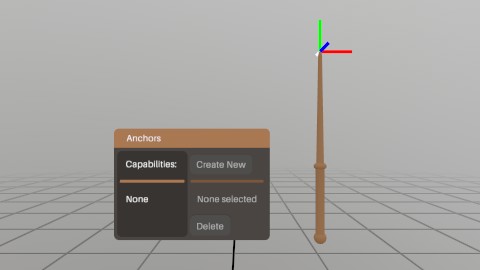
## [Anchors](https://github.com/StereoKit/StereoKit/blob/master/Examples/StereoKitTest/Demos/DemoAnchors.cs)
This demo uses StereoKit's Anchor API to add, remove, and load spatial anchors that are locked to local physical locations. These can be used for persisting locations across sessions, or increasing the stability of your experiences!
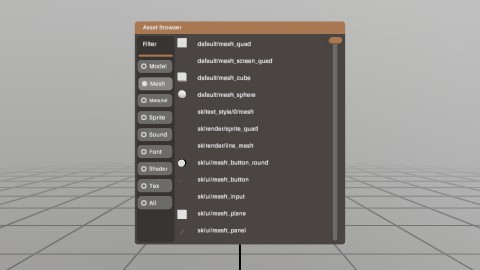
## [Asset Enumeration](https://github.com/StereoKit/StereoKit/blob/master/Examples/StereoKitTest/Demos/DemoAssets.cs)
If you need to take a peek at what's currently loaded, StereoKit has a couple tools in the Assets class!
This demo is just a quick illustration of how to enumerate through your Assets.
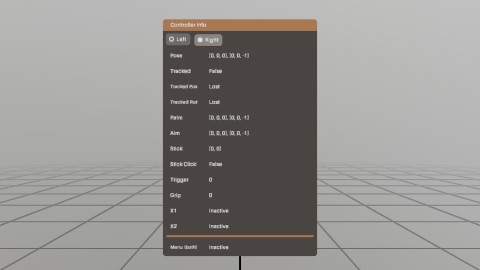
## [Controllers](https://github.com/StereoKit/StereoKit/blob/master/Examples/StereoKitTest/Demos/DemoControllers.cs)
While StereoKit prioritizes hand input, sometimes a controller has more precision! StereoKit provides access to any controllers via the Input.Controller function. This is a debug visualization of the controller data provided there.
StereoKit will simulate hands if only controllers are present, but it will not simulate controllers if only hands are present.
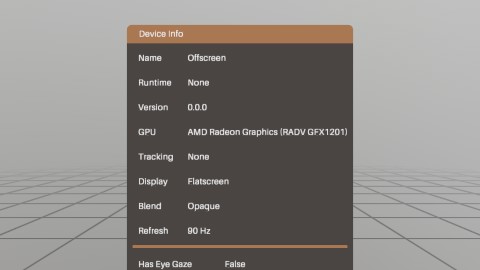
## [Device](https://github.com/StereoKit/StereoKit/blob/master/Examples/StereoKitTest/Demos/DemoDevice.cs)
The Device class contains a number of interesting bits of data about the device it's running on! Most of this is just information, but there's a few properties that can also be modified.
## [Eye Tracking](https://github.com/StereoKit/StereoKit/blob/master/Examples/StereoKitTest/Demos/DemoEyes.cs)
If the hardware supports it, and permissions are granted, eye tracking is as simple as grabbing Input.Eyes!
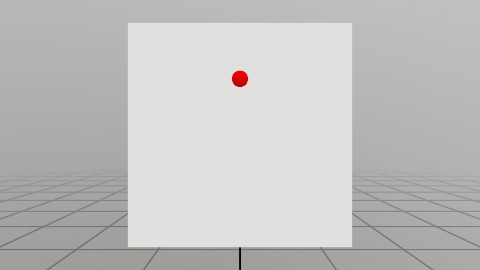
This scene is raycasting your eye ray at the indicated plane, and the dot's red/green color indicates eye tracking availability! On flatscreen you can simulate eye tracking with Alt+Mouse.
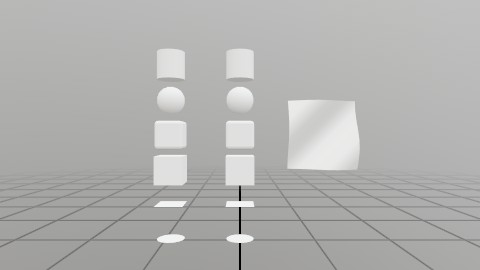
## [Mesh Generation](https://github.com/StereoKit/StereoKit/blob/master/Examples/StereoKitTest/Demos/DemoGeo.cs)
Generating a Mesh or Model via code can be an important task, and StereoKit provides a number of tools to make this pretty easy! In addition to the Default meshes, you can also generate a number of shapes, seen here. (See the Mesh.Gen functions)
If the provided shapes aren't enough, it's also pretty easy to procedurally assemble a mesh of your own from vertices and indices! That's the wavy surface all the way to the right.
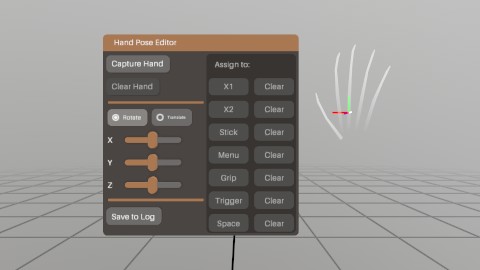
## [Hand Sim Poses](https://github.com/StereoKit/StereoKit/blob/master/Examples/StereoKitTest/Demos/DemoHandPoses.cs)
StereoKit simulates hand joints for controllers and mice, but sometimes you really just need to test a funky gesture!
The Input.HandSimPose functions allow you to customize how StereoKit simulates these hand poses, and this scene is a small tool to help you with capturing poses for these functions!
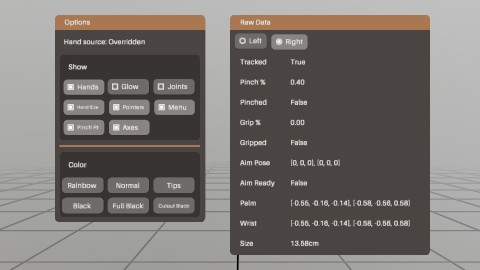
## [Hand Input](https://github.com/StereoKit/StereoKit/blob/master/Examples/StereoKitTest/Demos/DemoHands.cs)
StereoKit uses a hands first approach to user input! Even when hand-sensors aren't available, hand data is simulated instead using existing devices. Check out Input.Hand for all the cool data you get!
This demo is the source for the 'Using Hands' guide, and is a collection of different options and examples of how to get, use, and visualize Hand data.
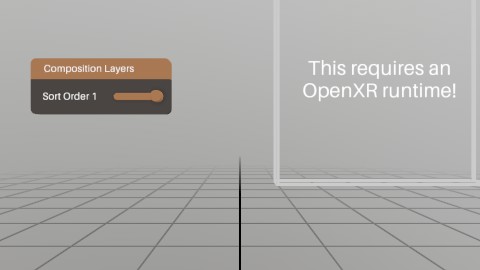
## [Composition Layers](https://github.com/StereoKit/StereoKit/blob/master/Examples/StereoKitTest/Demos/DemoLayers.cs)
OpenXR allows for a variety of surfaces to be composed onto the screen. StereoKit by default manages just a single 'Projection Layer', but you can also submit additional layers with special shapes (quad layers), or special color buffers (like video)!
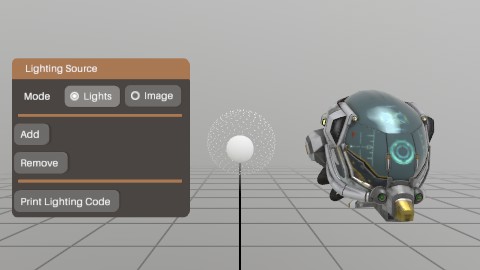
## [Lighting Editor](https://github.com/StereoKit/StereoKit/blob/master/Examples/StereoKitTest/Demos/DemoLighting.cs)
## [Line Render](https://github.com/StereoKit/StereoKit/blob/master/Examples/StereoKitTest/Demos/DemoLineRender.cs)
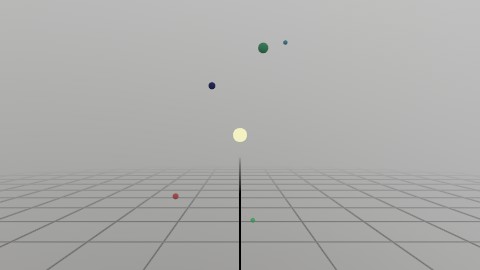
## [Lines](https://github.com/StereoKit/StereoKit/blob/master/Examples/StereoKitTest/Demos/DemoLines.cs)
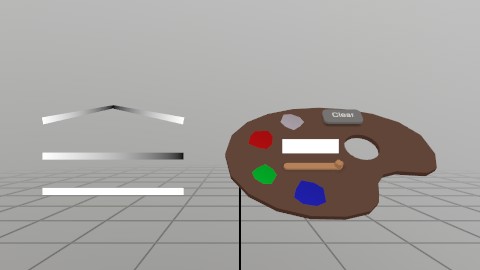
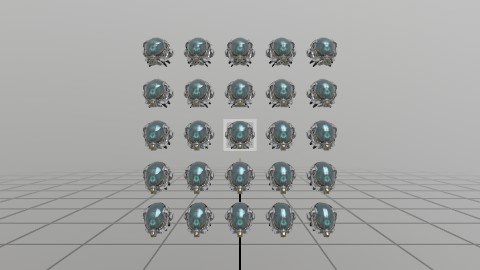
## [Many Objects](https://github.com/StereoKit/StereoKit/blob/master/Examples/StereoKitTest/Demos/DemoManyObjects.cs)
......
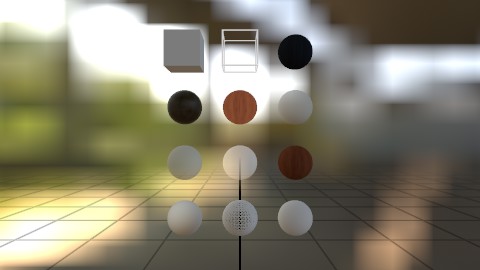
## [Materials](https://github.com/StereoKit/StereoKit/blob/master/Examples/StereoKitTest/Demos/DemoMaterial.cs)
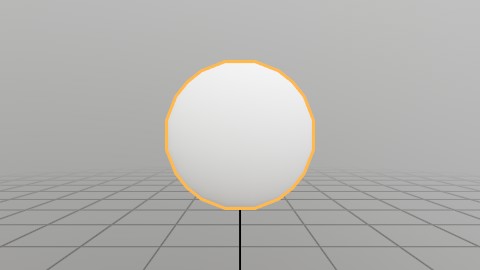
## [Material Chain](https://github.com/StereoKit/StereoKit/blob/master/Examples/StereoKitTest/Demos/DemoMaterialChain.cs)
Materials can be chained together to create a multi-pass material! What you're seeing in this sample is an 'Inverted Shell' outline, a two-pass effect where a second render pass is scaled along the normals and flipped inside-out.
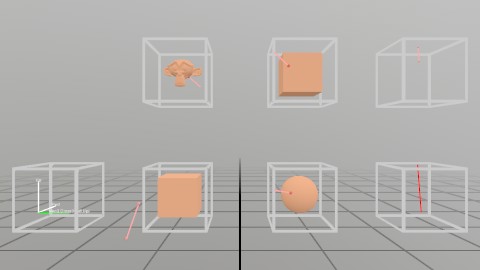
## [Math](https://github.com/StereoKit/StereoKit/blob/master/Examples/StereoKitTest/Demos/DemoMath.cs)
StereoKit has a SIMD optimized math library that provides a wide array of high-level math functions, shapes, and intersection formulas!
In C#, math types are backed by System.Numerics for easy interop with code from the rest of the C# ecosystem.
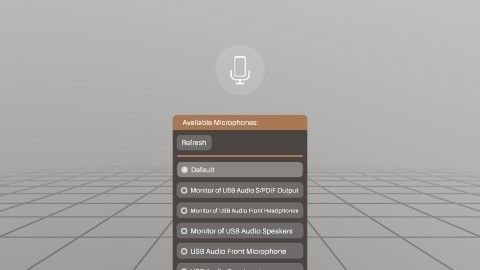
## [Microphone](https://github.com/StereoKit/StereoKit/blob/master/Examples/StereoKitTest/Demos/DemoMicrophone.cs)
Sometimes you need direct access to the microphone data! Maybe for a special effect, or maybe you just need to stream it to someone else. Well, there's an easy API for that!
This demo shows how to grab input from the microphone, and use it to drive an indicator that tells users that you're listening!
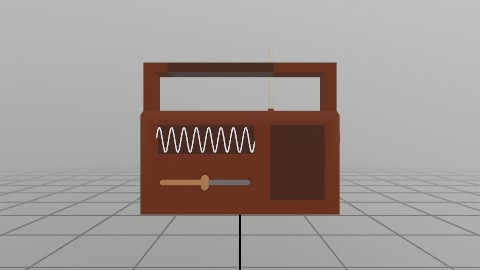
## [Model Nodes](https://github.com/StereoKit/StereoKit/blob/master/Examples/StereoKitTest/Demos/DemoNodes.cs)
ModelNode API lets...
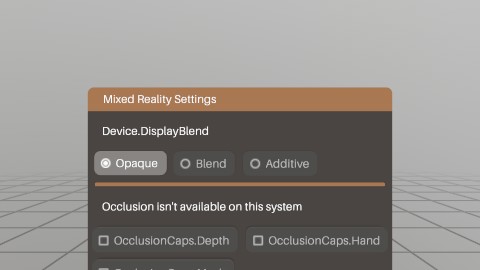
## [Mixed Reality](https://github.com/StereoKit/StereoKit/blob/master/Examples/StereoKitTest/Demos/DemoMixedReality.cs)
You can set up AR with OpenXR by changing the environment blend mode! In StereoKit, this is modifiable via Device.DisplayBlend at runtime, and SKSettings.blendPreference during initialization.
Note that some devices may not support each blend mode! Like a HoloLens can't be Opaque, and some VR headsets can't be transparent!
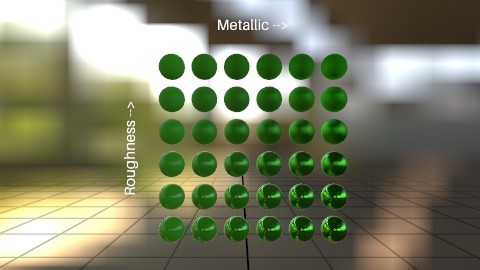
## [PBR Shaders](https://github.com/StereoKit/StereoKit/blob/master/Examples/StereoKitTest/Demos/DemoPBR.cs)
Shaders!
## [Permissions](https://github.com/StereoKit/StereoKit/blob/master/Examples/StereoKitTest/Demos/DemoPermissions.cs)
StereoKit comes with APIs for managing cross-platform permissions. While on Desktop, permissions are almost not an issue, platforms like Android can get kinda complicated! Here, StereoKit provides an API that handles the more complicated permission issues of platforms like Android, and also can be a regular part of your desktop code!
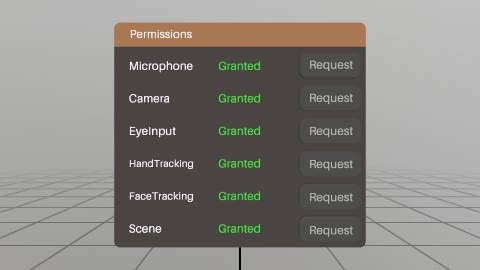
## [File Picker](https://github.com/StereoKit/StereoKit/blob/master/Examples/StereoKitTest/Demos/DemoPicker.cs)
Applications need to save and load files at runtime! StereoKit has a cross-platform, MR compatible file picker built in, Platform.FilePicker.
On systems/conditions where a native file picker is available, that's what you'll get! Otherwise, StereoKit will fall back to a custom picker built with StereoKit's UI.
## [Point Clouds](https://github.com/StereoKit/StereoKit/blob/master/Examples/StereoKitTest/Demos/DemoPointCloud.cs)
Point clouds are not a built-in feature of StereoKit, but it's not hard to do this yourself! Check out the code for this demo for a class that'll help you do this directly from data, or from a Model.
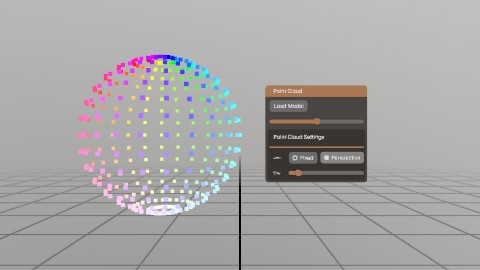
## [Ray to Mesh](https://github.com/StereoKit/StereoKit/blob/master/Examples/StereoKitTest/Demos/DemoRayMesh.cs)
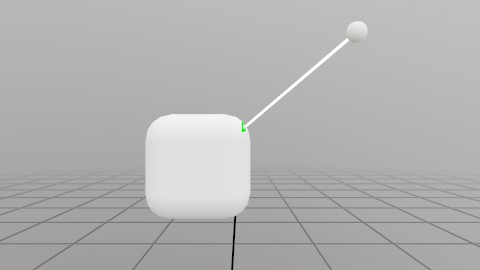
## [Record Mic](https://github.com/StereoKit/StereoKit/blob/master/Examples/StereoKitTest/Demos/DemoRecordMic.cs)
A common use case for the microphone would be to record a snippet of audio! This demo shows reading data from the Microphone, and using that to create a sound for playback.
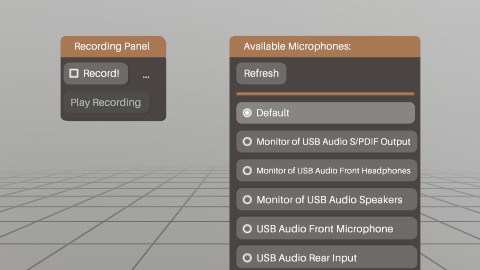
## [Render Lists](https://github.com/StereoKit/StereoKit/blob/master/Examples/StereoKitTest/Demos/DemoRenderList.cs)
All draw calls are stored in RenderList.Primary, but you can also store your draw calls to custom RenderLists! This allows you to draw more specific scenes to render textures with greater control, for use as icons, thumbnails, and all sorts of interesting things!
## [Render Scaling](https://github.com/StereoKit/StereoKit/blob/master/Examples/StereoKitTest/Demos/DemoRenderScaling.cs)
Sometimes you need to boost the number of pixels your app renders, to reduce jaggies! Renderer.Scaling and Renderer.Multisample let you increase the size of the draw surface, and multisample each pixel.
This is powerful stuff, so use it sparingly!
## [Rounded UI](https://github.com/StereoKit/StereoKit/blob/master/Examples/StereoKitTest/Demos/DemoRoundedUI.cs)
## [Dynamic ShadowMaps](https://github.com/StereoKit/StereoKit/blob/master/Examples/StereoKitTest/Demos/DemoShadows.cs)
Using StereoKit's Renderer.RenderTo, SetGlobalTexture, MaterialBuffers, and a bit of ingenuity, you can also add shadow mapping to your app!
This is a very basic single cascade implementation of shadow mapping to illustrate the idea.
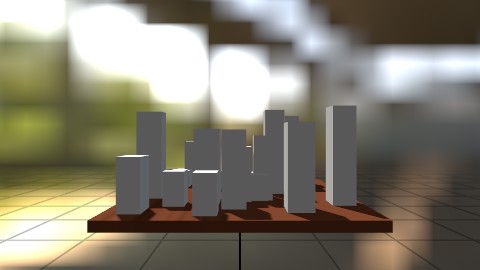
## [Skeleton Estimation](https://github.com/StereoKit/StereoKit/blob/master/Examples/StereoKitTest/Demos/DemoSkeleton.cs)
With knowledge about where the head and hands are, you can make a decent guess about where some other parts of the body are! The StereoKit repository contains an AvatarSkeleton IStepper to show a basic example of how something like this can be done.
## [Sound](https://github.com/StereoKit/StereoKit/blob/master/Examples/StereoKitTest/Demos/DemoSound.cs)
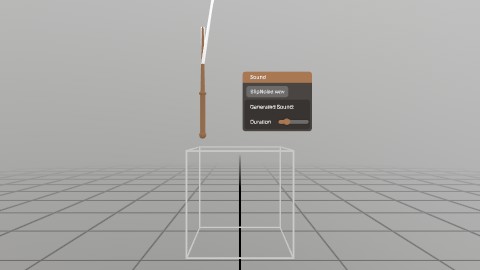
## [Text](https://github.com/StereoKit/StereoKit/blob/master/Examples/StereoKitTest/Demos/DemoText.cs)
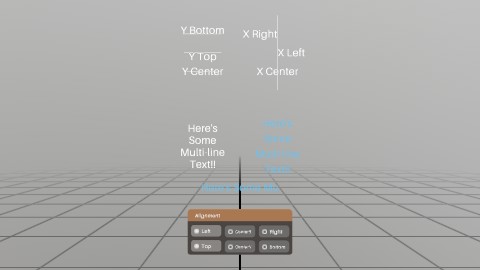
## [Text Input](https://github.com/StereoKit/StereoKit/blob/master/Examples/StereoKitTest/Demos/DemoTextInput.cs)
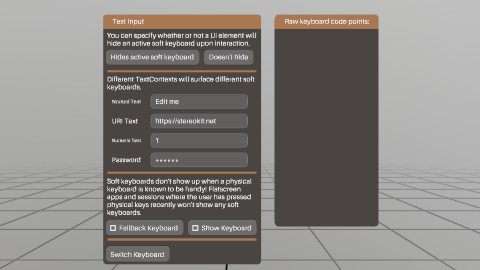
## [Procedural Textures](https://github.com/StereoKit/StereoKit/blob/master/Examples/StereoKitTest/Demos/DemoTextures.cs)
Here's a quick sample of procedurally assembling a texture!
## [UI](https://github.com/StereoKit/StereoKit/blob/master/Examples/StereoKitTest/Demos/DemoUI.cs)
...
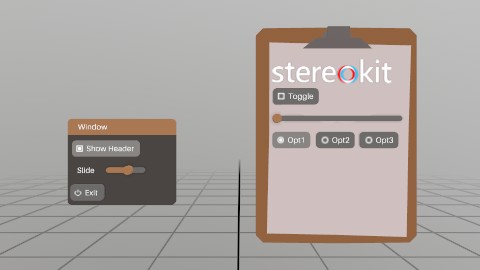
## [UI Grab Bar](https://github.com/StereoKit/StereoKit/blob/master/Examples/StereoKitTest/Demos/DemoUIGrabBar.cs)
This is an example of using external handles to manipulate a Window's pose! Since _you_ own the Pose data, you can do whatever you want with it!
The grab bar below the window is a common sight to see in recent XR UI, so here's one way to replicate that with SK's API.
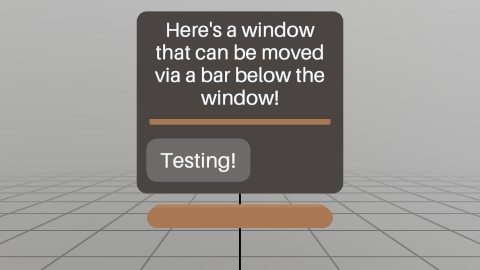
## [UI Settings](https://github.com/StereoKit/StereoKit/blob/master/Examples/StereoKitTest/Demos/DemoUISettings.cs)
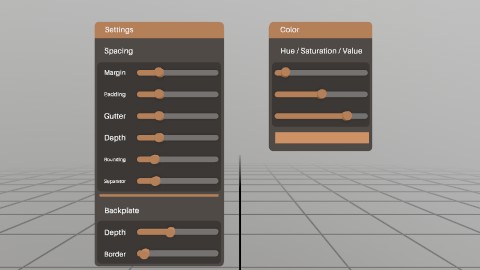
## [UI Tearsheet](https://github.com/StereoKit/StereoKit/blob/master/Examples/StereoKitTest/Demos/DemoUITearsheet.cs)
An enumeration of all the different types of UI elements!
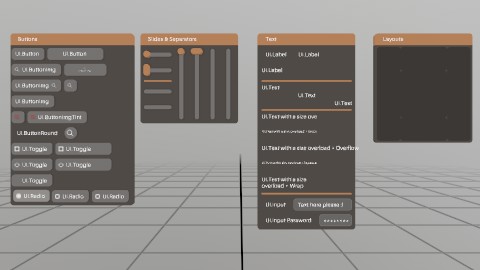
## [Unicode Text](https://github.com/StereoKit/StereoKit/blob/master/Examples/StereoKitTest/Demos/DemoUnicode.cs)
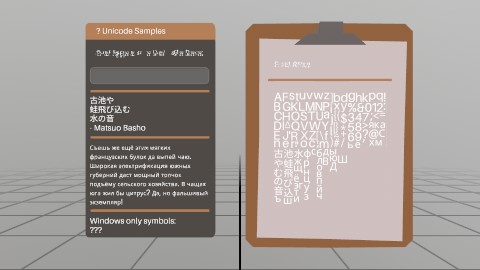
## Tools and Extensions
# Tools and Extensions
Here's a list of known tools designed to work with or extend StereoKit! If
you've got something you'd like to see listed here, please file an Issue on
the GitHub repository, we'd love to see it!
## [NuGet] - Official - [StereoKit.HolographicRemoting](https://github.com/StereoKit/StereoKit.HolographicRemoting)
This NuGet package is an implementation of HoloLens' Holographic Remoting
for StereoKit! This is an easy way to get desktop functionality onto your
HoloLens, or cut down on iteration time while testing on-device.
## [NuGet] - Official - [StereoKit.DesktopMirror (Windows)](https://github.com/StereoKit/StereoKit.DesktopMirror)
A small library for duplicating your desktop screen within a StereoKit
application on Windows. Useful for developing in-context!
## [GitHub] - Official (WIP) - [StereoKit Browser](https://github.com/StereoKit/StereoKit-Browser)
This is a short StereoKit sample that shows implementing a browser UI
widget using CefSharp!
## [GitHub] - [StereoKit Tools Collection](https://github.com/StereoKit/StereoKit/tree/master/Examples/StereoKitTest/Tools)
A small collection of `IStepper` tools and utilities for StereoKit.
## [GitHub] - [StereoKit Light Bake](https://github.com/maluoi/SKLightBake)
This is a quick demo for performantly managing static scenes, and baking
lighting into them with StereoKit! This bakes lighting into the vertex
colors of the mesh, so is visually limited by the number of vertices the
mesh has, and will merge meshes together.
# Examples
## Anim.Duration
### Loading an animated Model
Here, we're loading a Model that we know has the animations "Idle"
and "Jump". This sample shows some options, but only a single call
to PlayAnim is necessary to start an animation.
```csharp
Model model = Model.FromFile("Cosmonaut.glb");
// You can look at the model's animations:
foreach (Anim anim in model.Anims)
Log.Info($"Animation: {anim.Name} {anim.Duration}s");
// You can play an animation like this
model.PlayAnim("Jump", AnimMode.Once);
// Or you can find and store the animations in advance
Anim jumpAnim = model.FindAnim("Idle");
if (jumpAnim != null)
model.PlayAnim(jumpAnim, AnimMode.Loop);
```
## Anim.Name
See `Anim.Duration`
## Anim.Name
### Animation progress bar
A really simple progress bar visualization for the Model's active
animation.
```csharp
model.Draw(Matrix.Identity);
Hierarchy.Push(Matrix.T(0.5f, 1, -.25f));
// This is a pair of green lines that show the current progress through
// the animation.
float progress = model.AnimCompletion;
Lines.Add(V.XY0(0, 0), V.XY0(-progress, 0), new Color(0,1,0,1.0f), 2*U.cm);
Lines.Add(V.XY0(-progress, 0), V.XY0(-1, 0), new Color(0,1,0,0.2f), 2*U.cm);
// These are some labels for the progress bar that tell us more about
// the active animation.
Text.Add($"{model.ActiveAnim.Name} : {model.AnimMode}", Matrix.TS(0, -2*U.cm, 0, 3), Pivot.TopLeft);
Text.Add($"{model.AnimTime:F1}s", Matrix.TS(-progress, 2*U.cm, 0, 3), Pivot.BottomCenter);
Hierarchy.Pop();
```
## Anim
See `Anim.Duration`
## AnimMode
See `Anim.Duration`
## AppFocus
### Checking for changes in application focus
```csharp
static AppFocus lastFocus = AppFocus.Hidden;
static void CheckFocus()
{
if (lastFocus != SK.AppFocus)
{
lastFocus = SK.AppFocus;
Log.Info($"App focus changed to: {lastFocus}");
}
}
```
## Assets.All
### Enumerating all Assets
With Assets.All, you can take a peek at all the currently loaded
Assets! Here's a quick example of iterating through all assets and
dumping a quick summary to the log.
```csharp
foreach (var asset in Assets.All)
Log.Info($"{asset.GetType().Name,-10} - {asset.Id}");
```
## Assets.Type
### Simple Asset Browser
A full asset browser might have a few more features, but here's a quick
and dirty window that will provide a filtered list of the current
live assets!
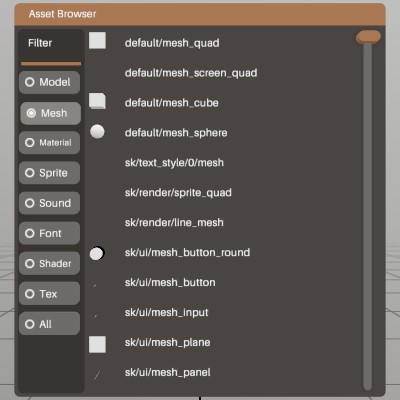
```csharp
List filteredAssets = new List();
Type filterType = typeof(IAsset);
Pose filterWindow = Demo.contentPose.Pose;
float filterScroll = 0;
const int filterScrollCt = 12;
void UpdateFilter(Type type)
{
filterType = type;
filterScroll = 0.0f;
filteredAssets.Clear();
// Here's where the magic happens! `Assets.Type` can take a Type, or a
// generic , and will give a list of all assets that match that
// type!
filteredAssets.AddRange(Assets.Type(filterType));
}
public void AssetWindow()
{
UISettings settings = UI.Settings;
float height = filterScrollCt * (UI.LineHeight + settings.gutter) + settings.margin * 2;
UI.WindowBegin("Asset Browser", ref filterWindow, V.XY(0.5f, height));
UI.LayoutPushCut(UICut.Left, 0.08f);
UI.PanelAt(UI.LayoutAt, UI.LayoutRemaining);
UI.Label("Filter");
UI.HSeparator();
// A radio button selection for what to filter by
Vec2 size = new Vec2(0.08f, 0);
if (UI.Radio("Model", filterType == typeof(Model ), size)) UpdateFilter(typeof(Model));
UI.SameLine();
if (UI.Radio("Mesh", filterType == typeof(Mesh ), size)) UpdateFilter(typeof(Mesh));
UI.SameLine();
if (UI.Radio("Material", filterType == typeof(Material), size)) UpdateFilter(typeof(Material));
UI.SameLine();
if (UI.Radio("Sprite", filterType == typeof(Sprite ), size)) UpdateFilter(typeof(Sprite));
UI.SameLine();
if (UI.Radio("Sound", filterType == typeof(Sound ), size)) UpdateFilter(typeof(Sound));
UI.SameLine();
if (UI.Radio("Font", filterType == typeof(Font ), size)) UpdateFilter(typeof(Font));
UI.SameLine();
if (UI.Radio("Shader", filterType == typeof(Shader ), size)) UpdateFilter(typeof(Shader));
UI.SameLine();
if (UI.Radio("Tex", filterType == typeof(Tex ), size)) UpdateFilter(typeof(Tex));
UI.SameLine();
if (UI.Radio("All", filterType == typeof(IAsset ), size)) UpdateFilter(typeof(IAsset));
UI.LayoutPop();
UI.LayoutPushCut(UICut.Right, UI.LineHeight);
UI.VSlider("scroll", ref filterScroll, 0, Math.Max(0,filteredAssets.Count-3), 1, 0, UIConfirm.Pinch);
UI.LayoutPop();
// We can visualize some of these assets, and just draw a label for
// some others.
for (int i = (int)filterScroll; i < Math.Min(filteredAssets.Count, (int)filterScroll + filterScrollCt); i++)
{
IAsset asset = filteredAssets[i];
UI.PushId(i);
switch (asset)
{
case Mesh item: VisualizeMesh (item); break;
case Material item: VisualizeMaterial(item); break;
case Sprite item: VisualizeSprite (item); break;
case Model item: VisualizeModel (item); break;
case Sound item: VisualizeSound (item); break;
}
UI.PopId();
UI.Label(string.IsNullOrEmpty(asset.Id) ? "(null)" : asset.Id, V.XY(UI.LayoutRemaining.x, 0));
}
UI.WindowEnd();
}
void VisualizeMesh(Mesh item)
{
Bounds meshSize = item.Bounds;
Bounds b = UI.LayoutReserve(V.XX(UI.LineHeight), false, UI.LineHeight);
float scale = (1.0f/meshSize.dimensions.Length);
item.Draw(Material.Default, Matrix.TS(b.center+meshSize.center*scale, b.dimensions*scale));
UI.SameLine();
}
void VisualizeMaterial(Material item)
{
// Default Materials have a number of special effect shaders that don't
// visualize in a generic way.
if (!string.IsNullOrEmpty(item.Id) && (item.Id.StartsWith("render/") || item.Id.StartsWith("default/")))
return;
Bounds b = UI.LayoutReserve(V.XX(UI.LineHeight), false, UI.LineHeight);
Mesh.Sphere.Draw(item, Matrix.TS(b.center, b.dimensions));
UI.SameLine();
}
void VisualizeSprite(Sprite item)
{
UI.Image(item, V.XX(UI.LineHeight));
UI.SameLine();
}
void VisualizeModel(Model item)
{
UI.Model(item, V.XX(UI.LineHeight));
UI.SameLine();
}
void VisualizeSound(Sound item)
{
if (UI.ButtonImg(">", Sprite.ArrowRight, UIBtnLayout.CenterNoText, V.XX(UI.LineHeight)))
item.Play(Hierarchy.ToWorld(UI.LayoutLast.center));
UI.SameLine();
}
```
## Assets.Type
See `Assets.Type`
## Assets
See `Assets.Type`
## Assets
See `Assets.All`
## Backend.XRType
### Implementing OpenXR Extensions
Using the `Backend.OpenXR` class, it's possible to implement OpenXR
extensions without directly modifying StereoKit! Here's a simple
example of how to do this, implemented via an `IStepper`.
```csharp
class Win32PerformanceCounterExt : IStepper
{
// Start by defining C# equivalents of OpenXR's function signatures and
// types. This can be a bit involved, see PassthroughFBExt.cs in the SK
// repository for a more extensive sample.
delegate uint XR_xrConvertTimeToWin32PerformanceCounterKHR(ulong instance, long time, out long performanceCounter);
static XR_xrConvertTimeToWin32PerformanceCounterKHR xrConvertTimeToWin32PerformanceCounterKHR;
const string timeExt = "XR_KHR_win32_convert_performance_counter_time";
public bool Enabled { get; private set; }
public Win32PerformanceCounterExt()
{
// OpenXR extensions must be requested before initializing StereoKit,
// so this IStepper needs to be added _before_ `SK.Initialize`.
if (SK.IsInitialized)
Log.Err("OpenXR extensions must be constructed before StereoKit is initialized!");
// At this point, we don't even know if the app will have access to
// OpenXR, so this should _not_ be be guarded by a check for OpenXR.
Backend.OpenXR.RequestExt(timeExt);
}
public bool Initialize()
{
// Check if we're running OpenXR, the extension is present, and all of
// our extension functions bound properly.
Enabled =
Backend.XRType == BackendXRType.OpenXR &&
Backend.OpenXR.ExtEnabled(timeExt) &&
LoadBindings();
// Test it out!
if (Enabled)
{
xrConvertTimeToWin32PerformanceCounterKHR(Backend.OpenXR.Instance, Backend.OpenXR.Time, out long counter);
Log.Info($"XrTime: {counter}");
}
return Enabled;
}
// In this method, we load any functions from the extension that we care
// about, and then report if they were loaded successfully.
private bool LoadBindings()
{
xrConvertTimeToWin32PerformanceCounterKHR =
Backend.OpenXR.GetFunction("xrConvertTimeToWin32PerformanceCounterKHR");
return xrConvertTimeToWin32PerformanceCounterKHR != null;
}
// A more complicated extension might use these, but this EXT does not
// require any actions on-Step.
public void Shutdown() { }
public void Step() { }
}
```
## Bounds.Contains
Here's a small example of checking to see if a finger joint is inside
a box, and drawing an axis gizmo when it is!
```csharp
// A volume for checking inside of! 10cm on each side, at the origin
Bounds testArea = new Bounds(Vec3.One * 0.1f);
// This is a decent way to show we're working with both hands
for (int h = 0; h < (int)Handed.Max; h++)
{
// Get the pose for the index fingertip
Hand hand = Input.Hand((Handed)h);
Pose fingertip = hand[FingerId.Index, JointId.Tip].Pose;
// Skip this hand if it's not tracked
if (!hand.IsTracked) continue;
// Draw the fingertip pose axis if it's inside the volume
if (testArea.Contains(fingertip.position))
Lines.AddAxis(fingertip);
}
```
## Bounds.FromCorner
### General Usage
```csharp
// All these create bounds for a 1x1x1m cube around the origin!
Bounds bounds = new Bounds(Vec3.One);
bounds = Bounds.FromCorner(new Vec3(-0.5f, -0.5f, -0.5f), Vec3.One);
bounds = Bounds.FromCorners(
new Vec3(-0.5f, -0.5f, -0.5f),
new Vec3( 0.5f, 0.5f, 0.5f));
// Note that positions must be in a coordinate space relative to
// the bounds!
if (bounds.Contains(new Vec3(0,0.25f,0)))
Log.Info("Super easy to check if something's in it!");
// Casting a ray at a bounds is trivial too, again, ensure
// coordinates are in the same space!
Ray ray = new Ray(Vec3.Up, -Vec3.Up);
if (bounds.Intersect(ray, out Vec3 at))
Log.Info($"Bounds intersection at {at}"); // <0, 0.5f, 0>
// You can also scale a Bounds using the '*' operator overload,
// this is really useful if you're working with the Bounds of a
// Model that you've scaled. It will scale the center as well as
// the size!
bounds = bounds * 0.5f;
// Scale the current bounds reference using 'Scale'
bounds.Scale(0.5f);
// Scale the bounds by a Vec3
bounds = bounds * new Vec3(1, 10, 0.5f);
```
## Bounds.FromCorners
See `Bounds.FromCorner`
## Bounds.Intersect
See `Bounds.FromCorner`
## Bounds
### An Interactive Model
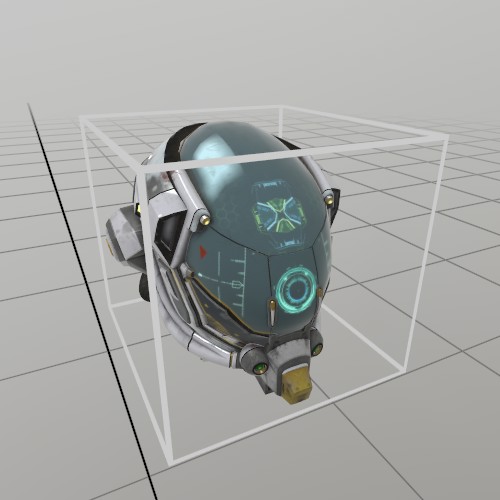
If you want to grab a Model and move it around, then you can use a
`UI.Handle` to do it! Here's an example of loading a GLTF from file,
and using its information to create a Handle and a UI 'cage' box that
indicates an interactive element.
```csharp
Model model = Model.FromFile("DamagedHelmet.gltf");
Pose handlePose = new Pose(0,0,0, Quat.Identity);
float scale = .15f;
public void StepHandle() {
UI.HandleBegin("Model Handle", ref handlePose, model.Bounds*scale);
model.Draw(Matrix.S(scale));
Mesh.Cube.Draw(Material.UIBox, Matrix.TS(model.Bounds.center*scale, model.Bounds.dimensions*scale));
UI.HandleEnd();
}
```
## Bounds
See `Bounds.FromCorner`
## BtnState
```csharp
BtnState state = Input.Hand(Handed.Right).pinch;
// You can check a BtnState using bit-flag logic
if ((state & BtnState.Changed) > 0)
Log.Info("Pinch state just changed!");
// Or you can check the same values with the extension methods, no
// bit flag logic :)
if (state.IsChanged())
Log.Info("Pinch state just changed!");
```
## BtnStateExtensions
See `BtnState`
## Color.Hex
### Creating color from hex values
```csharp
Color hex128 = Color .Hex(0xFF0000FF); // Opaque Red
Color32 hex32 = Color32.Hex(0x00FF00FF); // Opaque Green
```
## Color.HSV
```csharp
// You can create a color using Red, Green, Blue, Alpha values,
// but it's often a great recipe for making a bad color.
Color color = new Color(1,0,0,1); // Red
// Hue, Saturation, Value, Alpha is a more natural way of picking
// colors. The commentdocs have a list of important values for Hue,
// to make it a little easier to pick the hue you want.
color = Color.HSV(0, 1, 1, 1); // Red
// And there's a few static colors available if you need 'em.
color = Color.White;
// You can also implicitly convert Color to a Color32!
Color32 color32 = color;
```
## Color.HSV
```csharp
// Desaturating a color can be done quite nicely with the HSV
// functions
Color red = new Color(1,0,0,1);
Vec3 colorHSV = red.ToHSV();
colorHSV.y *= 0.5f; // Drop saturation by half
Color desaturatedRed = Color.HSV(colorHSV, red.a);
// LAB color space is excellent for modifying perceived
// brightness, or 'Lightness' of a color.
Color green = new Color(0,1,0,1);
Vec3 colorLAB = green.ToLAB();
colorLAB.x *= 0.5f; // Drop lightness by half
Color darkGreen = Color.LAB(colorLAB, green.a);
```
## Color.LAB
See `Color.HSV`
## Color.ToHSV
See `Color.HSV`
## Color.ToLAB
See `Color.HSV`
## Color
See `Color.HSV`
## Color
See `Color.Hex`
## Color32.Hex
See `Color.Hex`
## Color32
```csharp
// You can create a color using Red, Green, Blue, Alpha values,
// but it's often a great recipe for making a bad color.
Color32 color = new Color32(255, 0, 0, 255); // Red
// Hue, Saturation, Value, Alpha is a more natural way of picking
// colors. You can use Color's HSV function, plus the implicit
// conversion to make a Color32!
color = Color.HSV(0, 1, 1, 1); // Red
// And there's a few static colors available if you need 'em.
color = Color32.White;
```
## Color32
See `Color.Hex`
## Controller.aim
### Controller Debug Visualizer
This function shows a debug visualization of the current state of
the controller! It's not something you'd show to users, but it's
nice for just seeing how the API works, or as a temporary
visualization.
```csharp
void ShowController(Handed hand)
{
bool isLeft = hand == Handed.Left;
PoseState state = Input.PoseState(isLeft ? InputPose.LGrip : InputPose.RGrip);
if (!state.IsTracked()) return;
Hierarchy.Push(Input.Pose(isLeft?InputPose.LGrip:InputPose.RGrip));
// Pick the controller color based on trackin info state
Color color = Color.Black;
if ((state & PoseState.PosInferred) > 0) color.g = 0.5f;
if ((state & PoseState.PosKnown ) > 0) color.g = 1;
if ((state & PoseState.RotInferred) > 0) color.b = 0.5f;
if ((state & PoseState.RotKnown ) > 0) color.b = 1;
Default.MeshCube.Draw(Default.Material, Matrix.S(new Vec3(3, 3, 8) * U.cm), color);
// Show button info on the back of the controller
Hierarchy.Push(Matrix.TR(0,1.6f*U.cm,0, Quat.LookAt(Vec3.Zero, new Vec3(0,1,0), new Vec3(0,0,-1))));
// Show the tracking states as text
Text.Add(state.IsPosKnown()?"(pos)":(state.IsPosInferred()?"~pos~":"pos"), Matrix.TS(0,-0.03f,0, 0.25f));
Text.Add(state.IsRotKnown()?"(rot)":(state.IsRotInferred()?"~rot~":"rot"), Matrix.TS(0,-0.02f,0, 0.25f));
// Show the controller's buttons
Text.Add(Input.Button(isLeft?InputButton.LMenu:InputButton.RMenu).IsActive()?"(menu)":"menu", Matrix.TS(0,-0.01f,0, 0.25f));
Text.Add(Input.Button(isLeft?InputButton.LX1 :InputButton.RX1 ).IsActive()?"(X1)":"X1", Matrix.TS(0,0.00f,0, 0.25f));
Text.Add(Input.Button(isLeft?InputButton.LX2 :InputButton.RX2 ).IsActive()?"(X2)":"X2", Matrix.TS(0,0.01f,0, 0.25f));
// Show the analog stick's information
Vec3 stickAt = new Vec3(0, 0.03f, 0);
Lines.Add(stickAt, stickAt + Input.XY(isLeft?InputXY.LStick:InputXY.RStick).XY0*0.01f, Color.White, 0.001f);
if (Input.Button(isLeft?InputButton.LStick:InputButton.RStick).IsActive()) Text.Add("O", Matrix.TS(stickAt, 0.25f));
// And show the trigger and grip buttons
float trigger = Input.Float(isLeft?InputFloat.LTrigger:InputFloat.RTrigger);
float grip = Input.Float(isLeft?InputFloat.LGrip :InputFloat.RGrip );
Default.MeshCube.Draw(Default.Material, Matrix.TS(0, -0.015f, -0.005f, new Vec3(0.01f, 0.04f, 0.01f)) * Matrix.TR(new Vec3(0,0.02f,0.03f), Quat.FromAngles(-45+trigger*40, 0,0) ));
Default.MeshCube.Draw(Default.Material, Matrix.TS(0.0149f*(hand == Handed.Right?1:-1), 0, 0.015f, new Vec3(0.01f*(1-grip), 0.04f, 0.01f)));
Hierarchy.Pop();
Hierarchy.Pop();
// And show the pointer
Default.MeshCube.Draw(Default.Material, Input.Pose(isLeft?InputPose.LAim:InputPose.RAim).ToMatrix(new Vec3(1,1,4) * U.cm), Color.HSV(0,0.5f,0.8f).ToLinear());
}
```
## Controller.grip
See `Controller.aim`
## Controller.IsStickClicked
See `Controller.aim`
## Controller.IsTracked
See `Controller.aim`
## Controller.IsX1Pressed
See `Controller.aim`
## Controller.IsX2Pressed
See `Controller.aim`
## Controller.pose
See `Controller.aim`
## Controller.stick
See `Controller.aim`
## Controller.trackedPos
See `Controller.aim`
## Controller.trackedRot
See `Controller.aim`
## Controller.trigger
See `Controller.aim`
## Controller
See `Controller.aim`
## Cull.Front
Here's setting FaceCull to Front, which is the opposite of the
default behavior. On a sphere, this is a little hard to see, but
you might notice here that the lighting is for the back side of
the sphere!
```csharp
matCull = Material.Default.Copy();
matCull.FaceCull = Cull.Front;
```
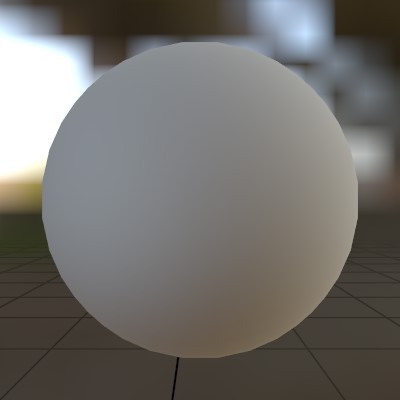
## Default.Material
If you want to modify the default material, it's recommended to
copy it first!
```csharp
matDefault = Material.Default.Copy();
```
And here's what it looks like:

## Default.MaterialPBR
Occlusion (R), Roughness (G), and Metal (B) are stored
respectively in the R, G and B channels of their texture.
Occlusion can be separated out into a different texture as per
the GLTF spec, so you do need to assign it separately from the
Metal texture.
```csharp
matPBR = Material.PBR.Copy();
matPBR[MatParamName.DiffuseTex ] = Tex.FromFile("metal_plate_diff.jpg");
matPBR[MatParamName.MetalTex ] = Tex.FromFile("metal_plate_metal.jpg", false);
matPBR[MatParamName.OcclusionTex] = Tex.FromFile("metal_plate_metal.jpg", false);
```

## Default.MaterialUI
This Material is basically the same as Default.Material, except it
also adds some glow to the surface near the user's fingers. It
works best on flat surfaces, and in StereoKit's design language,
can be used to indicate that something is interactive.
```csharp
matUI = Material.UI.Copy();
```
And here's what it looks like:

## Default.MaterialUIBox
The UI Box material has 3 parameters to control how the box wires
are rendered. The initial size in meters is 'border_size', and
can grow by 'border_size_grow' meters based on distance to the
user's hand. That distance can be configured via the
'border_affect_radius' property of the shader, which is also in
meters.
```csharp
matUIBox = Material.UIBox.Copy();
matUIBox["border_size"] = 0.005f;
matUIBox["border_size_grow"] = 0.01f;
matUIBox["border_affect_radius"] = 0.2f;
```

## Default.MaterialUnlit
```csharp
matUnlit = Material.Unlit.Copy();
matUnlit[MatParamName.DiffuseTex] = Tex.FromFile("floor.png");
```

## FingerId
See `Bounds.Contains`
## Font.FromFile
### Drawing text with and without a TextStyle
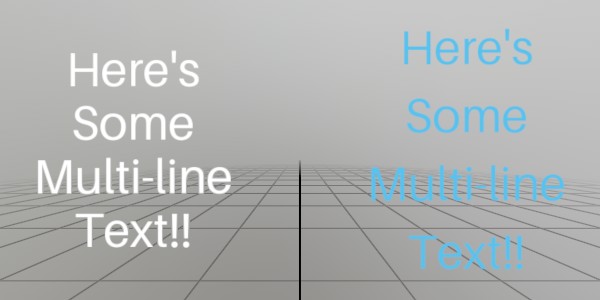
We can use a TextStyle object to control how text gets displayed!
```csharp
TextStyle style;
```
## Font.FromFile
In initialization, we can create the style from a font, a size,
and a base color. Overloads for MakeStyle can allow you to
override the default font shader, or provide a specific Material.
```csharp
style = Text.MakeStyle(
Font.FromFile("aileron_font.ttf"),
2 * U.cm,
Color.HSV(0.55f, 0.62f, 0.93f));
```
## Font.FromFile
Then it's pretty trivial to just draw some text on the screen! Just call
Text.Add on update. If you don't have a TextStyle available, calling it
without one will just fall back on the default style.
```csharp
// Text with an explicit text style
Text.Add(
"Here's\nSome\nMulti-line\nText!!",
Matrix.TR(new Vec3(0.1f, 0, 0), Quat.LookDir(0, 0, 1)),
style);
// Text using the default text style
Text.Add(
"Here's\nSome\nMulti-line\nText!!",
Matrix.TR(new Vec3(-0.1f, 0, 0), Quat.LookDir(0, 0, 1)));
```
## Hand
See `Bounds.Contains`
## Handed
See `Bounds.Contains`
## Hierarchy.Pop
### Transforming with Hierarchy
In StereoKit, draw calls all happen relative to the `Hierarchy`
stack! In this example, we make 2 draw calls with the same
transform matrix, but use the `Hierarchy` as a transform parent to
ensure the draws happen in different locations.
`Push`/`Pop` calls can also be nested to create more complex
hierarchies on a stack! Each `Push` call is also relative to the
parent `Push`ed transform.
```csharp
Matrix transform = Matrix.S(0.2f);
Hierarchy.Push(Matrix.T(-0.2f, 0, -0.5f));
Mesh.Sphere.Draw(Material.Default, transform, Color.HSV(0.0f, .8f, .8f));
Hierarchy.Pop();
Hierarchy.Push(Matrix.T( 0.2f, 0, -0.5f));
Mesh.Sphere.Draw(Material.Default, transform, Color.HSV(0.5f, .8f, .8f));
Hierarchy.Pop();
```
> One key thing to remember is that you should _always_ match a `Pop` for each `Push`.
## Hierarchy.Pop
### Spaces and Intersections
One tricky thing you need to keep in mind when working with
different spaces like the ones created with `Hierarchy` is that any
values you use for math need to be in the same space! I like to
explicitly label my variables with the space they're in anytime I'm
working with anything even a little complicated!
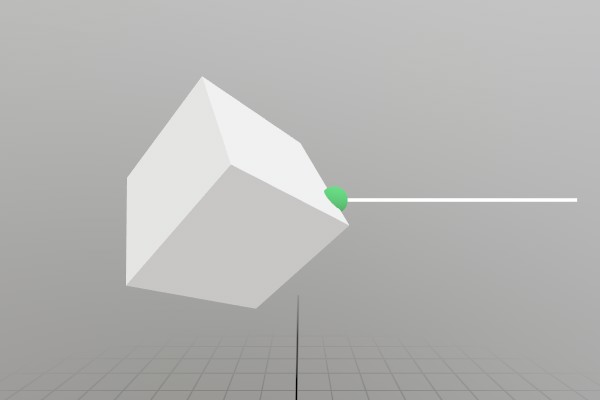
Here's an example of intersecting a ray with some content that
exists inside of a `Hierarchy` stack. You always need to transform
your data into `Mesh` or `Model` space in order to do an
`Intersect`, but the `Hierarchy` here adds a bit of extra
complexity to the problem!
```csharp
// It can often be helpful to consider if you're making a function
// "Hierarchy aware", meaning that it will still work properly if the
// code _already_ exists within a transformed hierarchy! Here we're
// using `Hierarchy.ToWorld` to ensure our intersection ray is
// _for sure_ in World Space.
Ray parentSpaceRay = new Ray(V.XYZ(0.5f, 4, -0.5f), V.XYZ(-1, 0, 0));
Ray worldSpaceRay = Hierarchy.ToWorld(parentSpaceRay);
Lines.Add(parentSpaceRay, 0.5f, Color.White, 0.005f);
// Sometimes it can help with clarity to add scope brackets to show
// how the hierarchy is affecting the code!
Hierarchy.Push(Matrix.T(0, 4, -0.5f));
{
Matrix localTransform = Matrix.TRS(Vec3.Zero, Quat.FromAngles(20, 135, 45), 0.2f);
Mesh.Cube.Draw(Material.Default, localTransform);
// Mesh intersection _must_ be done in Mesh space, since that's
// the space the Vertex data is in. So we need to convert our
// intersection ray all the way from world space to mesh space here
// before calling `Intersect`!
Ray localSpaceRay = Hierarchy.ToLocal(worldSpaceRay);
Ray meshSpaceRay = localTransform.Inverse.Transform(localSpaceRay);
if (meshSpaceRay.Intersect(Mesh.Cube, out Ray meshSpaceAt))
{
// Similarly, the intersection point needs to be transformed
// from Mesh space back into our local space before drawing it.
Ray localAt = localTransform.Transform(meshSpaceAt);
Mesh.Sphere.Draw(Material.Default, Matrix.TS(localAt.position, 0.04f), Color.HSV(0.36f, .8f, .8f));
}
}
Hierarchy.Pop();
```
## Hierarchy.Push
See `Hierarchy.Pop`
## Hierarchy.Push
See `Hierarchy.Pop`
## Hierarchy.ToLocal
See `Hierarchy.Pop`
## Hierarchy.ToWorld
See `Hierarchy.Pop`
## Hierarchy
See `Hierarchy.Pop`
## Hierarchy
See `Hierarchy.Pop`
## Input.ControllerMenuButton
See `Controller.aim`
## Input.Eyes
```csharp
if (Input.EyesTracked.IsActive())
{
// Intersect the eye Ray with a floor plane
Plane plane = new Plane(Vec3.Zero, Vec3.Up);
if (Input.Eyes.Ray.Intersect(plane, out Vec3 at))
{
Default.MeshSphere.Draw(Default.Material, Matrix.TS(at, .05f));
}
}
```
## Input.EyesTracked
See `Input.Eyes`
## Input.FingerGlow
### Disabling Finger Glow
When using StereoKit's built-in UI shaders, or the shader API's
`sk_finger_glow`, StereoKit provides a glowing aura around the
pointer finger.
This feature is on by default, but can be disabled without
modifying shaders! As long as `Input.FingerGlow` is `false` at
_the end of the frame_, StereoKit will skip providing the shaders
with valid finger pose data for the glow effect.
```csharp
Input.FingerGlow = false;
```
## Input.Controller
See `Controller.aim`
## Input.Hand
See `Bounds.Contains`
## Input.HapticCaps
### Driving haptics from controller velocity
This shows how to map a continuous physical signal (here, the
controller's grip-pose velocity) onto haptic output. There are two
paths: a simple per-frame `HapticPulse` that works on every device,
and a streaming `HapticWaveform` path that's used when
`XR_FB_haptic_pcm` is available.
```csharp
void StepProcedural(InputHaptic output)
{
Handed hand = output == InputHaptic.LController ? Handed.Left : Handed.Right;
InputPose pose = output == InputHaptic.LController ? InputPose.LGrip : InputPose.RGrip;
PoseState state = Input.PoseState(pose);
if (!state.IsTracked()) { haveLastPos = false; return; }
Vec3 pos = Input.Pose(pose).position;
if (!haveLastPos) { lastGripPos = pos; haveLastPos = true; return; }
float speed = (pos - lastGripPos).Length / Math.Max(0.001f, Time.Stepf);
lastGripPos = pos;
float intensity = MathF.Min(1, speed / 2.0f); // ~2 m/s saturates
InputHapticCaps caps = Input.HapticCaps(output);
if ((caps & InputHapticCaps.Waveform) != 0)
{
// Streaming path: synthesize one frame's worth of samples at the
// device's preferred rate, append onto the existing stream.
float r = Input.HapticPreferredRate(output);
if (r <= 0) r = 4000;
int count = (int)(r * Time.Stepf);
if (procBuffer.Length != count) procBuffer = new float[count];
for (int i = 0; i < count; i++)
procBuffer[i] = MathF.Sin(2 * MathF.PI * 220 * i / r) * intensity;
Input.HapticWaveform(output, procBuffer, r, append: true);
}
else if ((caps & InputHapticCaps.Pulse) != 0)
{
// Fallback path: per-frame pulse with current intensity.
Input.HapticPulse(output, 0, intensity, Time.Stepf);
}
}
```
## Input.HapticPreferredRate
See `Input.HapticCaps`
## Input.HapticPulse
See `Input.HapticCaps`
## Input.HapticStop
See `Input.HapticCaps`
## Input.HapticWaveform
See `Input.HapticCaps`
## Input.TextConsume
### Raw Text Input
```csharp
// If you need to read text input directly from a soft or hard keyboard,
// these functions give you direct access to the stream of Unicode
// characters produced! These characters are language and keyboard layout
// sensitive, making these functions the correct ones for working with text
// content vs. the `Input.Key` functions, which are not language specific.
//
// Every frame, `Input.TextConsume` will have a list of new characters that
// have been pressed or submitted to the app. Reading them will "consume"
// them, making them unavailable to anything that comes after. If you need
// to bypass some earlier element consuming them, you can reset the current
// frame's consume queue with `Input.TextReset`.
Pose rawWinPose = new Pose(0.3f,0,0);
List uniChars = new List(Enumerable.Repeat("", 10));
void ShowRawInputWindow()
{
UI.WindowBegin("Raw keyboard code points:", ref rawWinPose);
// Reset the text input back to the start of the list, since any
// UI.Input before this will consume the characters first and we
// always want to show input on this window.
Input.TextReset();
while (true)
{
// Consume each new character, 0 marks the end of the list of new
// characters.
char c = Input.TextConsume();
if (c == 0) break;
// Insert the codepoint at the start of the list, and bump off any
// more than 10 items.
uniChars.Insert(0, $"{(int)c}");
if (uniChars.Count > 10)
uniChars.RemoveAt(uniChars.Count - 1);
}
// Show each character code as a label
for (int i = 0; i < uniChars.Count; i++)
UI.Label(uniChars[i]);
UI.WindowEnd();
}
```
## Input.TextReset
See `Input.TextConsume`
## JointId
See `Bounds.Contains`
## Lines.Add
```csharp
Lines.Add(new Vec3(0.1f,0,0), new Vec3(-0.1f,0,0), Color.White, 0.01f);
```
## Lines.Add
```csharp
Lines.Add(new Vec3(0.1f,0,0), new Vec3(-0.1f,0,0), Color.White, Color.Black, 0.01f);
```
## Lines.Add
```csharp
Lines.Add(new LinePoint[]{
new LinePoint(new Vec3( 0.1f, 0, 0), Color.White, 0.01f),
new LinePoint(new Vec3( 0, 0.02f, 0), Color.Black, 0.005f),
new LinePoint(new Vec3(-0.1f, 0, 0), Color.White, 0.01f),
});
```
## Lines.AddAxis
### Identity Pose
The identity pose is a `Pose` at (0,0,0) facing Forward, which in
StereoKit is a direction of (0,0,-1) represented by a Quaternion of
(0,0,0,1). Note that a Quaternion of (0,0,0,0) is invalid, and can
cause problems with math, so using `default` or an empty
`new Pose()` with this struct can result in bad math results.
`Pose.Identity` is a good default to get used to!
Note that `Lines.AddAxis` here shows the `Pose` orientation by
drawing the pose local X+ (red) Y+ (blue) Z+ (green) axis lines in
the positive direction, and `Forward` in white.
```csharp
Pose pose = Pose.Identity;
Lines.AddAxis(pose);
// Show the origin for clarity
Lines.Add(V.XYZ(-1,0,0), V.XYZ(1,0,0), new Color32(100,0,0,100), 0.0005f);
Lines.Add(V.XYZ(0,-1,0), V.XYZ(0,1,0), new Color32(0,100,0,100), 0.0005f);
Lines.Add(V.XYZ(0,0,-1), V.XYZ(0,0,1), new Color32(0,0,100,100), 0.0005f);
```
## Lines.AddAxis
See `Bounds.Contains`
## Lines
See `Lines.AddAxis`
## Log.Filter
Show everything that StereoKit logs!
```csharp
Log.Filter = LogLevel.Diagnostic;
```
Or, only show warnings and errors:
```csharp
Log.Filter = LogLevel.Warning;
```
## Log.Diag
```csharp
Log.Diag($"<~blu>{Time.Total:0.0}s<~clr> have elapsed since StereoKit start.");
```
## Log.Err
```csharp
if (Time.Stepf > 0.017f)
Log.Err($"Oh no! Frame time (<~red>{Time.Stepf}<~clr>) has exceeded 17ms! There's no way we'll hit even 60 frames per second!");
```
## Log.Info
```csharp
Log.Info($"<~grn>{Time.Total:0.0}s<~clr> have elapsed since StereoKit start.");
```
## Log.Subscribe
Then you add the OnLog method into the log events like this in
your initialization code!
```csharp
Log.Subscribe(OnLog);
```
## Log.Subscribe
And in your Update loop, you can draw the window.
```csharp
LogWindow();
```
And that's it!
## Log.Subscribe
### An in-application log window
Here's an example of using the Log.Subscribe method to build a simple
logging window. This can be pretty handy to have around somewhere in
your application!
Here's the code for the window, and log tracking.
```csharp
static Pose logPose = new Pose(0, -0.1f, 0.5f, Quat.LookDir(Vec3.Forward));
static List logList = new List();
static float logIndex = 0;
static string logString = "";
static void OnLog(LogLevel level, string text)
{
logList.Insert(0, text.Length < 100 ? text + "\n" : text.Substring(0, 100) + "...\n");
UpdateLogStr((int)logIndex);
}
static void UpdateLogStr(int index)
{
logIndex = Math.Max(Math.Min(index, logList.Count - 1), 0);
logString = "";
for (int i = index; i < index + 15 && i < logList.Count; i++)
logString += logList[i];
}
static void LogWindow()
{
UI.WindowBegin("Log", ref logPose, new Vec2(40, 0) * U.cm);
UI.LayoutPushCut(UICut.Right, UI.LineHeight);
if (UI.VSlider("scroll", ref logIndex, 0, Math.Max(logList.Count - 3, 0), 1))
UpdateLogStr((int)logIndex);
UI.LayoutPop();
UI.Text(logString);
UI.WindowEnd();
}
```
## Log.Unsubscribe
```csharp
LogCallback onLog = (LogLevel level, string logText)
=> Console.WriteLine(logText);
Log.Subscribe(onLog);
```
...
```csharp
Log.Unsubscribe(onLog);
```
## Log.Warn
```csharp
Log.Warn($"Warning! <~ylw>{Time.Total:0.0}s<~clr> have elapsed since StereoKit start!");
```
## Log.Write
```csharp
Log.Write(LogLevel.Info, $"<~grn>{Time.Total:0.0}s<~clr> have elapsed since StereoKit start.");
```
## Log
See `Log.Subscribe`
## Log
See `Log.Subscribe`
## Log
See `Log.Subscribe`
## Material.Chain
### Inverted Shell Chain
Materials can be chained together to create a multi-pass material! What
you're seeing here is an 'Inverted Shell' outline, a two-pass effect
where a second render pass is scaled along the normals and flipped
inside-out.
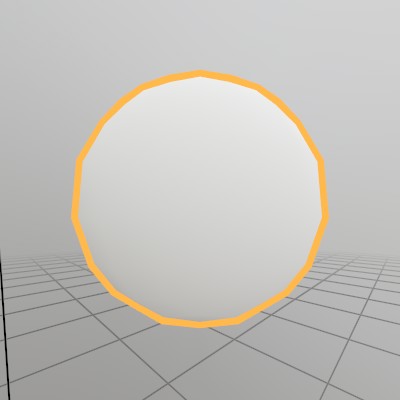
```csharp
Material outlineMaterial;
void CreateShellMaterial()
{
Material shellMaterial = new Material("inflatable.hlsl");
shellMaterial.FaceCull = Cull.Front;
shellMaterial[MatParamName.ColorTint] = Color.HSV(0.1f, 0.7f, 1);
outlineMaterial = Material.Default.Copy();
outlineMaterial.Chain = shellMaterial;
}
void DrawOutlineObject()
{
Mesh.Sphere.Draw(outlineMaterial, Matrix.S(0.3f));
}
```
## Material.Default
See `Default.Material`
## Material.FaceCull
See `Cull.Front`
## Material.ParamCount
### Listing parameters in a Material
```csharp
// Iterate using a foreach
Log.Info("Builtin PBR Materials contain these parameters:");
foreach (MatParamInfo info in Material.PBR.GetAllParamInfo())
Log.Info($"- {info.type,8}: {info.name}");
// Or with a normal for loop
Log.Info("Builtin Unlit Materials contain these parameters:");
for (int i=0; i("offsets", shaderData);
}
```
## Material
See `Material.SetData`
## Material
### Material parameter access
Material does have an array operator overload for setting
shader parameters really quickly! You can do this with strings
representing shader parameter names, or use the MatParamName
enum for compile safety.
```csharp
exampleMaterial[MatParamName.DiffuseTex ] = gridTex;
exampleMaterial[MatParamName.TexTransform] = new Vec4(0,0,2,2);
```
## MatParamInfo.name
See `Material.ParamCount`
## MatParamInfo.type
See `Material.ParamCount`
## MatParamInfo
See `Material.ParamCount`
## MatParamName
See `Material`
## Mesh.Bounds
See `Bounds`
## Mesh.IndCount
### Counting the Vertices and Triangles in a Model
Model.Visuals are always guaranteed to have a Mesh, so no need to
null check there, and VertCount and IndCount are available even if
Mesh.KeepData is false!
```csharp
int vertCount = 0;
int triCount = 0;
foreach (ModelNode node in model.Visuals)
{
Mesh mesh = node.Mesh;
vertCount += mesh.VertCount;
triCount += mesh.IndCount / 3;
}
Log.Info($"Model stats: {vertCount} vertices, {triCount} triangles");
```
## Mesh.VertCount
See `Mesh.IndCount`
## Mesh.Draw
### Generating a Mesh and Model
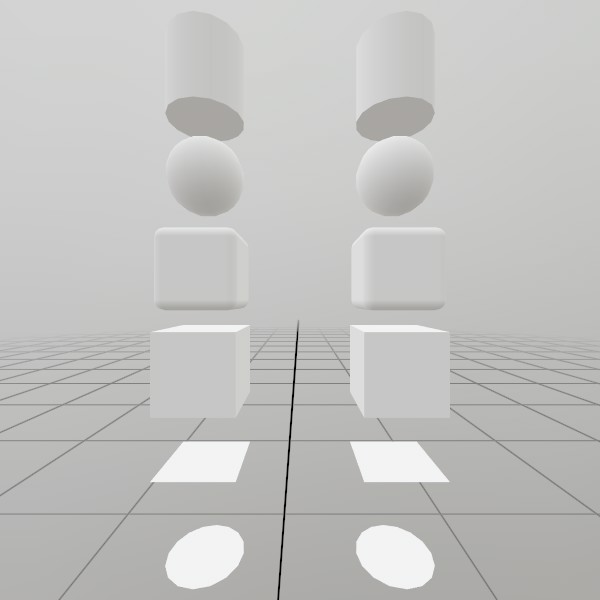
Here's a quick example of generating a mesh! You can store it in just a
Mesh, or you can attach it to a Model for easier rendering later on.
```csharp
// Do this in your initialization
Mesh roundedCubeMesh = Mesh.GenerateRoundedCube(Vec3.One * 0.4f, 0.05f);
Model roundedCubeModel = Model.FromMesh(roundedCubeMesh, Default.Material);
```
## Mesh.Draw
Drawing both a Mesh and a Model generated this way is reasonably simple,
here's a short example! For the Mesh, you'll need to create your own material,
we just loaded up the default Material here.
```csharp
// Call this code every Step
Matrix roundedCubeTransform = Matrix.T(0, 0, 0);
roundedCubeMesh.Draw(Default.Material, roundedCubeTransform);
roundedCubeTransform = Matrix.T(1, 0, 0);
roundedCubeModel.Draw(roundedCubeTransform);
```
## Mesh.GenerateCircle
### UV and Face layout
Here's a test image that illustrates how this mesh's geometry is
laid out.
```csharp
meshCircle = Mesh.GenerateCircle(1);
```
## Mesh.GenerateCircle
### Generating a Mesh and Model

Here's a quick example of generating a mesh! You can store it in just a
Mesh, or you can attach it to a Model for easier rendering later on.
```csharp
// Do this in your initialization
Mesh circleMesh = Mesh.GenerateCircle(0.4f);
Model circleModel = Model.FromMesh(circleMesh, Default.Material);
```
## Mesh.GenerateCircle
Drawing both a Mesh and a Model generated this way is reasonably simple,
here's a short example! For the Mesh, you'll need to create your own material,
we just loaded up the default Material here.
```csharp
Matrix circleTransform = Matrix.T(0, -1.5f, 0);
circleMesh.Draw(Default.Material, circleTransform);
circleTransform = Matrix.T(1, -1.5f, 0);
circleModel.Draw(circleTransform);
```
## Mesh.GenerateCube
### UV and Face layout
Here's a test image that illustrates how this mesh's geometry is
laid out.
```csharp
meshCube = Mesh.GenerateCube(Vec3.One);
```
## Mesh.GenerateCube
### Generating a Mesh and Model

Here's a quick example of generating a mesh! You can store it in just a
Mesh, or you can attach it to a Model for easier rendering later on.
```csharp
Mesh cubeMesh = Mesh.GenerateCube(Vec3.One * 0.4f);
Model cubeModel = Model.FromMesh(cubeMesh, Default.Material);
```
## Mesh.GenerateCube
Drawing both a Mesh and a Model generated this way is reasonably simple,
here's a short example! For the Mesh, you'll need to create your own material,
we just loaded up the default Material here.
```csharp
// Call this code every Step
Matrix cubeTransform = Matrix.T(0, -.5f, 0);
cubeMesh.Draw(Default.Material, cubeTransform);
cubeTransform = Matrix.T(1, -.5f, 0);
cubeModel.Draw(cubeTransform);
```
## Mesh.GenerateCylinder
### UV and Face layout
Here's a test image that illustrates how this mesh's geometry is
laid out.
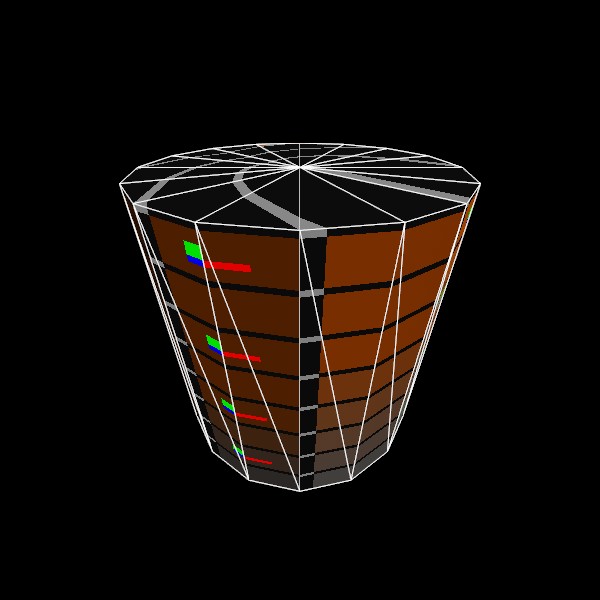
```csharp
meshCylinder = Mesh.GenerateCylinder(1, 1, Vec3.Up);
```
## Mesh.GenerateCylinder
### Generating a Mesh and Model

Here's a quick example of generating a mesh! You can store it in just a
Mesh, or you can attach it to a Model for easier rendering later on.
```csharp
// Do this in your initialization
Mesh cylinderMesh = Mesh.GenerateCylinder(0.4f, 0.4f, Vec3.Up);
Model cylinderModel = Model.FromMesh(cylinderMesh, Default.Material);
```
## Mesh.GenerateCylinder
Drawing both a Mesh and a Model generated this way is reasonably simple,
here's a short example! For the Mesh, you'll need to create your own material,
we just loaded up the default Material here.
```csharp
// Call this code every Step
Matrix cylinderTransform = Matrix.T(0, 1, 0);
cylinderMesh.Draw(Default.Material, cylinderTransform);
cylinderTransform = Matrix.T(1, 1, 0);
cylinderModel.Draw(cylinderTransform);
```
## Mesh.GeneratePlane
### UV and Face layout
Here's a test image that illustrates how this mesh's geometry is
laid out.
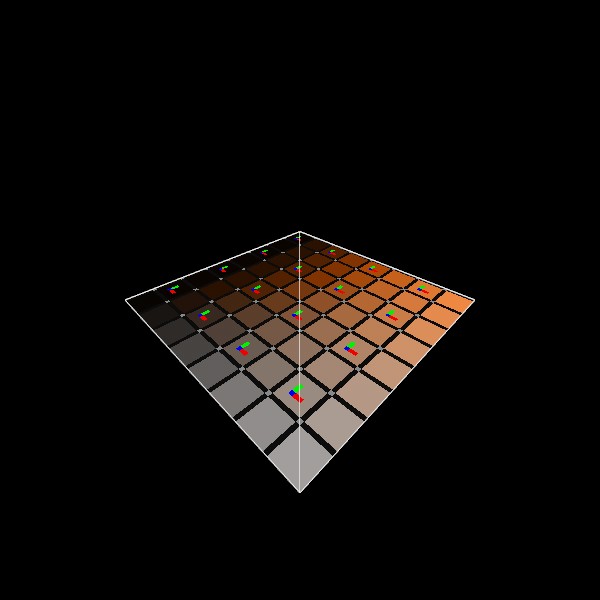
```csharp
meshPlane = Mesh.GeneratePlane(Vec2.One);
```
## Mesh.GeneratePlane
### Generating a Mesh and Model

Here's a quick example of generating a mesh! You can store it in just a
Mesh, or you can attach it to a Model for easier rendering later on.
```csharp
// Do this in your initialization
Mesh planeMesh = Mesh.GeneratePlane(Vec2.One*0.4f);
Model planeModel = Model.FromMesh(planeMesh, Default.Material);
```
## Mesh.GeneratePlane
Drawing both a Mesh and a Model generated this way is reasonably simple,
here's a short example! For the Mesh, you'll need to create your own material,
we just loaded up the default Material here.
```csharp
Matrix planeTransform = Matrix.T(0, -1, 0);
planeMesh.Draw(Default.Material, planeTransform);
planeTransform = Matrix.T(1, -1, 0);
planeModel.Draw(planeTransform);
```
## Mesh.GenerateRoundedCube
### UV and Face layout
Here's a test image that illustrates how this mesh's geometry is
laid out.
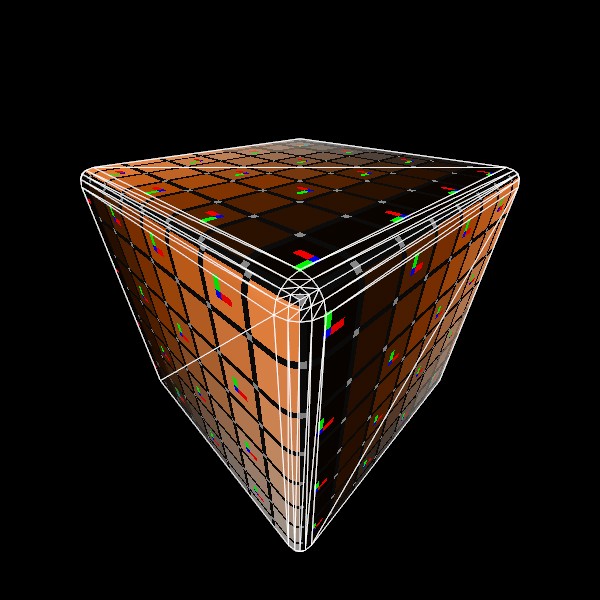
```csharp
meshRoundedCube = Mesh.GenerateRoundedCube(Vec3.One, 0.05f);
```
## Mesh.GenerateRoundedCube
See `Mesh.Draw`
## Mesh.GenerateRoundedCube
See `Mesh.Draw`
## Mesh.GenerateSphere
### UV and Face layout
Here's a test image that illustrates how this mesh's geometry is
laid out.
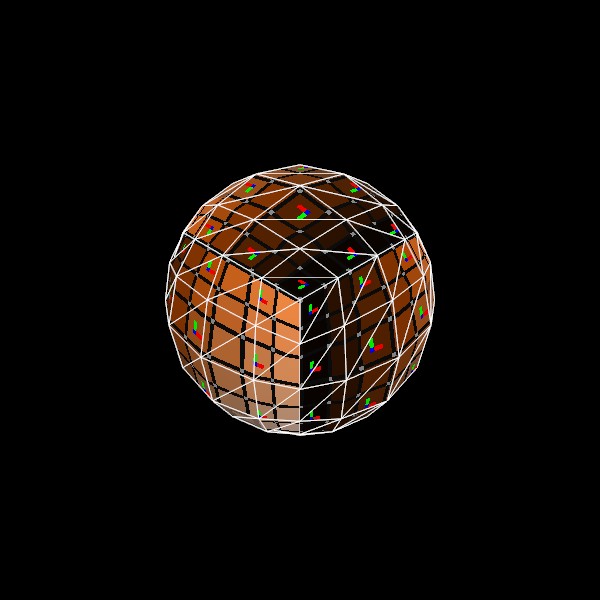
```csharp
meshSphere = Mesh.GenerateSphere(1);
```
## Mesh.GenerateSphere
### Generating a Mesh and Model

Here's a quick example of generating a mesh! You can store it in just a
Mesh, or you can attach it to a Model for easier rendering later on.
```csharp
// Do this in your initialization
Mesh sphereMesh = Mesh.GenerateSphere(0.4f);
Model sphereModel = Model.FromMesh(sphereMesh, Default.Material);
```
## Mesh.GenerateSphere
Drawing both a Mesh and a Model generated this way is reasonably simple,
here's a short example! For the Mesh, you'll need to create your own material,
we just loaded up the default Material here.
```csharp
// Call this code every Step
Matrix sphereTransform = Matrix.T(0, .5f, 0);
sphereMesh.Draw(Default.Material, sphereTransform);
sphereTransform = Matrix.T(1, .5f, 0);
sphereModel.Draw(sphereTransform);
```
## Mesh.Intersect
### Ray Mesh Intersection
Here's an example of casting a Ray at a mesh someplace in world space,
transforming it into model space, calculating the intersection point,
and displaying it back in world space.
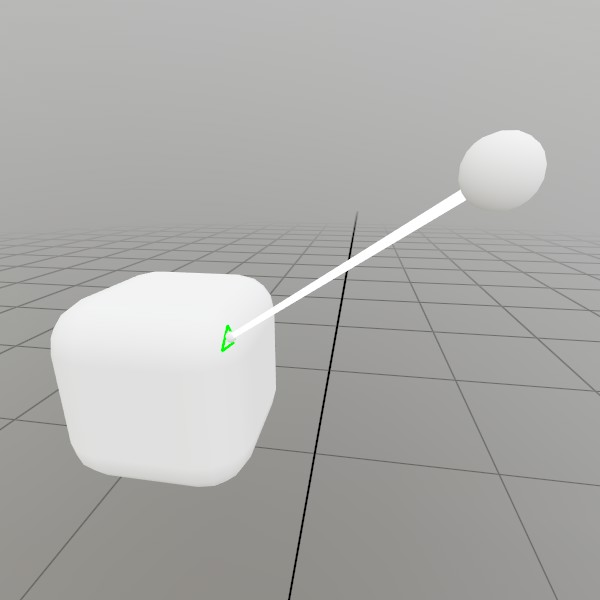
```csharp
Mesh sphereMesh = Default.MeshSphere;
Mesh boxMesh = Mesh.GenerateRoundedCube(Vec3.One*0.2f, 0.05f);
Pose boxPose = (Demo.contentPose * Matrix.T(0, -0.1f, 0)).Pose;
Pose castPose = (Demo.contentPose * Matrix.T(0.25f, 0.11f, 0.2f)).Pose;
public void StepRayMesh()
{
// Draw our setup, and make the visuals grab/moveable!
UI.Handle("Box", ref boxPose, boxMesh.Bounds);
UI.Handle("Cast", ref castPose, sphereMesh.Bounds*0.03f);
boxMesh .Draw(Default.MaterialUI, boxPose .ToMatrix());
sphereMesh.Draw(Default.MaterialUI, castPose.ToMatrix(0.03f));
Lines.Add(castPose.position, boxPose.position, Color.White, 0.005f);
// Create a ray that's in the Mesh's model space
Matrix transform = boxPose.ToMatrix();
Ray ray = transform
.Inverse
.Transform(Ray.FromTo(castPose.position, boxPose.position));
// Draw a sphere at the intersection point, if the ray intersects
// with the mesh.
if (ray.Intersect(boxMesh, Cull.Back, out Ray at, out uint index))
{
sphereMesh.Draw(Default.Material, Matrix.TS(transform.Transform(at.position), 0.01f));
if (boxMesh.GetTriangle(index, out Vertex a, out Vertex b, out Vertex c))
{
Vec3 aPt = transform.Transform(a.pos);
Vec3 bPt = transform.Transform(b.pos);
Vec3 cPt = transform.Transform(c.pos);
Lines.Add(aPt, bPt, new Color32(0,255,0,255), 0.005f);
Lines.Add(bPt, cPt, new Color32(0,255,0,255), 0.005f);
Lines.Add(cPt, aPt, new Color32(0,255,0,255), 0.005f);
}
}
}
```
## Mesh.SetData
### Procedurally generating a wavy grid
Here, we'll generate a grid mesh using Mesh.SetVerts and Mesh.SetInds! This
is a common example of creating a grid using code, we're using a sin wave
to make it more visually interesting, but you could also substitute this for
something like sampling a heightmap, or a more interesting mathematical
formula!
Note: x+y*gridSize is the formula for 2D (x,y) access of a 1D array that represents
a grid.
```csharp
const int gridSize = 8;
const float gridMaxF = gridSize-1;
Vertex[] verts = new Vertex[gridSize*gridSize];
uint [] inds = new uint [gridSize*gridSize*6];
for (int y = 0; y < gridSize; y++) {
for (int x = 0; x < gridSize; x++) {
// Create a vertex on a grid, centered about the origin. The dimensions extends
// from -0.5 to +0.5 on the X and Z axes. The Y value is then sampled from
// a sin wave using the x and y values.
//
// The normal of the vertex is then calculated from the derivative of the Y
// value!
verts[x+y*gridSize] = new Vertex(
new Vec3(
x/gridMaxF-0.5f,
SKMath.Sin((x+y) * 0.7f)*0.1f,
y/gridMaxF-0.5f),
new Vec3(
-SKMath.Cos((x+y) * 0.7f),
1,
-SKMath.Cos((x+y) * 0.7f)).Normalized,
new Vec2(
x / gridMaxF,
y / gridMaxF));
// Create triangle face indices from the current vertex, and the vertices
// on the next row and column! Since there is no 'next' row and column on
// the last row and column, we guard this with a check for size-1.
if (x micBuffer.Length)
micBuffer = new float[Microphone.Sound.UnreadSamples];
// Read data from the microphone stream into our buffer, and track
// how much was actually read. Since the mic data collection runs in
// a separate thread, this will often be a little inconsistent. Some
// frames will have nothing ready, and others may have a lot!
int samples = Microphone.Sound.ReadSamples(ref micBuffer);
// This is a cumulative moving average over the last 1000 samples! We
// Abs() the samples since audio waveforms are half negative.
for (int i = 0; i < samples; i++)
micIntensity = (micIntensity*999.0f + Math.Abs(micBuffer[i]))/1000.0f;
return micIntensity;
}
```
## Microphone.Sound
See `Microphone.IsRecording`
## Microphone.GetDevices
### Choosing a microphone device
While generally you'll prefer to use the default device, it can be
nice to allow users to pick which mic they're using! This is
especially important on PC, where users may have complicated or
interesting setups.
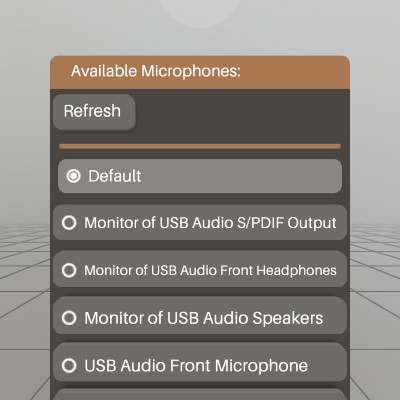
This sample is a very simple window that allows users to start
recording with a device other than the default. NOTE: this example
is designed with the assumption that Microphone.Start() has been
called already.
```csharp
Pose micSelectPose = new Pose(Demo.contentPose.Translation + V.XYZ(0,-0.12f,0), Demo.contentPose.Rotation);
string[] micDevices = null;
string micDeviceActive = null;
void ShowMicDeviceWindow()
{
// Let the user choose a microphone device
UI.WindowBegin("Available Microphones:", ref micSelectPose);
// User may plug or unplug a mic device, so it's nice to be able to
// refresh this list.
if (UI.Button("Refresh") || micDevices == null)
micDevices = Microphone.GetDevices();
UI.HSeparator();
// Display the list of potential microphones. Some systems may only
// have the default (null) device available.
Vec2 size = V.XY(0.25f, UI.LineHeight);
if (UI.Radio("Default", micDeviceActive == null, size))
{
micDeviceActive = null;
Microphone.Start(micDeviceActive);
}
foreach (string device in micDevices)
{
if (UI.Radio(device, micDeviceActive == device, size))
{
micDeviceActive = device;
Microphone.Start(micDeviceActive);
}
}
UI.WindowEnd();
}
```
## Microphone.Start
### Recording Audio Snippets
A common use case for the microphone would be to record a snippet of
audio! This demo is a window that will read data from the Microphone,
and use that to create a sound for playback.
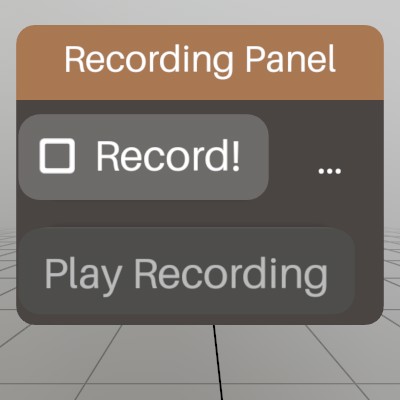
```csharp
Sound recordedSound = null;
List recordedData = new List();
float[] sampleBuffer = null;
bool recording = false;
Pose recordingWindow = (Demo.contentPose * Matrix.T(-0.15f,0,0)).Pose;
void RecordAudio()
{
UI.WindowBegin("Recording Panel", ref recordingWindow);
// This code will begin a new recording, or finish an existing
// recording!
if (UI.Toggle("Record!", ref recording))
{
if (recording)
{
// Clear out our data, and start up the mic!
recordedData.Clear();
recording = Microphone.Start();
if (!recording)
Log.Warn("Recording failed to start!");
}
else
{
// Stop the mic, and pour our recorded samples into a new Sound
Microphone.Stop();
recordedSound = Sound.FromSamples(recordedData.ToArray());
}
}
// If the mic is recording, every frame we'll want to grab all the data
// from the Microphone's audio stream, and store it until we can make
// a complete sound from it.
if (Microphone.IsRecording)
{
if (sampleBuffer == null || sampleBuffer.Length < Microphone.Sound.UnreadSamples)
sampleBuffer = new float[Microphone.Sound.UnreadSamples];
int read = Microphone.Sound.ReadSamples(ref sampleBuffer);
recordedData.AddRange(sampleBuffer[0..read]);
}
// Let the user know the current status of our recording code.
UI.SameLine();
if (Microphone.IsRecording) UI.Label("recording...");
else if (recordedSound != null) UI.Label($"{recordedSound.Duration:0.#}s");
else UI.Label("...");
// If we have a recording, give the user a button that'll play it back!
UI.PushEnabled(recordedSound != null);
if (UI.Button("Play Recording"))
recordedSound.Play(recordingWindow.position);
UI.PopEnabled();
UI.WindowEnd();
}
```
## Microphone.Start
See `Microphone.GetDevices`
## Microphone
See `Microphone.Start`
## Microphone
See `Microphone.IsRecording`
## Microphone
See `Microphone.GetDevices`
## Model.ActiveAnim
See `Anim.Name`
## Model.AnimCompletion
See `Anim.Name`
## Model.AnimMode
See `Anim.Name`
## Model.Anims
See `Anim.Duration`
## Model.AnimTime
See `Anim.Name`
## Model.Nodes
### Simple iteration
Walking through the Model's list of nodes is pretty
straightforward! This will touch every ModelNode in the Model,
in the order they were defined, regardless of hierarchy position
or contents.
```csharp
Log.Info("Iterate nodes:");
foreach (ModelNode node in model.Nodes)
Log.Info($" {node.Name}");
```
## Model.Nodes
### Tagged Nodes
You can search through Visuals and Nodes for nodes with some sort
of tag in their names. Since these names are from your modeling
software, this can allow for some level of designer configuration
that can be specific to your project.
```csharp
var nodes = model.Visuals
.Where(n => n.Name.Contains("[Wire]"));
foreach (ModelNode node in nodes)
{
node.Material = node.Material.Copy();
node.Material.Wireframe = true;
}
```
## Model.Nodes
### Collision Tagged Nodes
One particularly practical example of tagging your ModelNode names
would be to set up collision information for your Model. If, for
example, you have a low resolution mesh designed specifically for
fast collision detection, you can tag your non-solid nodes as
"[Intangible]", and your collider nodes as "[Invisible]":
```csharp
foreach (ModelNode node in model.Nodes)
{
node.Solid = node.Name.Contains("[Intangible]") == false;
node.Visible = node.Name.Contains("[Invisible]") == false;
}
```
## Model.RootNode
### Non-recursive depth first node traversal
If you need to walk through a Model's node hierarchy, this is a method
of doing this without recursion! You essentially do this by walking the
tree down (Child) and to the right (Sibling), and if neither is present,
then walking back up (Parent) until it can keep going right (Sibling)
and then down (Child) again.
```csharp
static void DepthFirstTraversal(Model model)
{
ModelNode node = model.RootNode;
int depth = 0;
while (node != null)
{
string tabs = new string(' ', depth*2);
Log.Info(tabs + node.Name);
if (node.Child != null) { node = node.Child; depth++; }
else if (node.Sibling != null) node = node.Sibling;
else {
while (node != null)
{
if (node.Sibling != null) {
node = node.Sibling;
break;
}
depth--;
node = node.Parent;
}
}
}
}
```
## Model.Visuals
See `Mesh.IndCount`
## Model.Visuals
### Simple iteration of visual nodes
This will iterate through every ModelNode in the Model with visual
data attached to it!
```csharp
Log.Info("Iterate visuals:");
foreach (ModelNode node in model.Visuals)
Log.Info($" {node.Name}");
```
## Model.Visuals
See `Model.Nodes`
## Model.Model
```csharp
Model model = new Model();
model.AddNode("Cube",
Matrix .Identity,
Mesh .GenerateCube(Vec3.One),
Default.Material);
```
## Model.AddNode
### Assembling a Model
While normally you'll load Models from file, you can also assemble
them yourself procedurally! This example shows assembling a simple
hierarchy of visual and empty nodes.
```csharp
Model model = new Model();
model
.AddNode ("Root", Matrix.S(0.2f), Mesh.Cube, Material.Default)
.AddChild("Sub", Matrix.TR (V.XYZ(0.5f, 0, 0), Quat.FromAngles(0, 0, 45)), Mesh.Cube, Material.Default)
.AddChild("Surface", Matrix.TRS(V.XYZ(0.5f, 0, 0), Quat.LookDir(V.XYZ(1,0,0)), V.XYZ(1,1,1)));
ModelNode surfaceNode = model.FindNode("Surface");
surfaceNode.AddChild("UnitX", Matrix.T(Vec3.UnitX));
surfaceNode.AddChild("UnitY", Matrix.T(Vec3.UnitY));
surfaceNode.AddChild("UnitZ", Matrix.T(Vec3.UnitZ));
```
## Model.Copy
See `Material.Copy`
## Model.FindAnim
See `Anim.Duration`
## Model.FindNode
See `Model.AddNode`
## Model.FromFile
See `Anim.Duration`
## Model.FromFile
See `Bounds`
## Model.PlayAnim
See `Anim.Duration`
## Model
See `Anim.Duration`
## Model
See `Anim.Name`
## Model
See `Mesh.IndCount`
## Model
See `Bounds`
## Model
See `Model.AddNode`
## Model
See `Model.Nodes`
## Model
See `Model.Visuals`
## Model
See `Model.Nodes`
## Model
See `Model.Nodes`
## Model
See `Model.RootNode`
## Model
### Recursive depth first node traversal
Recursive depth first traversal is a little simpler to implement as
long as you don't mind some recursion :)
This would be called like: `RecursiveTraversal(model.RootNode);`
```csharp
static void RecursiveTraversal(ModelNode node, int depth = 0)
{
string tabs = new string(' ', depth*2);
while (node != null)
{
Log.Info(tabs + node.Name);
RecursiveTraversal(node.Child, depth + 1);
node = node.Sibling;
}
}
```
## ModelNode.Info
### Modifying ModelNode.Info
While ModelNode.Info is automatically populated from a GLTF's
"extras", you can also embed or modify with your own data as well.
```csharp
ModelNode modelNode = model.AddNode("empty", Matrix.Identity);
modelNode.Info.Add("a", "1");
modelNode.Info.Add("b", "2");
modelNode.Info.Add("c", "3");
modelNode.Info.Add("c", "10"); // overwrite 'c's value
modelNode.Info.Remove("b");
```
## ModelNode.Info
### Iterating through ModelNode.Info
You can choose to iterate through different parts of ModelNode.Info
using foreach loops.
```csharp
foreach (ModelNode node in model.Nodes)
{
foreach (KeyValuePair kvp in node.Info)
Log.Info($"{kvp.Key} - {kvp.Value}");
foreach (string key in node.Info.Keys)
Log.Info($"key: {key} - {node.Info[key]}");
foreach (string val in node.Info.Values)
Log.Info($"value: {val}");
}
```
## ModelNode.Material
```csharp
foreach (ModelNode node in model.Nodes)
{
// ModelNode.Material will often returned a shared resource, so
// copy it if you don't wish to change all assets that share it.
Material mat = node.Material.Copy();
mat[MatParamName.ColorTint] = Color.HSV(0, 1, 1);
node.Material = mat;
}
```
## ModelNode.Solid
See `Model.Nodes`
## ModelNode.Visible
See `Model.Nodes`
## ModelNode.AddChild
See `Model.AddNode`
## ModelNodeInfoCollection.Keys
See `ModelNode.Info`
## ModelNodeInfoCollection.Values
See `ModelNode.Info`
## ModelNodeInfoCollection.Add
See `ModelNode.Info`
## ModelNodeInfoCollection.Remove
See `ModelNode.Info`
## OcclusionCaps
### Basic World Occlusion
A simple example of turning on occlusion. The method you use depends
on what the device supports — check `World.OcclusionCapabilities` to
see what's available. For example, HoloLens supports
`OcclusionCaps.Mesh`, while Quest supports `OcclusionCaps.Depth`.
```csharp
OcclusionCaps prevOcclusion;
public void Start()
{
OcclusionCaps available = World.OcclusionCapabilities;
if (available == OcclusionCaps.None)
Log.Info("Occlusion not available!");
// Store current state so we can restore it later
prevOcclusion = World.Occlusion;
// Enable whatever occlusion the device supports
World.Occlusion = available;
}
public void Stop()
{
// Restore the previous occlusion state
World.Occlusion = prevOcclusion;
}
```
## Platform.FilePickerVisible
### Opening a Model
This is a simple button that will open a 3D model selection
file picker, and make a call to OnLoadModel after a file has
been successfully picked!
```csharp
if (UI.Button("Open Model") && !Platform.FilePickerVisible) {
Platform.FilePicker(PickerMode.Open, OnLoadModel, null, Assets.ModelFormats);
}
```
## Platform.FilePickerVisible
Once you have the filename, it's simply a matter of loading it
from file. This is an example of async loading a model, and
calculating a scale value that ensures the model is a reasonable
size.
```csharp
private void OnLoadModel(string filename)
{
model = Model.FromFile(filename);
modelTask = Assets.CurrentTask;
modelScale = 1;
modelScaleDone = false;
model.OnLoaded += (m) => {
if (m.Anims.Count > 0)
m.PlayAnim(m.Anims[0], AnimMode.Loop);
};
}
```
## Platform.FilePicker
### Read Custom Files
```csharp
Platform.FilePicker(PickerMode.Open, file => {
// On some platforms, using StereoKit's Platform.ReadFile
// instead of C#'s File IO functions may help bypass permission
// issues.
if (Platform.ReadFile(file, out string text))
Log.Info(text);
}, null, ".txt");
```
## Platform.FilePicker
### Write Custom Files
```csharp
Platform.FilePicker(PickerMode.Save, file => {
// On some platforms, using StereoKit's Platform.WriteFile
// instead of C#'s File IO functions may help bypass permission
// issues.
Platform.WriteFile(file, "Text for the file.\n- Thanks!");
}, null, ".txt");
```
## Platform.FilePicker
See `Platform.FilePickerVisible`
## Platform.FilePicker
See `Platform.FilePickerVisible`
## Platform.ReadFile
See `Platform.FilePicker`
## Platform.WriteFile
See `Platform.FilePicker`
## Pose.Forward
### Pose Directions
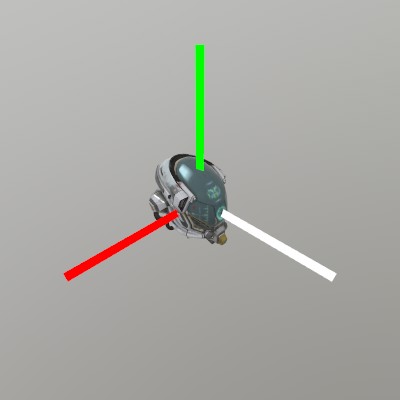
`Pose` provides a few handy vector properties to help working with
`Pose` relative directions! `Forward`, `Right`, and `Up` are all
derived from the `Pose`'s orientation, and represent the -Z, +X and
+Y directions of the `Pose`.
```csharp
Pose p = new Pose(0,0,-0.5f);
model.Draw(p.ToMatrix(0.03f));
Lines.Add(p.position, p.position + 0.1f*p.Right, new Color32(255,0,0,255), 0.005f);
Lines.Add(p.position, p.position + 0.1f*p.Up, new Color32(0,255,0,255), 0.005f);
Lines.Add(p.position, p.position + 0.1f*p.Forward, Color32.White, 0.005f);
```
## Pose.Identity
See `Lines.AddAxis`
## Pose.Right
See `Pose.Forward`
## Pose.Up
See `Pose.Forward`
## Pose.Pose
### Lerping Poses

Here we construct two `Pose`s, one using a position + direction
constructor, and one using a from -> to LookAt function. Both are
valid ways of constructing a `Pose`, check out the [`Quat`](https://stereokit.net/preview/Pages/StereoKit/Quat.html)
functions for more tools for creating `Pose` orientations!
After that, we're just blending between these two `Pose`s with a
`Pose.Lerp`, and showing the result at 10% intervals.
```csharp
Pose a = new Pose(0, 0.5f, -0.5f, Quat.LookDir(1,0,0));
Pose b = Pose.LookAt(V.XYZ(0,0,0), V.XYZ(0,1,0));
for (int i = 0; i < 11; i++) {
Pose p = Pose.Lerp(a, b, i/10.0f);
Lines.AddAxis(p, 0.05f);
}
// Show the origin for clarity
Lines.Add(V.XYZ(-1,0,0), V.XYZ(1,0,0), new Color32(100,0,0,100), 0.0025f);
Lines.Add(V.XYZ(0,-1,0), V.XYZ(0,1,0), new Color32(0,100,0,100), 0.0025f);
Lines.Add(V.XYZ(0,0,-1), V.XYZ(0,0,1), new Color32(0,0,100,100), 0.0025f);
```
## Pose.Lerp
See `Pose.Pose`
## Pose.LookAt
See `Pose.Pose`
## Pose.ToMatrix
### Draw Pose
Having a raw and malleable position/orientation available is great,
but with `Pose.ToMatrix`, you can also quickly turn a `Pose` into a
`Matrix` for use with drawing functions or other places where
`Matrix` transforms are needed! `ToMatrix` also has overloads to
include a scale, if one is available.

```csharp
Pose pose = new Pose(0,0,-0.5f, Quat.FromAngles(30,45,0));
float scale = 0.5f;
Mesh.Cube.Draw(Material.Default, pose.ToMatrix(scale));
```
## Pose
See `Lines.AddAxis`
## Pose
See `Pose.Pose`
## Pose
See `Pose.ToMatrix`
## Pose
See `Pose.Forward`
## Projection
### Toggling the projection mode
Only in flatscreen apps, there is the option to change the main
camera's projection mode between perspective and orthographic.
```csharp
if (SK.ActiveDisplayMode == DisplayMode.Flatscreen &&
Input.Key(Key.P).IsJustActive())
{
Renderer.Projection = Renderer.Projection == Projection.Perspective
? Projection.Ortho
: Projection.Perspective;
}
```
## Quat.Delta
```csharp
Pose spherePose = new Pose(-1, 0, 1, Quat.Identity);
Quat sphereDelta = Quat.Identity;
Vec3 oldPalmPos;
void SpinningSphere()
{
// Draw a sphere that you can spin around with your right hand!
Vec3 palmPos = Input.Hand(Handed.Right).palm.position - spherePose.position;
if (palmPos.Length < 0.3f)
{
sphereDelta = Quat.Delta(oldPalmPos.Normalized, palmPos.Normalized);
}
spherePose.orientation = sphereDelta * spherePose.orientation;
oldPalmPos = palmPos;
Mesh.Sphere.Draw(matDev, spherePose.ToMatrix(0.5f));
}
```
## Quat.LookAt
Quat.LookAt and LookDir are probably one of the easiest ways to
work with quaternions in StereoKit! They're handy functions to
have a good understanding of. Here's an example of how you might
use them.
```csharp
// Draw a box that always rotates to face the user
Vec3 boxPos = new Vec3(1,0,1);
Quat boxRot = Quat.LookAt(boxPos, Input.Head.position);
Mesh.Cube.Draw(Material.Default, Matrix.TR(boxPos, boxRot));
// Make a Window that faces a user that enters the app looking
// Forward.
Pose winPose = new Pose(0,0,-0.5f, Quat.LookDir(0,0,1));
UI.WindowBegin("Posed Window", ref winPose);
UI.WindowEnd();
```
## Quat
See `Quat.LookAt`
## Ray.Intersect
See `Mesh.Intersect`
## Renderer.Projection
See `Projection`
## Renderer.SkyLight
### Setting lighting to an equirect cubemap
Changing the environment's lighting based on an image is a really
great way to instantly get a particular feel to your scene! A neat
place to find compatible equirectangular images for this is
[Poly Haven](https://polyhaven.com/hdris)
```csharp
Renderer.SkyTex = Tex.FromCubemap("old_depot.hdr");
Renderer.SkyLight = Renderer.SkyTex.CubemapLighting;
```
And here's what it looks like applied to the default Material!

## Renderer.SkyTex
See `Renderer.SkyLight`
## RenderList.Add
### Render Icon From a Model
One place where RenderList excels, is at rendering icons or previews of
Models or scenes! This snippet of code will take a Model asset, and
render a preview of it into a small Sprite.
```csharp
static Sprite MakeIcon(Model model, int resolution)
{
RenderList list = new RenderList();
Tex result = Tex.RenderTarget(resolution, resolution, 8);
// Calculate a standard size that will fill the icon to the edges,
// based on the camera parameters we pass to DrawNow.
float scale = 1/model.Bounds.dimensions.Length;
list.Add(model, Matrix.TS(-model.Bounds.center*scale, scale), Color.White);
list.DrawNow(result,
Matrix.LookAt(V.XYZ(0,0,-1), Vec3.Zero, Vec3.Up),
Matrix.Perspective(45, 1, 0.01f, 10));
// Clearing isn't _necessary_ here, but DrawNow does not clear the list
// after drawing! This will free up assets that were referenced in the
// list without waiting for GC to destroy the RenderList object.
list.Clear();
return Sprite.FromTex(result.Copy());
}
```
From there, it's pretty easy to load a Model up, and draw it on a button
in the UI.
```csharp
Sprite icon;
public void Initialize()
{
Model model = Model.FromFile("Watermelon.glb");
// Model loading is async, so we want to make sure the Model is fully
// loaded before comitting it to a Sprite!
Assets.BlockForPriority(int.MaxValue);
icon = MakeIcon(model, 128);
}
Pose windowPose = new Pose(0,0,-0.5f, Quat.LookDir(0,0,1));
void ShowWindow()
{
UI.WindowBegin("RenderList Icons", ref windowPose);
UI.ButtonImg("Icon", icon, UIBtnLayout.CenterNoText, V.XX(UI.LineHeight*2));
UI.WindowEnd();
}
```
## RenderList.DrawNow
See `RenderList.Add`
## RenderList
See `RenderList.Add`
## SK.AppFocus
See `AppFocus`
## Sound.UnreadSamples
See `Microphone.IsRecording`
## Sound.FromFile
### Basic usage
```csharp
Sound sound = Sound.FromFile("BlipNoise.wav");
sound.Play(Vec3.Zero);
```
## Sound.FromSamples
### Generating a sound via samples
Making a procedural sound is pretty straightforward! Here's
an example of building a 500ms sound from two frequencies of
sin wave.
```csharp
float[] samples = new float[(int)(48000*0.5f)];
for (int i = 0; i < samples.Length; i++)
{
float t = i/48000.0f;
float band1 = SKMath.Sin(t * 523.25f * SKMath.Tau); // a 'C' tone
float band2 = SKMath.Sin(t * 659.25f * SKMath.Tau); // an 'E' tone
const float volume = 0.1f;
samples[i] = (band1 * 0.6f + band2 * 0.4f) * volume;
}
Sound sampleSound = Sound.FromSamples(samples);
sampleSound.Play(Vec3.Zero);
```
## Sound.FromSamples
See `Microphone.Start`
## Sound.Generate
### Generating a sound via generator
Making a procedural sound is pretty straightforward! Here's
an example of building a 500ms sound from two frequencies of
sin wave.
```csharp
Sound genSound = Sound.Generate((t) =>
{
float band1 = SKMath.Sin(t * 523.25f * SKMath.Tau); // a 'C' tone
float band2 = SKMath.Sin(t * 659.25f * SKMath.Tau); // an 'E' tone
const float volume = 0.1f;
return (band1*0.6f + band2*0.4f) * volume;
}, 0.5f);
genSound.Play(Vec3.Zero);
```
## Sound.Play
See `Sound.FromFile`
## Sound.ReadSamples
See `Microphone.Start`
## Sound.ReadSamples
See `Microphone.IsRecording`
## Sound
See `Sound.FromFile`
## Sound
See `Sound.Generate`
## Sound
See `Sound.FromSamples`
## Sound
See `Microphone.IsRecording`
## Sprite.FromTex
### Generating Particle Sprites
Sometimes you just need a small blob of color for visual effects or
other things! Instead of firing up an image editor, you can just
use Tex.GenParticle!
This sample generates a number of different shapes defined by the
`roundness` parameter. Starting at 0, and increasing at .1
increments to 1.0.
```csharp
Sprite[] sprites = new Sprite[10];
for (int i = 0; i < sprites.Length; i++)
{
float roundness = i / (float)(sprites.Length - 1);
Tex particleTex = Tex.GenParticle(64, 64, roundness);
sprites[i] = Sprite.FromTex(particleTex, SpriteType.Single);
}
// :End:
spriteList = sprites;
}
ublic void Step() {
Hierarchy.Push(Matrix.T(0,4,2));
Sprite[] sprites = spriteList;
```
:CodeSample: Tex.GenParticle Sprite.FromTex
And here's what that looks like when you draw using this code!
```csharp
for (int i = 0; i < sprites.Length; i++)
sprites[i].Draw(Matrix.TS(V.XY0(i%5, -i/5)*0.1f, 0.1f), Pivot.TopRight);
```
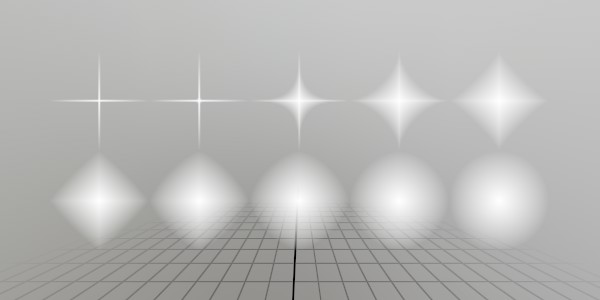
## SystemInfo.worldRaycastPresent
### Basic World Raycasting
World.RaycastEnabled must be true before calling World.Raycast, or
you won't ever intersect with any world geometry.
```csharp
public void Start()
{
if (!SK.System.worldRaycastPresent)
Log.Info("World raycasting not available!");
// This must be enabled before calling World.Raycast
World.RaycastEnabled = true;
}
public void Stop() => World.RaycastEnabled = false;
public void StepRaycast()
{
// Raycast out the index finger of each hand, and draw a red sphere
// at the intersection point.
for (int i = 0; i < 2; i++)
{
Hand hand = Input.Hand(i);
if (!hand.IsTracked) continue;
Ray fingerRay = hand[FingerId.Index, JointId.Tip].Pose.Ray;
if (World.Raycast(fingerRay, out Ray at))
Mesh.Sphere.Draw(Material.Default, Matrix.TS(at.position, 0.03f), new Color(1, 0, 0));
}
}
```
## Tex.FromCubemapEquirectangular
See `Renderer.SkyLight`
## Tex.GenParticle
See `Sprite.FromTex`
## Tex.GetColorData
### Get data from a Tex
Reading texture data from a Tex can be a slow operation, since
texture memory lives on the GPU, and isn't generally optimized for
readability. But, sometimes you still have to do it! Just remember
to avoid doing it too often or casually, and be cautious about how
you treat the large amounts of memory involved.
```csharp
// Reading colors can be as simple as this! Remember to select a color
// format that matches the data stored in the texture, as StereoKit
// will not convert the data for you. Most images from file are 32 bit
// RGBA images!
Tex texture = Tex.FromFile("floor.png");
Color32[] colors = texture.GetColorData();
// For a more complex texture, such as this generated texture with 32
// bits per channel, we can load the data into a float array, with 4
// floats per-pixel! A `Color` would probably be fine here too.
Tex texture2 = Tex.GenColor(Color.White, 16, 16, TexType.Image, TexFormat.Rgba128);
float[] colors2 = texture2.GetColorData(0, 4);
```
## Tex.SetColors
### Creating a texture procedurally
It's pretty easy to create an array of colors, and
just pass that into an empty texture! Here, we're
building a simple grid texture, like so:
You can call SetTexture as many times as you like! If
you're calling it frequently, you may want to keep
the width and height consistent to prevent from creating
new texture objects. Use TexType.ImageNomips to prevent
StereoKit from calculating mip-maps, which can be costly,
especially when done frequently.
```csharp
// Create an empty texture! This is TextType.Image, and
// an RGBA 32 bit color format.
Tex gridTex = new Tex();
// Use point sampling to ensure that the grid lines are
// crisp and sharp, not blended with the pixels around it.
gridTex.SampleMode = TexSample.Point;
// Allocate memory for the pixels we'll fill in, powers
// of two are always best for textures, since this makes
// things like generating mip-maps easier.
int width = 128;
int height = 128;
Color32[] colors = new Color32[width*height];
// Create a color for the base of the grid, and the
// lines of the grid
Color32 baseColor = Color.HSV(0.6f,0.1f,0.25f);
Color32 lineColor = Color.HSV(0.6f,0.05f,1);
Color32 subLineColor = Color.HSV(0.6f,0.05f,.6f);
// Loop through each pixel
for (int y = 0; y < height; y++) {
for (int x = 0; x < width; x++) {
// If the pixel's x or y value is a multiple of 64, or
// if it's adjacent to a multiple of 128, then we
// choose the line color! Otherwise, we use the base.
if (x % 128 == 0 || (x+1)%128 == 0 || (x-1)%128 == 0 ||
y % 128 == 0 || (y+1)%128 == 0 || (y-1)%128 == 0)
colors[x+y*width] = lineColor;
else if (x % 64 == 0 || y % 64 == 0)
colors[x+y*width] = subLineColor;
else
colors[x+y*width] = baseColor;
} }
// Put the pixel information into the texture
gridTex.SetColors(width, height, colors);
```
## Text.Add
See `Font.FromFile`
## Text.Add
See `Font.FromFile`
## Text.Add
See `Font.FromFile`
## Text.MakeStyle
See `Font.FromFile`
## Text.MakeStyle
See `Font.FromFile`
## Text.MakeStyle
See `Font.FromFile`
## Text.SizeLayout
### Text Sizes
When you need to work with placing text, `Text.SizeLayout` and
`Text.SizeRender` are the keys to the kingdom! `SizeLayout` will
give you the size of your text as far as layout is generally
concerned, while `SizeRender` will take your layout size and
provide the total bounds that you need to watch out for! Some fonts
can have absolutely _unreasonable_ ascenders and descenders for
some of their glyphs. Extreme cases can be a bit rare, so in
general you'll only need to work with the layout size. Just watch
out when you need to clip your text!

_You can see here with Segoe UI, the ascender area for rendering looks ridiculous._
In this screenshot, the black area represents the layout size,
while the gray area represents the render size. "lÔTy" is a decent
set of characters to illustrate a pretty normal range of height
variation.
```csharp
string text = "lÔTy";
TextStyle style = TextStyle.Default;
Text.Add(text, Matrix.Identity, style, Pivot.Center);
// Calculate the text sizes! Layout size is used for placing text, but
// render size indicates the total area where text could end up,
// accounting for _extreme_ ascenders and descenders.
Vec2 layoutSz = Text.SizeLayout(text, style);
Vec2 renderSz = Text.SizeRender(layoutSz, style, out float renderYOff);
// Draw the layout size behind the text in black
Mesh.Quad.Draw(Material.Unlit,
Matrix.TS(V.XYZ(0, 0, 0.0001f), (-layoutSz).XY1),
Color.Black);
// Draw the render size behind the text in gray, note that we're
// dividing the y offset by 2 because we're drawing from the _center_
// of a quad rather than something like the top left.
Mesh.Quad.Draw(Material.Unlit,
Matrix.TS(V.XYZ(0, renderYOff/2.0f, 0.0002f), (-renderSz).XY1),
new Color(0.2f,0.2f,0.2f));
```
## Text.SizeRender
See `Text.SizeLayout`
## TextStyle.Ascender
### TextStyle Info
If you're doing advanced text layout, StereoKit does provide some
information about the font underlying the TextStyle! Here's a
quick sketch that shows what all that info represents:

```csharp
// Some representative characters:
// l frequently goes above CapHeight all the way to the Ascender.
// Ô will go past the Ascender outside the layout bounds, and slightly below the baseline.
// T goes the whole way from Baseline to CapHeight.
// y will go all the way down to the descender.
string text = "lÔTy";
// Draw the text
Text.Add(text, Matrix.Identity, style, Pivot.TopLeft, Align.TopLeft);
// Show the bounding regions for the size of the text
Color colLayoutArea = new Color(0.1f, 0.1f, 0.1f);
Color colRenderArea = new Color(0.25f, 0.5f, 0.25f);
Vec2 size = Text.SizeLayout(text, style);
Vec2 sizeR = Text.SizeRender(size, style, out float yOff);
Mesh.Quad.Draw(Material.Unlit, Matrix.TS(size .XY0/-2 + V.XYZ(0, 0, 0.0001f), size .XY1), colLayoutArea);
Mesh.Quad.Draw(Material.Unlit, Matrix.TS(sizeR.XY0/-2 + V.XYZ(0, yOff, 0.0002f), sizeR.XY1), colRenderArea);
// Show lines representing the typography units for this style
Color32 colCapHeight = new Color32( 50, 255, 50, 255);
Color32 colBaseline = new Color32(255, 255, 255, 255);
Color32 colAscender = new Color32(255, 50, 50, 255);
Color32 colDescender = new Color32( 50, 50, 255, 255);
Color32 colLineHeight = new Color32(255, 255, 255, 255);
float baselineAt = -style.CapHeight;
float ascenderAt = baselineAt + style.Ascender;
float capHeightAt = baselineAt + style.CapHeight;
float descenderAt = baselineAt - style.Descender;
float lineHeightAt = ascenderAt - style.LineHeightPct * style.TotalHeight;
Lines.Add(V.XY0(0, ascenderAt ), V.XY0(-size.x, ascenderAt ), colAscender, 0.003f);
Lines.Add(V.XY0(0, baselineAt ), V.XY0(-size.x, baselineAt ), colBaseline, 0.003f);
Lines.Add(V.XY0(0, capHeightAt ), V.XY0(-size.x, capHeightAt ), colCapHeight, 0.003f);
Lines.Add(V.XY0(0, descenderAt ), V.XY0(-size.x, descenderAt ), colDescender, 0.003f);
Lines.Add(V.XY0(0, lineHeightAt), V.XY0(-size.x, lineHeightAt), colLineHeight, 0.003f);
```
## TextStyle.CapHeight
See `TextStyle.Ascender`
## TextStyle.Descender
See `TextStyle.Ascender`
## TextStyle.LineHeightPct
See `TextStyle.Ascender`
## TextStyle.TotalHeight
See `TextStyle.Ascender`
## TextStyle
See `TextStyle.Ascender`
## TrackState
See `Controller.aim`
## Transparency.Add
See `Material.Transparency`
## Transparency.Blend
See `Material.Transparency`
## Transparency.MSAA
See `Material.Transparency`
## UI.Enabled
### Enabling and Disabling UI Elements
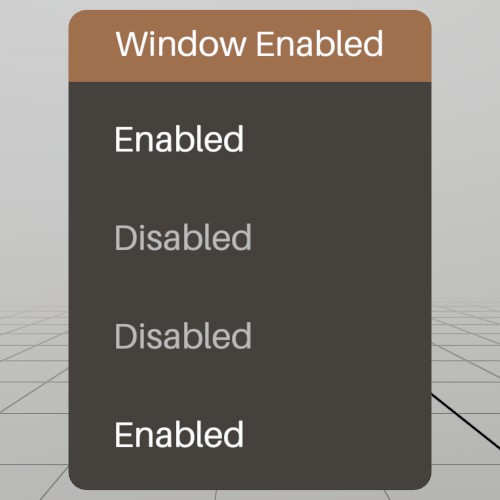
UI.Push/PopEnabled allows you to enable and disable groups of UI
elements! This is a hierarchical stack, so by default, all PushEnabled
calls inherit the stack's state.
```csharp
Pose windowPoseEnabled = new Pose(1.8f, 0, 0, Quat.Identity);
void ShowWindowEnabled()
{
UI.WindowBegin("Window Enabled", ref windowPoseEnabled);
// Default state of the enabled stack is true
UI.Label(UI.Enabled ? "Enabled" : "Disabled");
UI.PushEnabled(false);
{
// This label will be disabled
UI.Label(UI.Enabled?"Enabled":"Disabled");
UI.PushEnabled(true);
{
// This label inherits the state of the parent, so is therefore
// disabled
UI.Label(UI.Enabled?"Enabled":"Disabled");
}
UI.PopEnabled();
UI.PushEnabled(true, HierarchyParent.Ignore);
{
// This label was enabled, overriding the parent, and so is
// enabled.
UI.Label(UI.Enabled ? "Enabled" : "Disabled");
}
UI.PopEnabled();
}
UI.PopEnabled();
UI.WindowEnd();
}
```
## UI.LastElementActive
### Checking UI element status
It can sometimes be nice to know how the user is interacting with a
particular UI element! The UI.LastElementX functions can be used to
query a bit of this information, but only for _the most recent_ UI
element that **uses an id**!
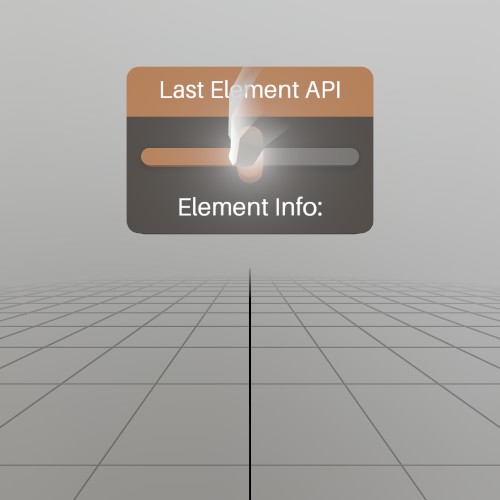
So in this example, we're querying the information for the "Slider"
UI element. Note that UI.Text does NOT use an id, which is why this
works.
```csharp
UI.WindowBegin("Last Element API", ref windowPose);
UI.HSlider("Slider", ref sliderVal, 0, 1, 0.1f, 0, UIConfirm.Pinch);
UI.Text("Element Info:", Align.TopCenter);
if (UI.LastElementHandActive (Handed.Left ).IsActive()) UI.Label("Left Active");
if (UI.LastElementHandActive (Handed.Right).IsActive()) UI.Label("Right Active");
if (UI.LastElementHandFocused(Handed.Left ).IsActive()) UI.Label("Left Focused");
if (UI.LastElementHandFocused(Handed.Right).IsActive()) UI.Label("Right Focused");
if (UI.LastElementFocused .IsActive()) UI.Label("Focused");
if (UI.LastElementActive .IsActive()) UI.Label("Active");
UI.WindowEnd();
```
## UI.LastElementFocused
See `UI.LastElementActive`
## UI.Button
### A simple button
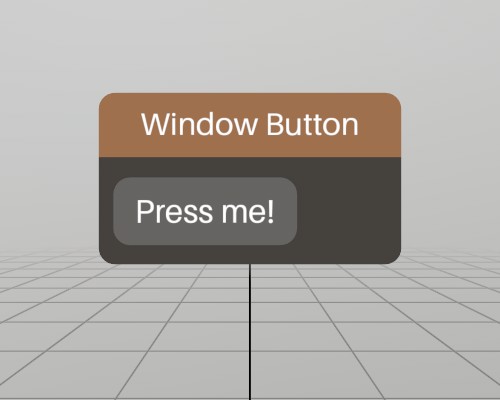
This is a complete window with a simple button on it! `UI.Button`
returns true only for the very first frame the button is pressed, so
using the `if(UI.Button())` pattern works very well for executing
code on button press!
```csharp
Pose windowPoseButton = new Pose(0, 0, 0, Quat.Identity);
void ShowWindowButton()
{
UI.WindowBegin("Window Button", ref windowPoseButton);
if (UI.Button("Press me!"))
Log.Info("Button was pressed.");
UI.WindowEnd();
}
```
## UI.HandleBegin
See `Bounds`
## UI.HandleEnd
See `Bounds`
## UI.HSeparator
### Separating UI Visually
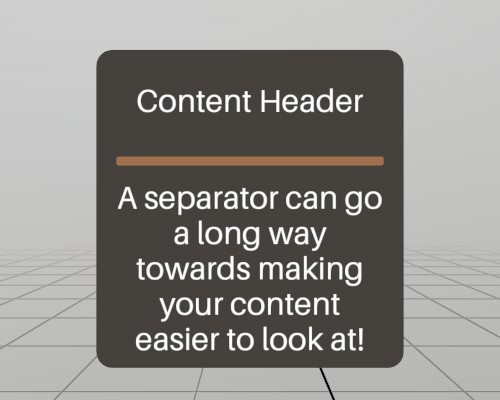
A separator is a simple visual element that fills the window
horizontally. It's nothing complicated, but can help create visual
association between groups of UI elements.
```csharp
Pose windowPoseSeparator = new Pose(.6f, 0, 0, Quat.Identity);
void ShowWindowSeparator()
{
UI.WindowBegin("Window Separator", ref windowPoseSeparator, UIWin.Body);
UI.Label("Content Header");
UI.HSeparator();
UI.Text("A separator can go a long way towards making your content "
+ "easier to look at!", Align.TopCenter);
UI.WindowEnd();
}
```
## UI.HSlider
### Horizontal Sliders
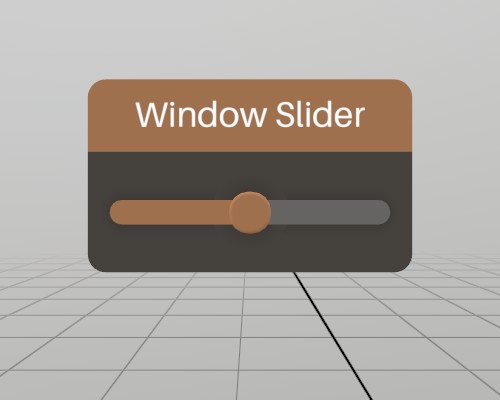
A slider will slide between two values at increments. The function
requires a reference to a float variable where the slider's state is
stored. This allows you to manage the state yourself, and it's
completely valid for you to change the slider state separately, the
UI element will update to match.
Note that `UI.HSlider` returns true _only_ when the slider state has
changed, and does _not_ return the current state.
```csharp
Pose windowPoseSlider = new Pose(.9f, 0, 0, Quat.Identity);
float sliderState = 0.5f;
void ShowWindowSlider()
{
UI.WindowBegin("Window Slider", ref windowPoseSlider);
if (UI.HSlider("Slider", ref sliderState, 0, 1, 0.1f))
Log.Info($"Slider value just changed: {sliderState}");
UI.WindowEnd();
}
```
## UI.Input
### Text Input
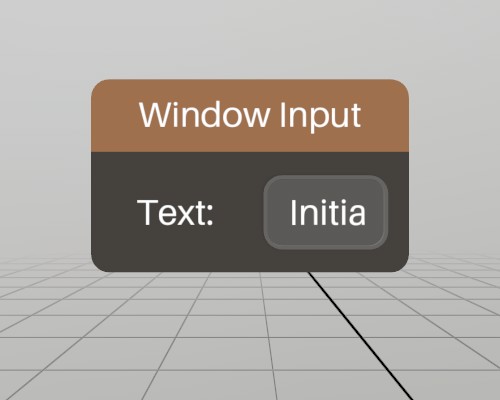
The `UI.Input` element allows users to enter text. Upon selecting the
element, a virtual keyboard will appear on platforms that provide
one. The function requires a reference to a string variable where
the input's state is stored. This allows you to manage the state
yourself, and it's completely valid for you to change the input state
separately, the UI element will update to match.
`UI.Input` will return true on frames where the text has _just_
changed.
```csharp
Pose windowPoseInput = new Pose(1.2f, 0, 0, Quat.Identity);
string inputState = "Initial text";
void ShowWindowInput()
{
UI.WindowBegin("Window Input", ref windowPoseInput);
// Add a small label in front of it on the same line
UI.Label("Text:");
UI.SameLine();
if (UI.Input("Text", ref inputState))
Log.Info($"Input text just changed");
UI.WindowEnd();
}
```
## UI.Label
See `UI.HSeparator`
## UI.LastElementHandActive
See `UI.LastElementActive`
## UI.LastElementHandFocused
See `UI.LastElementActive`
## UI.PopEnabled
See `UI.Enabled`
## UI.PushEnabled
See `UI.Enabled`
## UI.Radio
### Radio button group
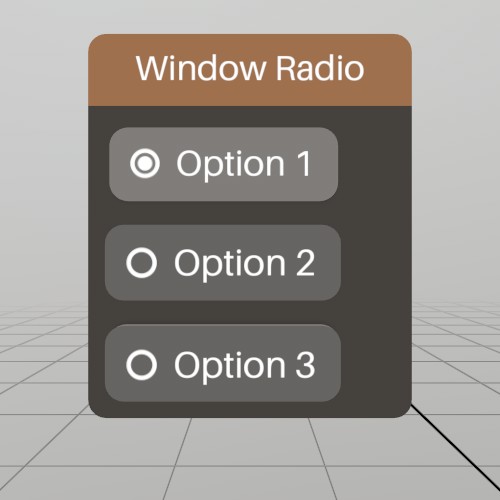
Radio buttons are a variety of Toggle button that behaves in a manner
more conducive to radio group style behavior. This is an example of
how to implement a small radio button group.
```csharp
Pose windowPoseRadio = new Pose(1.5f, 0, 0, Quat.Identity);
int radioState = 1;
void ShowWindowRadio()
{
UI.WindowBegin("Window Radio", ref windowPoseRadio);
if (UI.Radio("Option 1", radioState == 1)) radioState = 1;
if (UI.Radio("Option 2", radioState == 2)) radioState = 2;
if (UI.Radio("Option 3", radioState == 3)) radioState = 3;
UI.WindowEnd();
}
```
## UI.SameLine
See `UI.Input`
## UI.Text
See `UI.HSeparator`
## UI.Text
### Scrolling Text
`UI.Text` has an optional overload that allows you to scroll long
chunks of text! Here's a simple example that allows you to scroll some
Lorem Ipsum text vertically.

```csharp
Pose windowPoseScroll = new Pose(2.1f, 0, 0, Quat.Identity);
Vec2 scroll = V.XY(0,0.1f);
void ShowWindowTextScroll()
{
UI.WindowBegin("Window Text Scroll", ref windowPoseScroll);
UI.Text(loremIpsum, ref scroll, UIScroll.Vertical, 0.1f);
UI.WindowEnd();
}
```
## UI.Toggle
### A toggle button
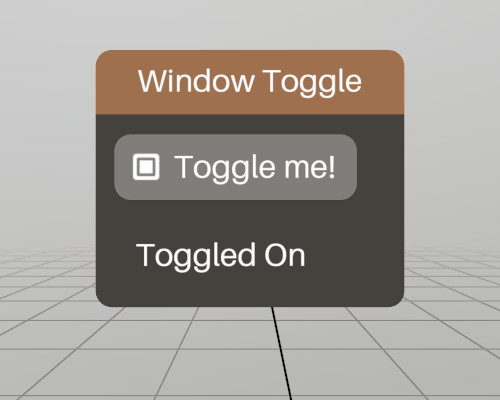
Toggle buttons swap between true and false when you press them! The
function requires a reference to a bool variable where the toggle's
state is stored. This allows you to manage the state yourself, and
it's completely valid for you to change the toggle state separately,
the UI element will update to match.
Note that `UI.Toggle` returns true _only_ when the toggle state has
changed, and does _not_ return the current state.
```csharp
Pose windowPoseToggle = new Pose(.3f, 0, 0, Quat.Identity);
bool toggleState = true;
void ShowWindowToggle()
{
UI.WindowBegin("Window Toggle", ref windowPoseToggle);
if (UI.Toggle("Toggle me!", ref toggleState))
Log.Info("Toggle just changed.");
if (toggleState) UI.Label("Toggled On");
else UI.Label("Toggled Off");
UI.WindowEnd();
}
```
## UI.VolumeAt
This code will draw an axis at the index finger's location when
the user pinches while inside a VolumeAt.
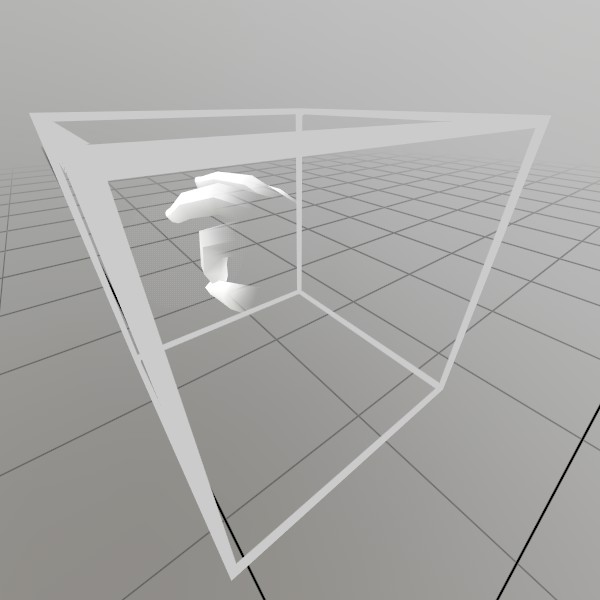
```csharp
// Draw a transparent volume so the user can see this space
Vec3 volumeAt = new Vec3(0, 0.2f, -0.4f);
float volumeSize = 0.2f;
Default.MeshCube.Draw(Default.MaterialUIBox, Matrix.TS(volumeAt, volumeSize));
BtnState volumeState = UI.VolumeAt("Volume", new Bounds(volumeAt, Vec3.One * volumeSize), UIConfirm.Pinch, out Handed hand);
if (volumeState != BtnState.Inactive)
{
// If it just changed interaction state, make it jump in size
float scale = volumeState.IsChanged()
? 0.1f
: 0.05f;
Lines.AddAxis(Input.Hand(hand)[FingerId.Index, JointId.Tip].Pose, scale);
}
```
## UI.WindowBegin
See `UI.Button`
## UI.WindowEnd
See `UI.Button`
## UI
See `UI.Button`
## UIWin
See `UI.HSeparator`
## Vec2.Angle
```csharp
Vec2 point = new Vec2(1, 0);
float angle0 = point.Angle();
point = new Vec2(0, 1);
float angle90 = point.Angle();
point = new Vec2(-1, 0);
float angle180 = point.Angle();
point = new Vec2(0, -1);
float angle270 = point.Angle();
```
## Vec2.AngleBetween
```csharp
Vec2 directionA = new Vec2( 1, 1);
Vec2 directionB = new Vec2(-1, 1);
float angle90 = Vec2.AngleBetween(directionA, directionB);
directionA = new Vec2(1, 1);
directionB = new Vec2(0,-2);
float angleNegative135 = Vec2.AngleBetween(directionA, directionB);
```
## Vec3.Distance
### Distance between two points
Distance does use a Sqrt call, so only use it if you definitely
need the actual distance. Otherwise, consider DistanceSq.
```csharp
Vec3 pointA = new Vec3(3,2,5);
Vec3 pointB = new Vec3(3,2,8);
float distance = Vec3.Distance(pointA, pointB);
```
## Vec3.DistanceSq
```csharp
Vec3 pointA = new Vec3(3, 2, 5);
Vec3 pointB = new Vec3(3, 2, 8);
float distanceSquared = Vec3.DistanceSq(pointA, pointB);
if (distanceSquared < 4*4) {
Log.Info("Distance is less than 4");
}
```
## World.BoundsPose
```csharp
// Here's some quick and dirty lines for the play boundary rectangle!
if (World.HasBounds)
{
Vec2 s = World.BoundsSize/2;
Matrix pose = World.BoundsPose.ToMatrix();
Vec3 tl = pose.Transform( new Vec3( s.x, 0, s.y) );
Vec3 br = pose.Transform( new Vec3(-s.x, 0, -s.y) );
Vec3 tr = pose.Transform( new Vec3(-s.x, 0, s.y) );
Vec3 bl = pose.Transform( new Vec3( s.x, 0, -s.y) );
Lines.Add(tl, tr, Color.White, 1.5f*U.cm);
Lines.Add(bl, br, Color.White, 1.5f*U.cm);
Lines.Add(tl, bl, Color.White, 1.5f*U.cm);
Lines.Add(tr, br, Color.White, 1.5f*U.cm);
}
```
## World.BoundsSize
See `World.BoundsPose`
## World.HasBounds
See `World.BoundsPose`
## World.Occlusion
### Configuring Quality Occlusion
If you expect the user's environment to change a lot, or you
anticipate the user's environment may not be well scanned already,
then you may wish to boost the frequency of world data updates. By
default, StereoKit is quite conservative about scanning to reduce
computation, but this can be configured using the World.RefreshX
properties as seen here.
```csharp
// If occlusion is not available, the rest of the code will have no
// effect.
if (World.OcclusionCapabilities == OcclusionCaps.None)
Log.Info("Occlusion not available!");
// Configure SK to update the world data as fast as possible, this
// allows occlusion to accomodate better for moving objects.
World.Occlusion = World.OcclusionCapabilities;
World.RefreshType = WorldRefresh.Timer; // Refresh on a timer
World.RefreshInterval = 0; // Refresh every 0 seconds
World.RefreshRadius = 6; // Get everything in a 6m radius
```
## World.Occlusion
See `OcclusionCaps`
## World.OcclusionCapabilities
See `World.Occlusion`
## World.OcclusionCapabilities
See `OcclusionCaps`
## World.RaycastEnabled
See `SystemInfo.worldRaycastPresent`
## World.RefreshInterval
See `World.Occlusion`
## World.RefreshRadius
See `World.Occlusion`
## World.RefreshType
See `World.Occlusion`
## World.Raycast
See `SystemInfo.worldRaycastPresent`
## World
See `World.Occlusion`
## WorldRefresh
See `World.Occlusion`
## Ease
### Easing a Cube
Here we're just animating a cube around, using some custom easing
functions as well as builtin ones! The color here is animated using a
conventional animation, just flipping through various hues, but the pose
and scale are using easing to go to a position _and_ come back!
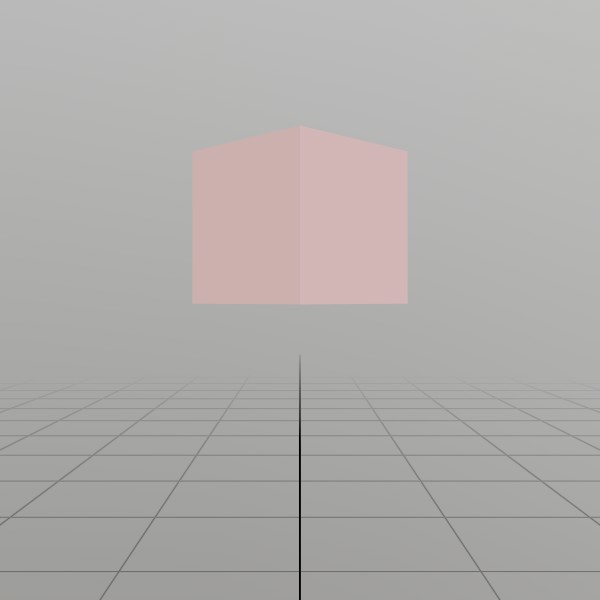
```csharp
// Initial starting values for the pose, size, and color of a cube that
// we'll animate!
EasePose pose = new EasePose (V.XYZ(0,-0.1f,-0.5f), Quat.Identity);
EaseVec3 scale = new EaseVec3 (0.1f,0.1f,0.1f);
EaseColor color = new EaseColor(Color.White);
// Here's a custom easing function! This one goes from 0 to 1 and then back
// to 0 again! So it actually ends in the exact same place it started. We
// could achieve the same behavior with just sin(pi*t), but the rest of the
// math here softens the start and end of the animation.
// See a graph here: https://www.desmos.com/calculator/zz8cdvrvju
static float EaseReturn(float t) => (float)Math.Sin(2*Math.PI*t - 0.5*Math.PI) * 0.5f + 0.5f;
void StepEasedCube()
{
// If the Ease animation for the Pose is finished or never started to
// begin with, we can make it hop with our custom `EaseReturn`
// function!
if (pose.IsFinished)
pose.AnimTo(
new Pose(V.XYZ(0, 0.1f, -0.5f), Quat.FromAngles(0, 180, 0)),
0.5f,
EaseReturn);
if (scale.IsFinished)
scale.AnimTo(
V.XYZ(0.15f, 0.15f, 0.15f),
0.75f,
EaseReturn);
// For the color, we're picking a semi-random hue, and using one of the
// built-in easing functions to just ease all the way to our
// destination color!
if (color.IsFinished)
color.AnimTo(
Color.HSV((Time.Frame % 100) / 100.0f, 0.7f, 0.7f),
1,
Ease.FastIn);
// Convert `pose` and `scale` into a transform Matrix! Ease values have
// implicit conversions that will automatically `Resolve` the current
// value, so most of the time you can just pass them the same way you
// would a normal type. In this case to call `ToMatrix` we need to
// either explicitly cast, or call `Resolve`, and `Resolve` is the most
// obvious action.
Matrix transform = pose.Resolve().ToMatrix(scale);
Mesh.Cube.Draw(Material.Default, transform, color);
}
```
## EaseColor.IsFinished
See `Ease`
## EaseColor.AnimTo
See `Ease`
## EaseColor.Resolve
See `Ease`
## EaseColor
See `Ease`
## EasePose.IsFinished
See `Ease`
## EasePose.AnimTo
See `Ease`
## EasePose.Resolve
See `Ease`
## EasePose
See `Ease`
## EaseVec3.IsFinished
See `Ease`
## EaseVec3.AnimTo
See `Ease`
## EaseVec3.Resolve
See `Ease`
## EaseVec3
See `Ease`
## HandMenuItem
### Basic layered hand menu
The HandMenuRadial is an `IStepper`, so it should be registered with
`StereoKitApp.AddStepper` so it can run by itself! It's recommended to
keep track of it anyway, so you can remove it when you're done with it
via `StereoKitApp.RemoveStepper`
The constructor uses a params style argument list that makes it easy and
clean to provide lists of items! This means you can assemble the whole
menu on a single 'line'. You can still pass arrays instead if you prefer
that!
```csharp
handMenu = SK.AddStepper(new HandMenuRadial(
new HandRadialLayer("Root",
new HandMenuItem("File", null, null, "File"),
new HandMenuItem("Search", null, null, "Edit"),
new HandMenuItem("About", Sprite.FromFile("search.png"), () => Log.Info(SK.VersionName)),
new HandMenuItem("Cancel", null, null)),
new HandRadialLayer("File",
new HandMenuItem("New", null, () => Log.Info("New")),
new HandMenuItem("Open", null, () => Log.Info("Open")),
new HandMenuItem("Close", null, () => Log.Info("Close")),
new HandMenuItem("Back", null, null, HandMenuAction.Back)),
new HandRadialLayer("Edit",
new HandMenuItem("Copy", null, () => Log.Info("Copy")),
new HandMenuItem("Paste", null, () => Log.Info("Paste")),
new HandMenuItem("Back", null, null, HandMenuAction.Back))));
```
## HandMenuItem
```csharp
SK.RemoveStepper(handMenu);
```
## HandMenuRadial
See `HandMenuItem`
## HandMenuRadial
See `HandMenuItem`
## HandRadialLayer
See `HandMenuItem`
## HandRadialLayer
See `HandMenuItem`
## IStepper
See `Backend.XRType`